
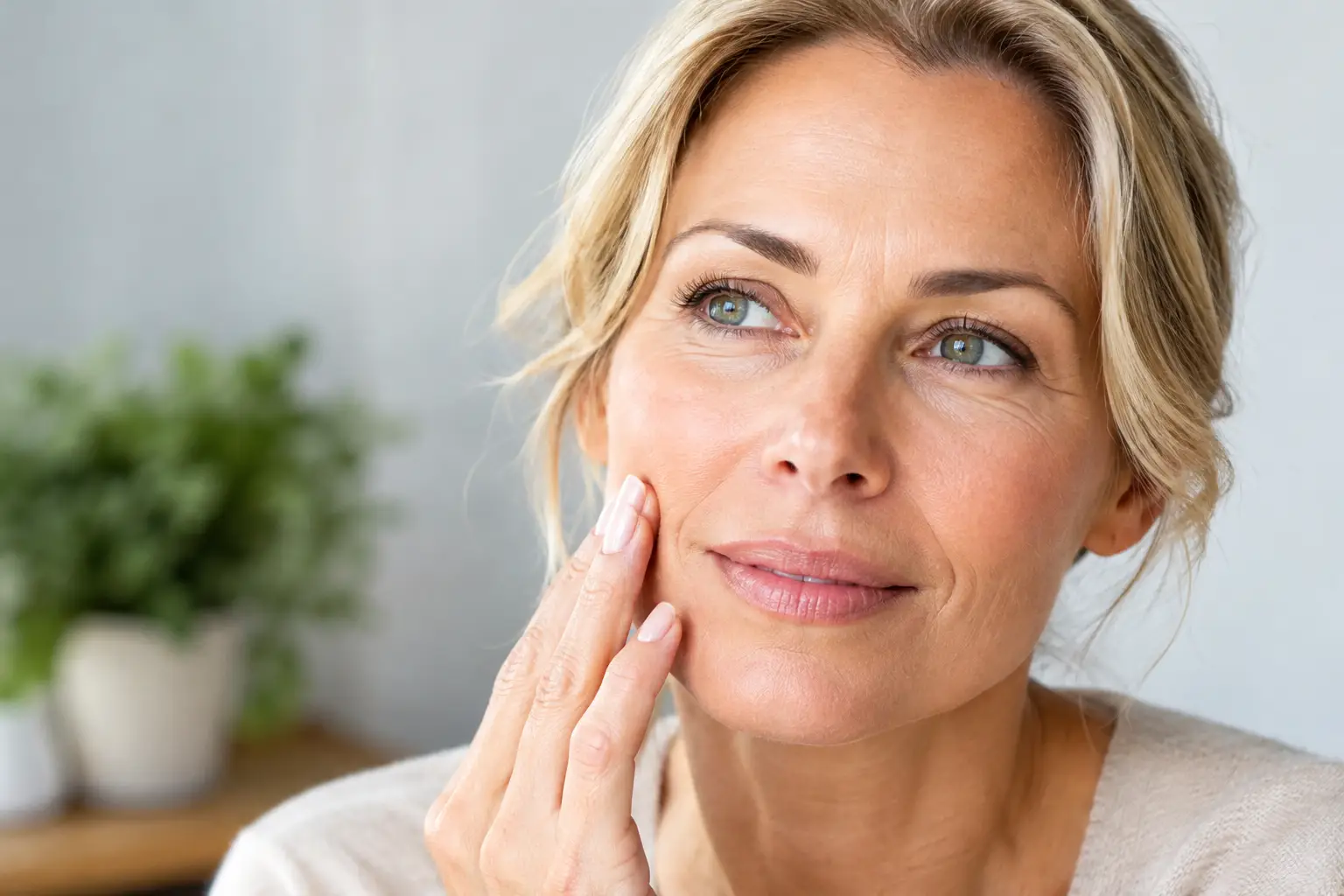
Vertical lines around the mouth can make lipstick feather, create a tense appearance at rest, and become more noticeable in photographs. If you are researching how to treat smoker lines, the most natural-looking results usually come from addressing more than one factor: repetitive muscle movement, collagen loss, skin texture, and, in some cases, loss of support around the lips.
Despite the name, smoker lines are not limited to people who smoke. They may develop with age, sun exposure, genetics, pursing the lips, drinking through straws, and the gradual decrease in collagen and elastin that affects the skin over time. Smoking can accelerate the process, but it is only one part of the picture.
A physician-led consultation is the right starting point because the lines around the mouth require precision. This area moves constantly, and treatment should soften wrinkles while preserving a natural smile, speech, and lip shape.
What Causes Smoker Lines Around the Mouth?
Smoker lines, also called perioral lines or lipstick lines, are the fine vertical creases that form above the upper lip and sometimes extend below the lower lip. Early lines may only appear when you purse your mouth. Over time, they can become etched into the skin and remain visible even when the face is relaxed.
The orbicularis oris is the circular muscle that controls lip movement. Repeated contraction gradually folds the skin in the same direction. At the same time, skin becomes thinner and less resilient with age, while changes in facial volume and bone structure can reduce the support around the mouth.
This is why one person may benefit primarily from skin resurfacing, while another may need a small amount of neuromodulator, strategic filler support, or a combination approach. Treating every vertical line with filler alone can make the area look heavy or overfilled. Treating movement alone may improve dynamic lines but leave deeper texture unchanged.
How to Treat Smoker Lines With a Personalized Plan
There is no single best treatment for every set of smoker lines. The ideal approach depends on whether the concern is fine surface creasing, deeper static wrinkles, excessive lip movement, volume loss, or several concerns at once.
Botox for Repetitive Lip Movement
Botox and other neuromodulators can relax the tiny muscle contractions that contribute to pursing and vertical creasing. When used carefully around the mouth, treatment may help prevent lines from becoming more pronounced and can soften lines that appear with expression.
This is an area where dosing matters. Too much product can affect the ability to pucker, sip through a straw, pronounce certain words, or control the upper lip. A conservative approach is usually preferred, especially for first-time patients. The goal is not to freeze the mouth. It is to reduce excessive pull while maintaining normal expression.
Neuromodulator results typically develop gradually over several days and commonly last about three to four months. For etched lines at rest, Botox is often best viewed as one part of a broader treatment plan.
Dermal Fillers for Fine Lines and Structural Support
Hyaluronic acid dermal filler can soften individual lines around the lip border and restore subtle support to areas that have lost volume. In selected patients, a small amount placed in the lips, philtral columns, or surrounding perioral area may reduce the shadowing that makes wrinkles look deeper.
Natural results depend on product selection, placement depth, and restraint. The skin above the lip is thin, and overfilling can create an unnatural shelf, visible product, or a swollen appearance. For this reason, a skilled injector may recommend treating gradually over more than one visit rather than attempting to erase every line in one session.
Fillers are not always the first choice for very fine, widespread creasing. When texture is the main issue, resurfacing treatments may produce a more refined result than adding volume.
Microneedling and PRP for Skin Quality
Microneedling creates controlled microchannels in the skin to stimulate collagen renewal. It can improve the look of fine lines, texture, and overall skin quality around the mouth with minimal downtime. A series of treatments is generally recommended because collagen remodeling occurs gradually.
Platelet-rich plasma, or PRP, may be paired with microneedling for appropriate candidates. PRP uses a concentration of your own platelets to support the skin’s natural repair response. Patients often choose this approach when they want to focus on smoother texture and healthier-looking skin without adding volume.
Microneedling and PRP will not produce the immediate smoothing effect of filler, and results are more subtle. Their value is in improving the quality of the skin itself, which can make the area look softer and more refreshed over time.
Chemical Peels and Laser Resurfacing
For superficial smoker lines, chemical peels and laser treatments can help improve uneven texture, sun-related damage, and fine creasing. These treatments encourage skin renewal and can be especially valuable when lines are accompanied by dullness, pigmentation, or a rougher skin surface.
The right level of resurfacing depends on your skin type, sensitivity, lifestyle, and tolerance for recovery time. A lighter treatment may offer gradual improvement with less downtime, while a more intensive approach can create more noticeable resurfacing but requires careful aftercare and a longer recovery period.
Not every laser or peel is appropriate for every patient. Individuals with a history of hyperpigmentation, melasma, cold sores, or certain skin conditions need a tailored plan to reduce unnecessary risk. Proper preparation and post-treatment sun protection are part of achieving an even result.
Why Combination Treatment Often Looks Most Natural
The most successful smoker line treatments are often layered rather than aggressive. A neuromodulator can reduce repeated creasing, while microneedling, PRP, a peel, or laser treatment addresses skin texture. If there is volume loss or a few deeper folds, conservative filler can provide support without changing the character of the lips.
This measured approach is particularly useful for patients who want to look rested rather than treated. It also allows the provider to assess how the area responds before adding more product. Facial rejuvenation is rarely about removing every line. It is about creating a smoother, balanced result that still looks like you.
At-Home Care That Supports Professional Results
Professional treatments can make a meaningful difference, but daily skin care helps protect the investment. Broad-spectrum sunscreen is essential because ultraviolet exposure breaks down collagen and can deepen fine lines around the mouth. Apply it consistently to the upper lip area, which is often missed.
A well-tolerated retinoid can support collagen production and improve skin texture over time. Because this area can be sensitive, introduce active products gradually and follow professional guidance if you are using prescription-strength retinoids or planning a peel or laser treatment.
Keeping the lips and surrounding skin hydrated can also reduce the temporary appearance of fine dehydration lines. Hydration will not erase established wrinkles, but a healthy skin barrier helps the area look smoother and recover well after treatment.
If you smoke or vape, reducing or stopping can benefit both skin health and treatment longevity. Nicotine and smoke exposure affect circulation and collagen, which may contribute to premature aging and can complicate healing. This is a health decision as well as an aesthetic one, and support is available through your primary care provider.
What to Expect From a Consultation
A thoughtful consultation should look beyond the upper lip alone. Your provider will assess the depth and pattern of lines, lip movement, skin quality, facial proportions, previous injectable treatments, and medical history. You should also discuss whether you have a history of cold sores, allergies, bleeding concerns, or medications that may affect bruising or healing.
At Balwin Aesthetics, treatment planning is centered on physician-supervised care and results that complement your natural features. Some patients are ready for an injectable treatment, while others are better served by beginning with skin renewal and reassessing after collagen-building treatments.
Smoker lines can be softened at nearly every stage, but the best results are usually built with patience, precise technique, and a plan that respects how naturally expressive the mouth should remain.
