
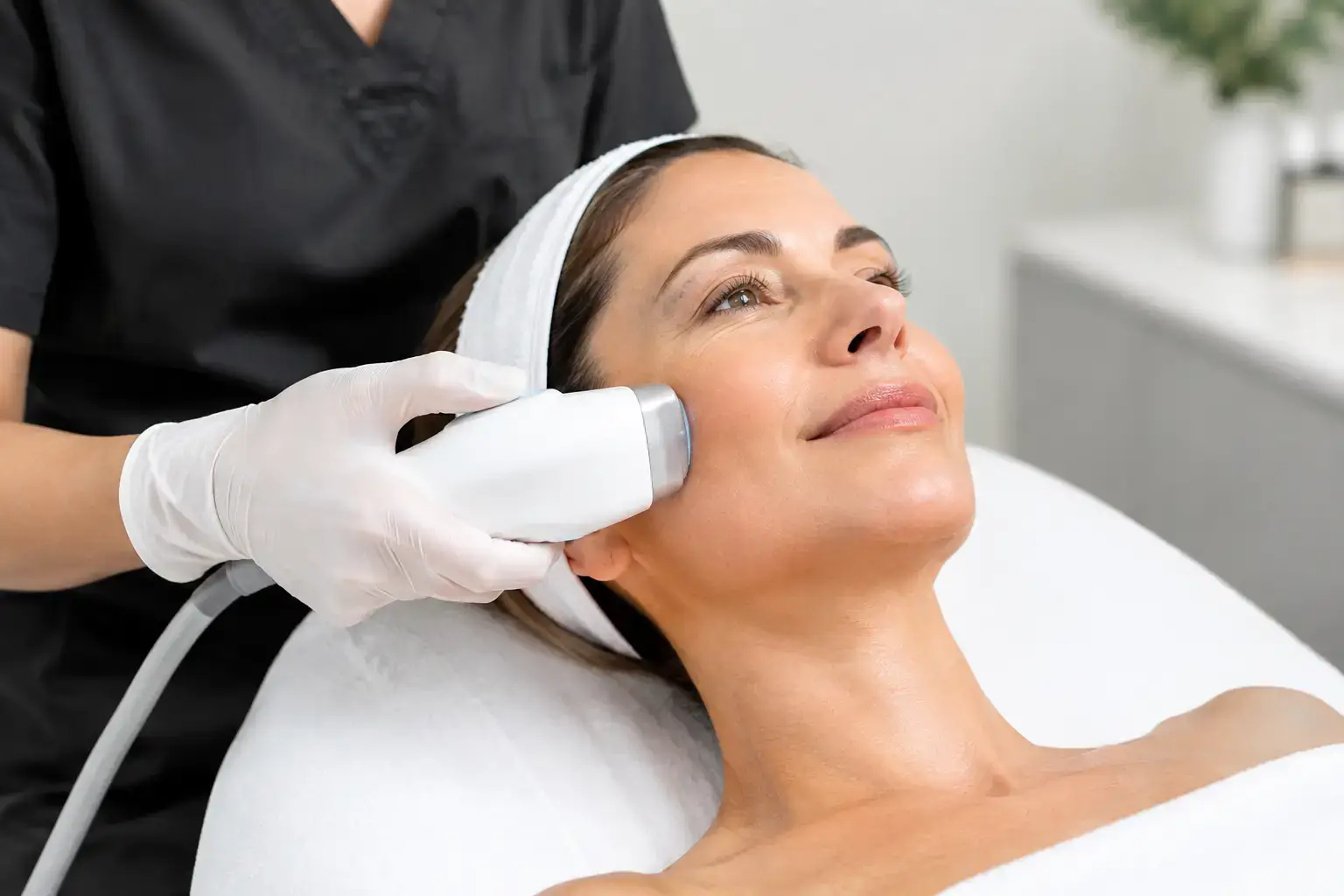
A relaxed face can still show early laxity in the mirror: a softer jawline, creasing around the mouth, or skin that no longer appears as firm as it once did. XERF is a non-surgical radiofrequency treatment designed for people who want to address these changes without injections, surgery, or significant downtime.
For the right candidate, radiofrequency skin tightening can be a thoughtful part of a long-term aesthetic plan. It is not a substitute for a surgical facelift, and it will not create an overnight transformation. Its value lies in gradual, natural-looking improvement that supports skin quality while allowing clients to return to their routines quickly.
What Is XERF Skin Tightening?
XERF is an energy-based treatment that uses radiofrequency to deliver controlled heat beneath the skin’s surface. The goal is to warm targeted tissue at levels that encourage the skin’s natural collagen response. Collagen is one of the structural proteins that helps skin appear firm, smooth, and supported.
Over time, collagen production and organization change. Sun exposure, weight fluctuations, genetics, and the natural aging process can all contribute to looser-looking skin and less definition. XERF is intended to address mild to moderate skin laxity by supporting collagen remodeling without needles or incisions.
The treatment can be considered for areas such as the face, neck, and select body concerns, depending on the provider’s assessment and the treatment plan. A qualified clinician should evaluate both the quality of the skin and the degree of laxity before recommending radiofrequency treatment. The best approach depends on whether the concern is primarily texture, volume loss, muscle movement, pigmentation, or true skin laxity.
How XERF Works
Radiofrequency energy creates heat in deeper skin layers while the treatment handpiece and cooling features are designed to protect the surface of the skin and maintain comfort. During treatment, the provider moves the applicator across the planned area in a controlled pattern, adjusting technique according to the area being treated and the patient’s tolerance.
That controlled heating process can create an immediate temporary tightening effect in some patients, largely related to collagen contraction. The more meaningful changes develop gradually as the body produces and remodels collagen over the following weeks and months.
This timeline matters. XERF is not designed to deliver the dramatic lifting associated with surgery, and a responsible provider should not present it that way. Rather, it is often suited to people who want a refreshed, firmer appearance without changing the character of their face or taking extended time away from work and social commitments.
What Treatment Feels Like
Most patients describe XERF as a sensation of deep warmth that comes and goes as the device moves over the skin. Comfort is highly individual. Areas with thinner skin or more bony contours may feel more sensitive than fuller areas of the face.
Your provider should monitor your comfort throughout the appointment and explain what sensations are expected. A well-planned treatment is not about simply using more energy. It is about using appropriate settings, careful technique, and real-time communication to treat effectively while prioritizing safety.
A session length varies based on the area being treated. There is generally little to no downtime, although temporary warmth, redness, or mild swelling can occur. These effects usually resolve quickly, but your provider will give you aftercare instructions specific to your skin and treatment area.
When Will You See XERF Results?
Patience is part of choosing a collagen-stimulating treatment. Some people notice a subtle improvement soon after their session, but results typically continue to evolve over several weeks. Collagen remodeling is a biologic process, not an instant cosmetic filter.
Many patients evaluate their outcome around two to six months after treatment, although the exact timeline varies. Age, baseline skin laxity, lifestyle, sun exposure, and individual collagen response all influence how noticeable the result may be. People with early laxity and good skin quality often see the most refined improvement.
Results are also influenced by expectations. If your goal is a slightly firmer lower face, smoother neck skin, or more polished overall skin quality, XERF may be a reasonable option. If you have significant jowling, pronounced neck laxity, or substantial excess skin, surgery may offer a more meaningful correction. An ethical consultation should make that distinction clear.
Who May Be a Good Candidate for XERF?
XERF may appeal to adults who want gradual facial or body skin tightening without surgery. Ideal candidates generally have mild to moderate laxity, realistic expectations, and a preference for natural-looking change. It can be especially appealing for patients who are not ready for surgery or who want to maintain results from other aesthetic treatments.
A consultation is necessary because not every concern is best treated with radiofrequency. For example, hollowing through the cheeks may benefit more from a carefully selected filler or biostimulatory approach. Dynamic forehead lines and crow’s feet are commonly addressed with neuromodulators. Texture irregularities, acne scarring, and discoloration may call for treatments such as microneedling, chemical peels, or laser-based skin renewal.
Your medical history matters as well. Be open about previous cosmetic procedures, implanted medical devices, active skin infections, pregnancy, medications, healing concerns, and any history of unusual scarring or pigmentation changes. A physician-led aesthetic consultation should account for these details before proceeding.
XERF Compared With Other Non-Surgical Treatments
XERF occupies a specific place in aesthetic care. It is focused on skin tightening and collagen support, not replacing lost facial volume or relaxing the muscles that cause expression lines. For that reason, it may be used alone or incorporated into a personalized plan with other treatments.
Dermal fillers can restore contour in areas affected by volume loss, such as the cheeks, temples, or lips. Botox and similar neuromodulators can soften lines caused by repeated muscle movement. Microneedling and certain laser treatments can focus more directly on surface texture, scarring, and pigmentation. Radiofrequency tightening targets a different concern: the support and firmness of the skin itself.
The right combination depends on your anatomy and priorities. Treating every concern with a single modality can lead to compromised results. In many cases, a measured plan with appropriately spaced treatments creates a more balanced and natural outcome than trying to correct everything at once.
How to Prepare for a XERF Consultation
Come prepared to discuss what has changed and what you would like to improve. Photos from several years ago can sometimes help you and your provider identify whether the main issue is skin laxity, volume loss, or a shift in facial proportions. Be specific about whether you want a subtle refresh or a more substantial change.
Ask how many sessions may be recommended, what results are realistic for your starting point, and when you should schedule treatment around important events. It is also appropriate to ask who will perform the procedure, what training they have, and how the clinic manages unexpected reactions. These are practical questions, not inconveniences.
Avoid choosing based on a discounted price alone. Energy-based treatments are highly dependent on the device, treatment settings, provider technique, and patient selection. A lower-cost appointment is not necessarily equivalent care, particularly when your face, skin health, and comfort are involved.
Supporting Your Results After Treatment
Your skin continues to age after any aesthetic procedure, so maintaining results requires consistent care. Daily broad-spectrum sunscreen, a personalized skincare routine, adequate hydration, and avoiding smoking all support healthier-looking skin over time. These habits do not replace treatment, but they help protect the investment you make in your skin.
A follow-up assessment can help determine whether your response aligns with expectations and whether another treatment or complementary option would be beneficial. The goal should remain refinement, not overcorrection.
For people seeking a non-surgical option for early laxity, XERF can offer a measured path toward firmer-looking skin. The most satisfying outcomes begin with an honest conversation about what the technology can do, what it cannot do, and which treatment plan truly fits your features and goals.
