
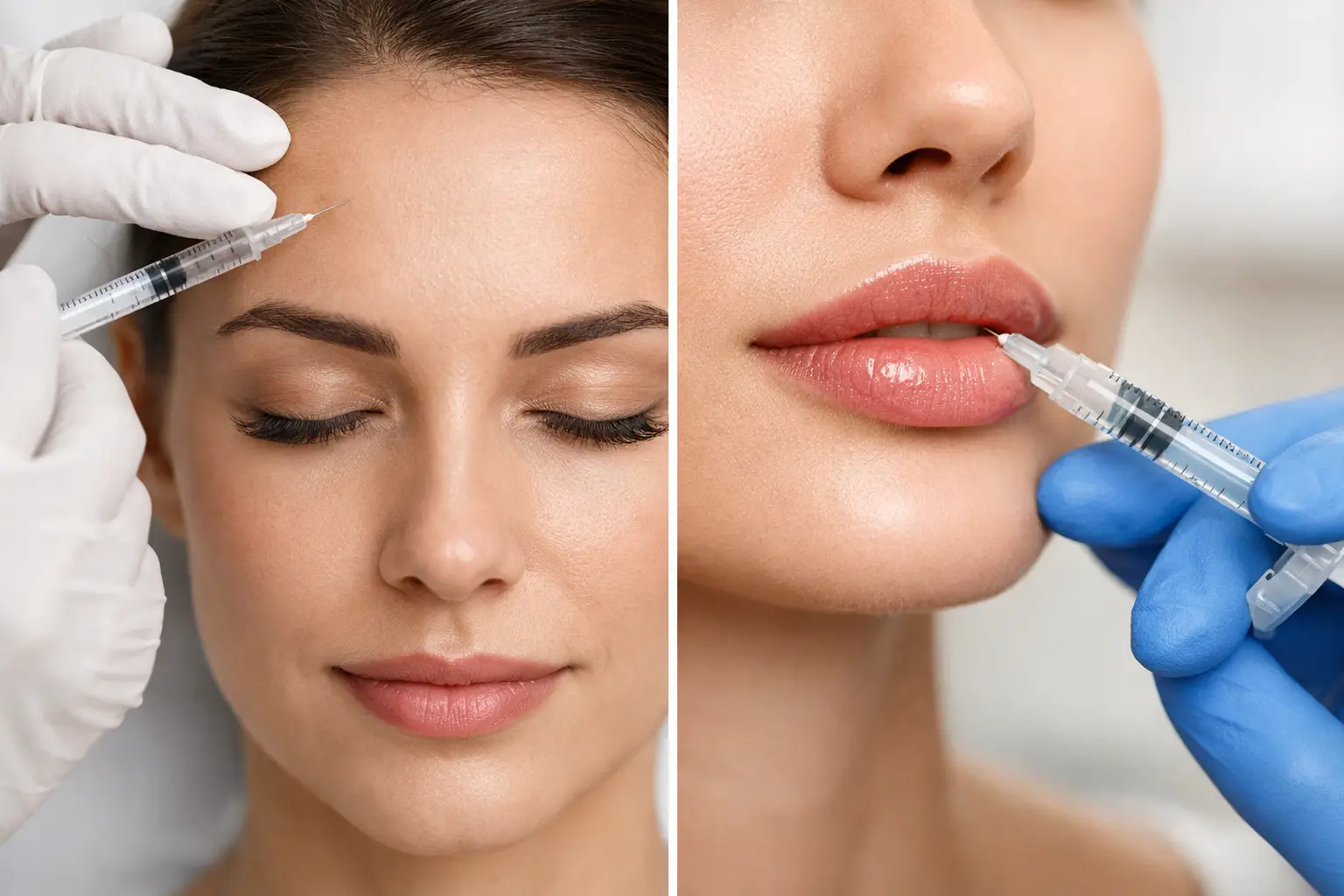
A mirror can be oddly specific. One day you notice faint lines across the forehead. Another day it is the under-eye hollowing, a flatter cheek, or folds around the mouth that seem more noticeable than they used to be. When patients compare botox vs fillers, they are usually not asking which treatment is better overall. They are asking which one makes sense for the concern they actually see.
That distinction matters, because Botox and dermal fillers do very different jobs. They are both injectable treatments, both commonly used for facial rejuvenation, and both can produce natural-looking results when chosen well. But they are not interchangeable.
Botox vs fillers: the core difference
The simplest way to understand botox vs fillers is this: Botox relaxes muscle movement, while fillers restore or add volume.
Botox is most often used for dynamic wrinkles. These are lines caused by repeated facial expression, such as frown lines between the brows, crow’s feet, and horizontal forehead lines. By reducing the pull of selected muscles, Botox softens those expression lines and can help prevent them from becoming more deeply etched over time.
Fillers work differently. Most modern dermal fillers are made with hyaluronic acid, a substance naturally found in the body. Instead of relaxing muscles, fillers support tissue, replace lost volume, and improve contour. They are commonly used in the cheeks, lips, jawline, chin, and around the mouth. In some cases, they can also soften under-eye hollows or folds that develop as facial volume shifts with age.
If your concern comes from movement, Botox is often the better fit. If your concern comes from volume loss, structural change, or contour, filler is usually the more effective choice.
What Botox is best for
Botox is a strong option when the face looks different in motion than it does at rest. If lines appear when you raise your brows, squint, or frown, muscle activity is likely part of the issue.
Common treatment areas include the forehead, glabella or 11 lines, and crow’s feet. Some patients also use Botox for a brow lift effect, chin dimpling, gummy smile reduction, jaw slimming, or neck band softening. The best candidates are often people who want a smoother, more rested appearance without changing the shape of the face.
The result is not added fullness. Botox will not lift sagging cheeks, refill under-eyes, or replace volume in the lips. It can make the face look fresher and less tense, but it does so by reducing overactive movement, not by rebuilding support.
Results typically begin within a few days, with full effect developing over about two weeks. Most patients notice the benefit lasts around three to four months, though this varies by treatment area, metabolism, dose, and muscle strength.
What fillers are best for
Dermal fillers are best for concerns that Botox cannot correct. If the issue is hollowing, deflation, or a loss of facial definition, filler may offer a more direct solution.
Cheek filler can restore mid-face support and soften a tired appearance. Lip filler can improve shape, hydration, and balance. Chin and jawline filler can strengthen profile and lower-face definition. Around the mouth, filler may soften marionette lines or folds if volume loss is a key cause.
This is where nuance matters. Not every line should be filled, and not every face benefits from adding volume. Good filler treatment is less about chasing every crease and more about restoring proportion and support in a way that still looks like you. In a physician-led setting, the consultation should focus on facial anatomy, movement, skin quality, and how one area affects another.
Depending on the product used and the area treated, fillers can last anywhere from six months to well over a year. Some areas break down product more quickly, while others hold it longer. Longevity also depends on the amount placed and the individual patient’s metabolism.
Botox vs fillers for common concerns
If you are trying to decide between botox vs fillers, it helps to match the treatment to the actual concern rather than the area alone.
Forehead lines usually respond best to Botox because they are caused by repeated muscle movement. Crow’s feet and frown lines also fall into this category.
Cheek flattening, lip thinning, and under-eye hollows are generally filler concerns because they involve missing volume or reduced structural support. Nasolabial folds can be more complex. Sometimes filler in the cheeks improves them indirectly by lifting support higher up. Sometimes direct treatment near the fold is appropriate. Sometimes the issue is skin laxity, and injectable treatment alone will only do so much.
Around the lower face, many patients assume they need filler when they actually have heavy muscle pull at the corners of the mouth or tension in the chin. Others assume Botox can fix everything when the real issue is loss of support in the mid-face or jawline. This is why a personalized assessment matters more than a one-size-fits-all treatment menu.
Can you get Botox and fillers together?
Yes, and in many cases that approach produces the most balanced result.
A face rarely ages in only one way. Expression lines deepen because of movement, but volume also shifts, skin quality changes, and support weakens over time. Botox can soften the muscle-driven part of aging, while fillers address the structural part. Used together, they can create a more complete but still natural-looking rejuvenation plan.
For example, a patient may use Botox to relax forehead lines and filler to restore cheek support. Another may choose Botox for crow’s feet and filler for lip enhancement. The point is not to do more for the sake of more. The goal is to use the right treatment in the right place, in the right amount.
Safety, technique, and why injector choice matters
Both Botox and fillers are medical treatments, not casual beauty services. That matters for safety, planning, and results.
Botox is highly technique-dependent. The dose, placement, and pattern all affect expression, brow position, and overall facial balance. Too little may do very little. Too much in the wrong area can create heaviness or an unnatural look.
Filler requires even more anatomical precision. Product choice, depth of injection, and understanding of vascular anatomy are critical. A natural result depends on restraint as much as skill. Overfilled features rarely happen because filler itself is bad. They happen because the treatment plan was poor, the product was excessive, or the injector lacked a strong aesthetic and medical approach.
For patients who value refined outcomes, physician supervision adds an important layer of judgment and safety. A good consultation should explain what the treatment can do, what it cannot do, and whether another option may serve you better.
How to choose the right treatment for your face
The best decision usually starts with one question: what is actually causing the change you want to treat?
If you see lines that deepen when you make expressions, Botox may be the answer. If you notice hollowing, flattening, or loss of shape even when your face is at rest, filler may be more appropriate. If both are happening, a combined plan may make the most sense.
Age alone is not the deciding factor. Some younger patients choose Botox preventively for strong expression lines. Others seek filler early for lip shape or chin balance rather than age-related volume loss. Some mature patients do beautifully with subtle Botox alone, while others benefit more from restoring support with filler. The right approach depends on anatomy, goals, and how much change you want.
This is also where realistic expectations matter. Botox will not replace a facelift. Filler will not improve every line. And neither should make you look like someone else. The strongest outcomes are usually the least obvious ones – smoother movement, softer transitions, and better facial balance without a dramatic change in identity.
At Balwin Aesthetics, that is the standard patients are often looking for: physician-led guidance, personalized planning, and results that look refreshed rather than overdone.
The better question than Botox vs fillers
Sometimes the most useful shift is to stop asking botox vs fillers as if one must win. These treatments solve different problems, and the right choice depends on what your face is asking for.
A thoughtful consultation can tell you whether the issue is movement, volume, facial structure, or a combination of factors. Once that is clear, the decision becomes much easier – and the result is far more likely to look natural, balanced, and worth it.
