
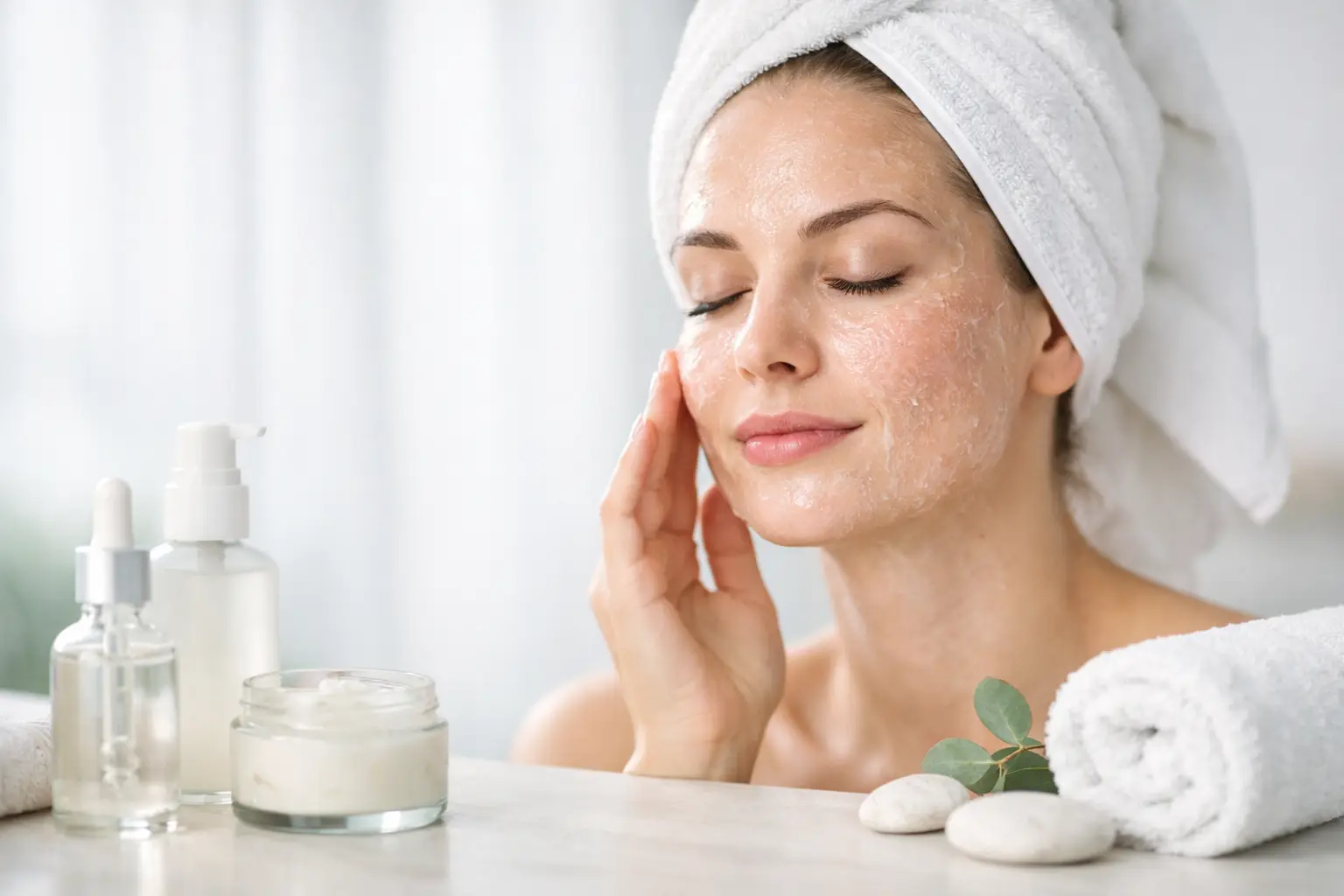
Your skin may look brighter immediately after a chemical peel, but the most meaningful part of the treatment happens over the days that follow. This chemical peel aftercare guide explains how to protect the skin barrier, manage normal peeling, and recognize when you need guidance from your treatment provider.
A chemical peel creates controlled exfoliation. Depending on the type and strength of peel, it can improve concerns such as dullness, uneven tone, fine lines, acne, visible pores, and pigmentation. That renewal process also leaves the skin temporarily more sensitive to heat, friction, active skincare ingredients, and sun exposure. Thoughtful aftercare is what helps your results develop evenly and safely.
The First 24 Hours: Keep Skin Calm and Clean
For the first day, treat your skin gently. You may notice mild warmth, tightness, pinkness, or sensitivity, particularly with a medium-depth peel or a treatment that included other resurfacing procedures. These reactions are usually expected and should gradually settle.
Cleanse only as directed by your provider, using lukewarm or cool water and a gentle, fragrance-free cleanser if one has been approved. Pat your face dry with a clean, soft towel rather than rubbing. Apply a simple moisturizer or post-treatment product recommended for your skin type to support comfort and hydration.
Avoid touching your face unnecessarily. Freshly treated skin is more vulnerable to irritation and bacteria from hands, phones, makeup brushes, and pillowcases. If your provider permits makeup the next day, use clean applicators and choose non-irritating products. Some peels require a longer makeup break, so your personalized instructions should always take priority.
Chemical Peel Aftercare: What Not to Do
The urge to speed up flaking is understandable, especially when skin begins to peel around the mouth, nose, or chin. Resist it. Pulling, scrubbing, or picking at loose skin can lead to prolonged redness, uneven healing, infection, or post-inflammatory pigmentation.
For several days, or longer when your provider advises it, avoid exfoliating ingredients and treatments. This includes retinoids, retinol, tretinoin, glycolic acid, salicylic acid, lactic acid, enzyme masks, exfoliating pads, facial scrubs, and at-home peeling products. Vitamin C can also sting on sensitized skin and may need to be paused temporarily.
Heat and sweat can increase redness and irritation. Skip hot yoga, intense workouts, steam rooms, saunas, hot tubs, and very hot showers during the early recovery period. Swimming pools and open-water swimming are also best postponed until the skin has recovered, as chlorine, salt, and bacteria may irritate compromised skin.
Avoid waxing, threading, depilatory creams, dermaplaning, and facial shaving until your provider confirms it is appropriate. Do not schedule another resurfacing treatment too soon. Your skin needs time to rebuild its protective barrier before it is challenged again.
Expect Peeling, but Do Not Force It
Not every chemical peel produces visible sheets of peeling. Light peels may cause only subtle dryness or fine flaking, while deeper treatments can create more noticeable peeling for several days. The amount of visible peeling does not measure how effective your treatment was.
Peeling often begins two to three days after treatment, though timing varies. The skin may feel dry or look slightly darker before it flakes. Continue using a bland moisturizer as directed, and allow the shedding process to occur naturally. If small pieces of skin are fully detached and catching on clothing, they can sometimes be carefully trimmed with clean scissors, but never pulled.
Hydration can make this phase more comfortable. Drink water consistently, use a humidifier if indoor air is dry, and apply your approved moisturizer as often as needed. Heavy occlusive products are not right for every peel or every skin type, especially for acne-prone patients, so follow the specific product plan provided at your appointment.
Sun Protection Is Part of the Treatment
After a peel, newly exposed skin is especially susceptible to sun damage and discoloration. Even a brief period of unprotected exposure can interfere with the clearer, more even-looking result you are working toward.
Use a broad-spectrum mineral sunscreen with SPF 30 or higher once your provider says sunscreen is appropriate. Reapply when outdoors, and pair it with practical protection such as a wide-brimmed hat, sunglasses, and shade. Avoid deliberate tanning, tanning beds, and prolonged direct sun exposure throughout healing and afterward.
This matters even on cloudy days and during colder months. Ultraviolet radiation can worsen pigmentation without creating an obvious sunburn. For patients treating melasma, sun spots, or post-acne marks, diligent sun protection is particularly essential to maintaining improvement.
Adjust Aftercare to the Type of Peel
Recovery is not identical for every chemical peel. A superficial peel may involve slight redness and light flaking with minimal downtime. A stronger or medium-depth peel can produce more pronounced peeling, swelling, and temporary sensitivity, requiring a more structured recovery plan.
Your skin tone, history of hyperpigmentation, active acne, rosacea, use of prescription skincare, and recent sun exposure all influence how your skin responds. Patients with deeper skin tones may need especially careful pre- and post-treatment planning to reduce the risk of pigmentation changes. This is one reason physician-supervised care and individualized treatment selection matter.
If your peel was performed alongside microneedling, laser treatment, injectables, or another aesthetic service, your aftercare may differ from standard instructions. Do not assume that advice from a previous facial or social media video applies to your treatment. The products and timing that support one procedure can be too aggressive for another.
When to Contact Your Provider
Mild redness, dryness, tightness, itching, and flaking can be normal. However, you should contact your provider promptly if you develop concerning symptoms. Early communication allows the team to assess whether you need an adjustment to your home care routine or medical attention.
Reach out if you experience any of the following:
- Increasing pain, significant swelling, or redness that worsens rather than improves
- Blistering, oozing, crusting, pus, or signs of infection
- A widespread rash, hives, severe itching, or swelling around the eyes or lips
- Dark patches, very pale areas, or other unexpected color changes
- Symptoms that feel substantially different from the recovery expectations discussed at your appointment
Do not self-treat a suspected reaction with strong over-the-counter products, steroid creams, or leftover prescriptions unless your medical provider instructs you to do so. A well-intended product can complicate healing or make it harder to determine what caused the reaction.
Returning to Your Regular Skincare Routine
Your skin should guide the transition back to active products, but your provider should set the timeline. Once peeling has stopped and the skin no longer feels tender or reactive, you may gradually reintroduce your usual regimen. Start with one active ingredient at a time and use it less frequently than usual at first.
For example, retinoids and exfoliating acids may be introduced on alternating nights rather than immediately returning to daily use. If burning, persistent stinging, or renewed flaking occurs, stop the active product and return to a gentle cleanser, moisturizer, and sunscreen until the skin settles.
A chemical peel is most effective as part of a personalized skin plan, not as a one-time shortcut. The right frequency depends on your goals, skin sensitivity, and the depth of your treatment. Some patients benefit from a series of gentle peels, while others need more time between stronger sessions.
Healthy recovery is not about making skin peel as much as possible. It is about giving treated skin the calm, protected environment it needs to reveal a smoother, fresher, more even-looking result.
