
What if the most effective way to combat the damage from Edmonton’s 2,300 annual hours of sunshine isn’t just a higher SPF, but a strategic, medical-grade reset for your skin? You’ve likely noticed how our city’s harsh, dry winters and intense UV exposure leave your complexion feeling brittle, dull, or marked by stubborn patches of hyperpigmentation. It’s natural to feel hesitant about chemical peels when social media often highlights extreme cases of redness and peeling that look more like a burn than a beauty treatment.
At Balwin Aesthetics, we understand that you want a refreshed, natural look rather than a week of hiding at home. You’ll learn how professional chemical peels can revitalize your complexion, address deep-seated skin concerns, and actually help your skin thrive in Alberta’s unique climate. We’re going to walk through the specific medical protocols Dr. Balwin uses to ensure a safe, elegant transformation that prioritizes your skin’s long-term health and your personal confidence.
Chemical Peel Essentials: Science, Benefits, and Depth
- Understand how medical-grade skin resurfacing triggers your body’s natural healing response to reveal a smoother, more youthful complexion.
- Discover the science behind professional chemical peels and how specific acids like AHAs, BHAs, and TCAs address your unique aesthetic concerns.
- Learn how to choose the ideal treatment depth—light, medium, or deep—to balance your desired results with your available recovery time.
- Navigate Edmonton’s dry climate with expert pre- and post-care strategies designed to maintain hydration and optimize your skin’s healing process.
- Explore the Balwin Aesthetics approach to physician-led excellence, ensuring every treatment is tailored by Dr. Sameer Sardesai for natural-looking harmony.
What are Chemical Peels? Defining Clinical Skin Resurfacing in Edmonton
Chemical peels aren’t just a standard facial; they’re a precise clinical tool designed to reset the skin’s biological clock. At Balwin Aesthetics, we view these treatments as a foundational pillar of long-term skin health. The process involves applying a specialized acid solution to the face, neck, or hands to dissolve the cellular “glue” that keeps dead, damaged skin attached to the surface. By removing these outer layers, we reveal the smoother, more youthful tissue hidden beneath, effectively addressing years of environmental damage in a single session.
Modern chemical peels have evolved significantly from the aggressive treatments of previous decades. Today’s formulations are highly controlled and incredibly sophisticated. We can now customize the depth of the resurfacing to accommodate various skin sensitivities and specific concerns. Whether you’re dealing with the dry, high-altitude climate of Edmonton or specific textural irregularities, these clinical solutions provide a predictable and safe path to restoration.
The Purpose of Professional Exfoliation
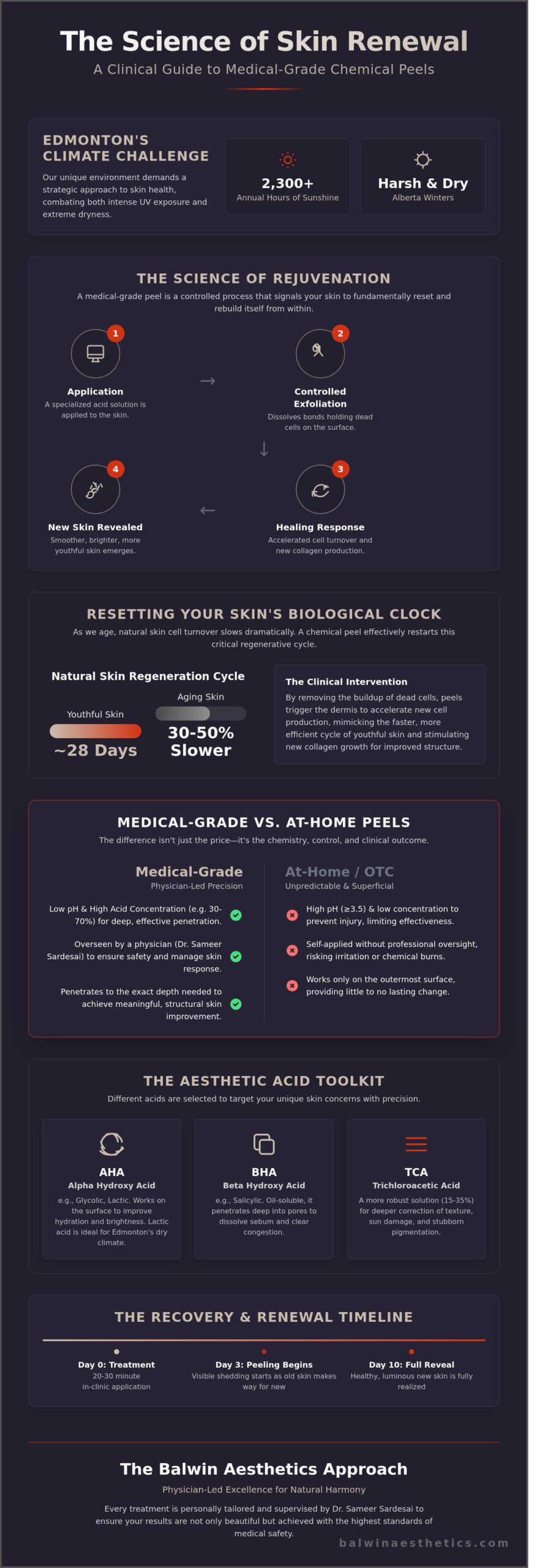
The human skin naturally replaces itself every 28 days during youth, but this regenerative cycle can slow by as much as 30% to 50% as we age. This slowdown results in a dull, thickened stratum corneum that traps bacteria and emphasizes fine lines. Professional exfoliation steps in to bridge this gap. By removing the buildup of keratinized cells, we signal the deeper dermis to accelerate cellular turnover. This process does more than just smooth the surface; it triggers a natural healing response that stimulates new collagen production in the deeper layers of the dermis. Chemical peels are controlled clinical treatments that use specific acids to remove dead skin cells and trigger natural regeneration.
Medical-Grade vs. Over-the-Counter Peels
The primary difference between a store-bought kit and a clinical treatment lies in the chemistry and the pH levels. Over-the-counter products typically maintain a pH level of 3.5 or higher to minimize the risk of injury, which also limits their ability to reach deeper tissue. In contrast, medical-grade chemical peels utilized by Dr. Sameer Sardesai often feature a much lower pH and higher acid concentrations, such as 30% to 70% glycolic acid or specialized TCA blends. These levels require professional oversight to manage the skin’s response safely.
At-home kits often lead to superficial irritation or even chemical burns without achieving any meaningful change in the skin’s structure. Having a physician like Dr. Sameer Sardesai oversee your treatment ensures that the peel penetrates to the exact depth required to treat your specific condition without compromising the skin barrier. This medical supervision is the key to achieving a refined, natural result while maintaining the highest standards of safety and comfort.
The Science of Rejuvenation: How Chemical Peels Transform Your Skin
At its core, a medical-grade treatment relies on the principle of controlled injury. When we apply chemical peels to your skin, we aren’t just removing the surface layer. We’re initiating a sophisticated biological reset. This process dissolves the protein bonds that keep dull, damaged cells attached to your face. By removing this barrier, we signal the deeper dermis to accelerate cellular turnover and ramp up collagen production. It’s a calculated intervention that replaces tired tissue with a fresh, vibrant foundation.
The transformation follows a predictable physiological timeline. While the initial application takes roughly 20 to 30 minutes, the real work happens beneath the surface over the following week. Most patients notice visible shedding starting around day 3, with the emergence of healthy, luminous cells fully realized by day 10. This cycle doesn’t just improve the look of your skin; it fundamentally strengthens its structure. You can explore how these transitions fit your lifestyle during a private skin analysis at our Edmonton clinic.
Common Acids Used in Aesthetic Medicine
We select specific agents based on your unique skin chemistry and goals. Alpha Hydroxy Acids (AHAs), like Glycolic or Lactic acid, work on the surface to boost hydration and brightness. Lactic acid is particularly effective for Edmonton’s dry climate because it acts as a humectant, drawing moisture into the tissue. Salicylic Acid, a Beta Hydroxy Acid (BHA), is lipophilic, meaning it penetrates deep into the pores to dissolve excess sebum. For more significant corrective work, we utilize Trichloroacetic Acid (TCA) in concentrations ranging from 15% to 35% to address deep-seated texture issues and stubborn sun damage.
Targeting Specific Skin Concerns
- Hyperpigmentation: Professional chemical peels break up concentrated melanin clusters. This helps fade sun spots and melasma by lifting pigmented cells to the surface where they eventually flake away.
- Fine Lines: By stimulating the fibroblasts, peels encourage the skin to thicken the epidermis. This natural plumping effect can reduce the depth of fine lines by up to 30% after a consistent series of treatments.
- Acne and Congestion: Peels clear the debris that clogs follicles. This reduces the frequency of breakouts and minimizes the appearance of enlarged pores by keeping them free of oxidized oil and dead skin cells.
Light, Medium, or Deep? Selecting Your Ideal Peel Depth
Selecting the right intensity for chemical peels requires a careful balance between your aesthetic aspirations and your lifestyle constraints. We don’t believe in a one size fits all approach at Balwin Aesthetics. Instead, we use the Fitzpatrick scale to assess your skin’s reaction to UV light and its risk of post-inflammatory hyperpigmentation. This scientific classification ensures we choose a depth that delivers transformative results without compromising the safety of your complexion.
Superficial (Light) Peels
Often called “lunchtime peels,” these treatments require zero downtime and fit easily into a busy Edmonton schedule. We typically utilize alpha-hydroxy acids (AHAs) or beta-hydroxy acids (BHAs) to gently exfoliate the outermost layer of the epidermis. They’re perfect for addressing common local skin concerns like seasonal dryness or minor pigment irregularities. A 2023 clinical review showed that a series of 6 light peels, spaced 14 days apart, can improve skin texture by 35% without a single day of social withdrawal.
Medium-Depth Peels
These treatments reach through the epidermis into the upper part of the papillary dermis. We often use Trichloroacetic acid (TCA) at concentrations between 20% and 35% to target stubborn sun damage and deeper lines. You’ll need to plan for 5 to 7 days of visible peeling. It’s a controlled process where the old skin sheds to reveal a more uniform, youthful layer beneath. This depth is highly effective for patients seeing the first signs of significant photo-aging who want a noticeable change in their skin’s structural quality.
The Deep Peel Difference
Deep peels represent the most aggressive end of the resurfacing spectrum. These are intensive treatments designed for severe acne scarring or deep-set wrinkles that don’t respond to milder interventions. Unlike lighter options, these are generally one-time procedures rather than recurring monthly treatments. Recovery is significant, often requiring 14 days of strict adherence to post-treatment protocols to ensure proper healing. Because of the intensity, these require the highest level of medical oversight to ensure the skin’s integrity remains protected throughout the cellular turnover process.
Your journey begins with a detailed consultation where we map out a treatment plan tailored to your skin’s specific needs. Whether you’re looking for a subtle glow or a complete skin reset, we match the chemical peels intensity to your unique biology. We prioritize the preservation of your natural character while achieving the fresh, rested appearance you deserve.
Navigating Recovery: Pre- and Post-Peel Care in Edmonton’s Dry Climate
Edmonton’s environmental profile presents a unique challenge for skin resurfacing. With indoor humidity levels often plummeting to 15% during the winter heating season, your skin is naturally more prone to transepidermal water loss. This dry environment makes hydration the cornerstone of any successful treatment plan. At Balwin Aesthetics, we view chemical peels as a collaborative journey between our clinical expertise and your at-home commitment. Fall and winter are traditionally dubbed “peel season” in Alberta. This timing is intentional. Between October and March, the UV index in Edmonton rarely exceeds 2, providing a safer window for deep cellular renewal without the aggressive solar interference seen during our high-exposure summer months.
High-altitude living also plays a role in your recovery. Edmonton sits at an elevation of approximately 671 meters, where UV radiation is significantly more intense than at sea level. On a clear January day, fresh snow can reflect up to 80% of UV rays back onto your face, making diligent protection a year-round requirement rather than a seasonal suggestion. Preparing your skin for these variables ensures that the treatment remains a restorative experience rather than a reactive one.
Pre-Peel Skin Conditioning
Achieving an even, luminous result begins 14 days before you step into our clinic. We recommend “priming” the skin with medical-grade topicals to stabilize melanocyte activity. This step reduces the risk of post-inflammatory hyperpigmentation by approximately 30% in patients with higher Fitzpatrick skin types. You’ll need to discontinue prescription retinoids and aggressive physical exfoliants at least 5 to 7 days prior to your appointment. A resilient, well-hydrated skin barrier ensures the chemical peels penetrate at a controlled, uniform depth, preventing the “hot spots” that occur when active acids reach compromised areas too quickly.
The Golden Rules of Post-Peel Healing
The period following your treatment requires patience and a gentle touch. Your primary directive is to never pick, pull, or peel the shedding skin. Disrupting this natural shedding process prematurely can lead to permanent scarring or uneven pigment distribution. Because Edmonton’s air is notoriously parched, we transition patients to lipid-rich, occlusive moisturizers that act as a breathable “second skin” to lock in moisture. Protecting your investment requires a broad-spectrum SPF 30 or higher every single morning, regardless of the cloud cover over the North Saskatchewan River valley.
To ensure your skin is perfectly prepared for a transformative and safe result, book a comprehensive skin analysis with our specialists today.
The Balwin Aesthetics Approach: Physician-Led Skin Excellence
Your skin tells a unique story, and at Balwin Aesthetics, we believe every chapter deserves a personalized touch. Every treatment begins with a comprehensive consultation with Dr. Sameer Sardesai. This isn’t a five-minute chat; it’s a deep dive into your skin’s history and your personal goals. We prioritize natural-looking results that enhance your unique features rather than masking them. Our protocols ensure maximum safety in a controlled medical environment, which is vital when performing medical-grade chemical peels.
Our philosophy focuses on the harmony between science and aesthetics. We often recommend combining treatments for synergistic results. For example, pairing microneedling with a peel can improve skin texture and tone 40% more effectively than a single modality alone. This layered approach targets both surface pigmentation and deeper structural concerns simultaneously. By addressing the skin at multiple depths, we achieve a level of rejuvenation that feels both significant and entirely authentic to your face.
What to Expect at Our Edmonton Clinic
We’ve designed our Edmonton clinic as a private sanctuary where medical precision meets patient relaxation. You won’t find a sterile, cold atmosphere here. Instead, you’ll experience a quiet, premium space designed for total comfort. Every patient receives a detailed aftercare kit, including clinical-grade barrier creams and SPF 50+ protection, to ensure the healing process is seamless. These kits, valued at approximately C$75, are essential for protecting your investment. We also provide follow-up support within 72 hours to verify your skin is regenerating exactly as planned.
Your Journey to Radiant Skin Starts Here
No two complexions are identical. We specialize in customizing acid blends for every patient. This includes using lower-pH mandelic acid for those with sensitive or reactive skin types, ensuring our chemical peels are safe for even the most delicate faces. To keep your skin glowing year-round, we develop 12-month maintenance plans that adapt to Edmonton’s harsh seasonal shifts, moving from deep hydration in the winter to pigment correction in the spring.
- Personalized acid concentrations based on your specific Fitzpatrick skin type.
- Integration of medical-grade skincare to prep the skin 14 days before your appointment.
- Long-term strategies to combat environmental aging and maintain collagen production.
Book your skin consultation at Balwin Aesthetics today and take the first step toward a more confident, radiant version of yourself.
Refining Your Natural Radiance in Edmonton
Achieving a balanced, luminous complexion requires more than a standard over-the-counter treatment. Clinical skin resurfacing through customized chemical peels allows for the precise removal of damaged cellular layers, revealing the healthy, vibrant tissue beneath. At Balwin Aesthetics, we recognize that Edmonton’s dry climate demands a specialized approach to pre-treatment preparation and post-peel hydration to ensure optimal healing. Every protocol is physician-owned and operated under the direct supervision of Dr. Sameer Sardesai. We don’t believe in one-size-fits-all treatments. Instead, we focus on medical-grade solutions that respect your unique facial character while addressing concerns like hyperpigmentation, acne scarring, or fine lines. Our clinic utilizes three distinct levels of resurfacing depth to match your specific skin integrity and downtime requirements. By combining advanced dermatological science with an artistic eye for natural results, we ensure your skin feels restored rather than over-processed. Your path to long-term skin health begins with a professional assessment of your skin’s current state and future potential. Investing in your skin is a commitment to your self-confidence and internal harmony. We look forward to guiding you toward a refreshed, authentic version of yourself.
Schedule Your Chemical Peel Consultation in Edmonton
Frequently Asked Questions
How long is the recovery time after a chemical peel?
Recovery time typically spans 3 to 14 days depending on the specific depth of your treatment. For a superficial peel, you’ll likely experience mild redness and subtle flaking for about 48 hours. A medium-depth treatment requires 7 to 10 days for the skin to fully shed and reveal a refreshed texture. We provide a tailored post-care kit to ensure your skin remains hydrated and protected during this delicate transition.
Do chemical peels hurt during the application?
You’ll feel a warm, tingling sensation or a mild stinging during the application, but the process isn’t considered painful. Most patients describe the sensation as a 3 out of 10 on a discomfort scale. For deeper treatments, we use cooling fans or topical numbing to maintain your comfort. The sensation usually subsides within 15 minutes after we apply the neutralizing solution to your skin.
How many sessions will I need to see significant results?
Most patients achieve their desired aesthetic goals after a series of 3 to 6 sessions spaced 4 weeks apart. While a single session improves immediate radiance, cumulative chemical peels are necessary to correct deeper pigment issues or fine lines. During your initial consultation at Balwin Aesthetics, Dr. Balwin designs a personalized protocol based on your specific skin concerns and the unique architecture of your face.
Can chemical peels be performed on darker skin tones safely?
Chemical peels are safe for darker skin tones when performed using specific exfoliating agents like Mandelic or Salicylic acid. We carefully select formulations that minimize the risk of post-inflammatory hyperpigmentation, which can affect 15 percent of patients if treated with incorrect concentrations. Our approach focuses on a cautious, gradual method. This ensures we enhance your natural glow without compromising the safety or integrity of your complexion.
What is the best time of year in Edmonton to get a chemical peel?
The optimal time for chemical peels in Edmonton is between October and March when UV index levels consistently stay below 3. Since the treatment leaves your skin temporarily more sensitive to the sun, our shorter winter days provide a safer environment for healing. This timing allows you to complete a full series of treatments before the intense Alberta summer sun returns in May.
Will a chemical peel help with my active acne or just the scars?
Medical-grade peels effectively treat both active acne and existing scars by decongesting pores and stimulating collagen production. Salicylic acid formulations can reduce active breakouts by 40 percent after just two treatments by regulating sebum production. For scarring, we focus on deeper resurfacing to smooth out the skin’s physical texture. This dual action helps prevent future blemishes while refining the remnants of past inflammation.
Can I wear makeup immediately after my treatment?
You should wait at least 24 to 48 hours before applying traditional makeup to your face. Your pores are open and the skin barrier is temporarily compromised, so introducing pigments or oils can cause irritation. If coverage is essential, we recommend medical-grade mineral foundations starting 2 days post-treatment. These specific products allow the skin to breathe while providing necessary UV protection during your recovery phase.
How do I know if I need a light, medium, or deep peel?
Your ideal peel depth is determined by your specific skin concerns and the amount of downtime you can accommodate in your schedule. Light peels address surface dullness; medium peels target sun damage; deep peels tackle more pronounced structural changes. Dr. Balwin performs a comprehensive skin analysis to match the treatment to your biological needs. This ensures we achieve a harmonious result that respects your natural features.
