
Quick Summary
Laser facial recovery time depends mainly on how aggressive the treatment is. Non-ablative treatments may cause only mild redness that settles within days, moderate treatments usually show healing for one to two weeks, and intensive treatments can need several weeks before makeup feels comfortable.
- Recovery generally scales with how much of the skin surface is removed and how deep the injury goes.
- Non-ablative fractional treatments often need two to four days away from public-facing work.
- Ablative fractional treatments commonly need five to seven days before returning to work.
- Fully ablative CO2 resurfacing typically needs one to two weeks before you feel comfortable in public.
- Contact your clinic if pain, pus, spreading redness, worsening blistering or fever appear.
Table of Contents
- How Long Laser Facial Recovery Time Really Takes
- Ablative vs Fractional vs Non-Ablative: How Each Affects Healing
- CO2 Laser Recovery Time and What Happens Day by Day
- Fractional Laser Recovery: Shorter Downtime, Different Expectations
- Laser Facial Aftercare: Cleansing, Protection and Products to Prepare
- Returning to Work After Laser Resurfacing
- Normal Healing Versus Warning Signs to Report
- Booking Your Laser Consultation at Balwin Aesthetics
- Frequently Asked Questions
How Long Laser Facial Recovery Time Really Takes
Most people want a straight answer about downtime before booking. The visible healing period varies with how aggressive the treatment is. Your practitioner at Balwin Aesthetics will assess your skin and explain what to expect for your specific plan.
Recovery is not the same as final results. Redness and tightness often fade within days, while collagen remodelling and the full improvement in texture can take several weeks to months. Many people find it helpful to plan around two timelines: the healing phase, and the period when skin looks and feels settled.
- Light treatments: Mild redness that often settles within a few days
- Moderate treatments: Visible healing for roughly one to two weeks
- Intensive treatments: Several weeks of healing before makeup can be applied comfortably
Skin type, the laser used, and how well you follow aftercare all affect your timeline.
Ablative vs Fractional vs Non-Ablative: How Each Affects Healing
Laser facials are usually grouped by how deeply and how completely they affect the skin’s surface. That grouping is the single biggest driver of recovery time, so it helps to understand the mechanism before you compare timelines.
- Non-ablative lasers heat the dermis through an intact surface, so the epidermis is not removed. Common examples include pulsed-dye, Nd:YAG and some diode and IPL-style devices used for pigment and redness.
- Fractional lasers create microscopic columns of injury while leaving surrounding tissue intact. Because only a fraction of the surface is treated per session, healing is generally faster than full-surface resurfacing.
- Fully ablative lasers remove the entire epidermis and part of the dermis across the treated area. CO2 and erbium:YAG resurfacing are the classic examples, and they generally involve the longest downtime.
A useful way to think about it is that recovery generally scales with how much of the surface is removed and how deep the injury goes.
Settings matter as much as the device name, and recovery can differ between people receiving the same type of laser treatment.
Watch out: marketing language can blur these categories. “Fractional” describes how the laser delivers energy, not whether it is ablative. Ask your practitioner to confirm whether your planned treatment is ablative or non-ablative and how many days of visible healing they expect, rather than relying on the device’s brand name.
Your practitioner will match the laser type to your skin concerns and goals. Speak with them about which option fits your situation and how their planned settings affect your expected recovery.
CO2 Laser Recovery Time and What Happens Day by Day
CO2 laser resurfacing is an ablative treatment, so it typically involves a longer laser facial recovery period. If you are weighing laser options with less downtime, you can explore vascular laser treatment for broken capillaries. In the first few days, skin is often red, swollen and sensitive, and crusting or peeling is common as new skin forms underneath. Avoid picking at any flaking skin.
Because individual healing varies, keep in touch with your clinic if anything seems unusual.
Fractional Laser Recovery: Shorter Downtime, Different Expectations
Fractional lasers treat only parts of the skin at a time, which can shorten recovery compared with full-surface treatments. Results often build over a series of sessions.
Shorter downtime does not mean no recovery at all. You can see what lip enhancement results look like and how long they last for a realistic picture. Protect your skin from sun exposure while it heals.
Laser Facial Aftercare: Cleansing, Protection and Products to Prepare
Good aftercare supports healing and speeds up laser facial recovery. Your clinic will give specific instructions, but common steps include:
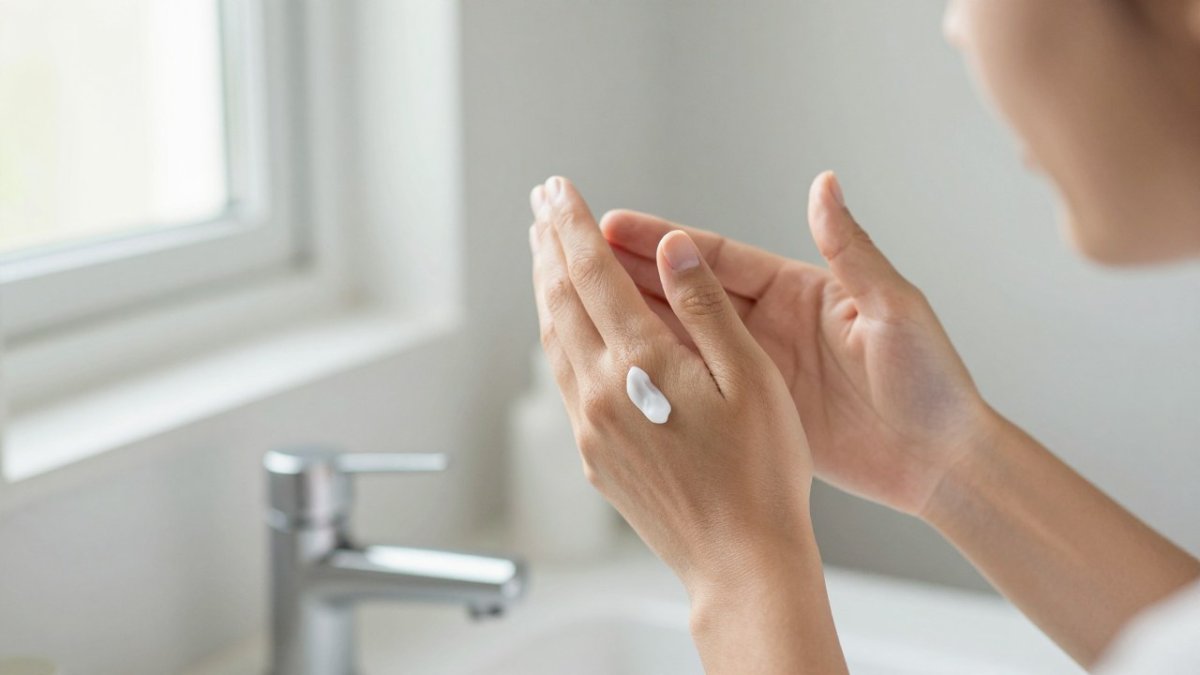
- Gently cleanse with a mild, fragrance-free cleanser
- Apply the moisturizer or healing product your clinic recommends
- Use a broad-spectrum sunscreen every day
- Avoid harsh scrubs, retinoids and exfoliating acids until your skin has healed
Having these products ready before your treatment can make the first few days easier.
Returning to Work After Laser Resurfacing
Recovery advice is more useful when it separates being functional from being fully healed. You can often return to work before your skin looks completely settled, and you can often look settled before the final cosmetic result is visible. Plan around three separate questions: when can I work, when can I exercise, and when can I wear makeup and be social?
Returning to work. For non-ablative treatments, many people return the same day or the next, with mild redness that can be covered if needed. For non-ablative fractional treatments, plan on roughly two to four days away from public-facing work if redness and flaking would be noticeable. For ablative fractional treatments, a common range is five to seven days. For fully ablative CO2 resurfacing, plan on roughly one to two weeks before you are comfortable in a public-facing role, and longer if your job involves heavy physical activity, heat or significant sun exposure. Desk-based and remote work can often resume sooner than customer-facing work.
Exercise and heat. Vigorous exercise, hot yoga, saunas and steam rooms increase blood flow and sweating, which can worsen redness and swelling and, in the early days, raise the risk of complications in healing skin. A common approach is to avoid strenuous activity for about three to seven days after lighter treatments and one to two weeks after deeper resurfacing, then reintroduce it gradually. Ask your practitioner for a specific window based on your treatment.
Makeup and skincare. Makeup is generally avoided until the skin has re-epithelialized. Until then, stick to the gentle cleanser and healing moisturizer your clinic recommends, and keep using broad-spectrum sunscreen once the skin is ready for it.
Social activities and sun. Redness can linger after the skin has healed. Sun exposure is the main modifiable risk for lingering pigment problems, so plan shade, a hat and sunscreen for any outdoor activity during recovery.
Watch out: booking a treatment too close to a fixed event such as a wedding, a photoshoot or a work presentation can leave little room for recovery. Build in a buffer rather than assuming you will be ready by a specific date.
Ask your practitioner for guidance based on your treatment and job demands. Bring this up at your consultation so you can plan your schedule realistically.
The article gives these recovery windows for returning to work and daily activity after laser treatment, by treatment type.
| Treatment type | Work and activity guidance | Note |
|---|---|---|
| Non-ablative | Same day or next day | Mild redness can be covered |
| Non-ablative fractional | Two to four days | Away from public-facing work if flaking is noticeable |
| Ablative fractional | Five to seven days | Common range for return to work |
| Fully ablative CO2 | One to two weeks | Longer if job involves heavy physical activity or sun exposure |
| Strenuous exercise after lighter treatments | Three to seven days | Reintroduce gradually |
| Strenuous exercise after deeper resurfacing | One to two weeks | Ask your practitioner for a specific window |
Normal Healing Versus Warning Signs to Report
Some redness, swelling, tightness and flaking are expected. Contact your clinic promptly if you notice:
- Increasing pain, warmth or swelling after the first few days
- Pus, a foul smell or spreading redness
- Blistering that worsens rather than improves
- Fever or feeling generally unwell
These signs do not always mean something is wrong, but they should be checked by a qualified professional. Our guide to injectable safety standards and qualified providers explains what to look for.
Booking Your Laser Consultation at Balwin Aesthetics
Every skin type and goal is different, so the right recovery plan depends on your individual needs. At Balwin Aesthetics, our physician-led team can explain your options and aftercare steps before you decide. Book your consultation today to get a clear, personalized plan for your laser facial treatment. If hair thinning is your concern, you can also learn what scalp PRP outcomes to expect.
Frequently Asked Questions
How long does it take to recover from a laser facial?
Recovery depends on the laser type and treatment intensity. Lighter treatments generally involve mild redness and flaking, while deeper ablative treatments such as CO2 or erbium resurfacing involve a longer recovery period. Your provider at Balwin Aesthetics can give you a timeline based on the specific treatment planned for your skin.
How many days should I take off work after laser resurfacing?
Time off work depends on the treatment and your job demands, since skin may be crusted, swollen or visibly peeling during the first days after deeper resurfacing. Because work demands differ, discuss your schedule and job environment with your provider before booking so you can plan realistically.
When can I wear makeup after a laser facial?
Makeup is usually avoided until the treated skin has closed over and stopped weeping or crusting. Once your provider confirms the skin barrier is intact, ask them when makeup can be reintroduced.
When should I contact my provider after laser treatment?
Contact your provider if you notice increasing pain, spreading warmth, pus or a foul smell, fever, or swelling that worsens after the first few days instead of improving. Signs of an unusual skin reaction or prolonged blistering also warrant a call. Normal healing typically improves steadily each day, so any change that moves in the opposite direction should be checked promptly.

