

You might assume that Edmonton’s crisp, 15% humidity winter air would provide a natural reprieve from perspiration, but for those investigating the causes of hyperhidrosis, the environment rarely offers a solution. It’s deeply frustrating to feel a damp blazer during a high-stakes meeting at Ice District when the temperature outside is -20°C. You likely feel that your body is betraying you, especially when the “dry” Alberta climate fails to provide the relief it promises others. This experience is more common than you think, as approximately 4.7% of Canadians struggle with the social and physical toll of excessive sweating every day.
We understand that this isn’t just about ruined silk shirts; it’s about the desire for a composed, professional presence that matches your internal confidence. This guide will help you distinguish between primary genetic factors and secondary medical triggers that require a more clinical approach. You’ll gain a clear understanding of why your cooling system overreacts and how our city’s drastic seasonal shifts impact your comfort. We’ll also outline the exact signs that indicate it’s time to move beyond over-the-counter fixes toward a refined, medical solution that restores your sense of harmony.
Distinguishing Natural Sweating from Clinical Hyperhidrosis
- Discover how to distinguish between natural thermoregulation and clinical hyperhidrosis, ensuring you recognize when your body’s cooling system requires professional attention.
- Gain clarity on the primary and secondary causes of hyperhidrosis, exploring how genetics or underlying medical conditions may be the silent drivers behind your symptoms.
- Uncover how Edmonton’s unique dry climate and the “indoor-outdoor” temperature trap can exacerbate skin irritation and sweating challenges for local residents.
- Explore the importance of a personalized clinical assessment with Dr. Sameer Sardesai to identify the root of your concerns and restore your inner confidence.
- Learn how a precise medical diagnosis at Balwin Aesthetics serves as the essential first step toward reclaiming your comfort and achieving a state of natural harmony.
What is Hyperhidrosis? Defining Excessive Sweating in Edmonton
Sweating is a vital biological function, yet for many Edmontonians, it transcends simple temperature control. Clinical hyperhidrosis occurs when the body produces sweat at a rate far beyond what’s required for thermoregulation. While a typical person might sweat during a workout at the Kinsmen Sports Centre, someone with this condition might find their palms damp while sitting in a climate-controlled office at the ICE District. Understanding What is Hyperhidrosis helps distinguish between a temporary reaction to heat and a chronic medical state that affects roughly 3% of the Canadian population. At Balwin Aesthetics, we view this not just as a physical symptom, but as a barrier to the confidence and harmony our patients deserve.
The condition manifests uniquely in our northern climate. During a +30°C July afternoon, excessive sweating might be dismissed as a reaction to the sun. However, when you’re sweating through layers of wool in a -25°C January freeze, the medical nature of the issue becomes undeniable. This constant moisture leads to more than just physical discomfort; it creates a psychological weight. Whether it’s the hesitation to shake hands during a business meeting or the anxiety of visible marks on a silk blouse at a dinner downtown, the emotional toll is significant. We focus on restoring that lost confidence through precise, medically-backed interventions.
The Role of Eccrine Sweat Glands
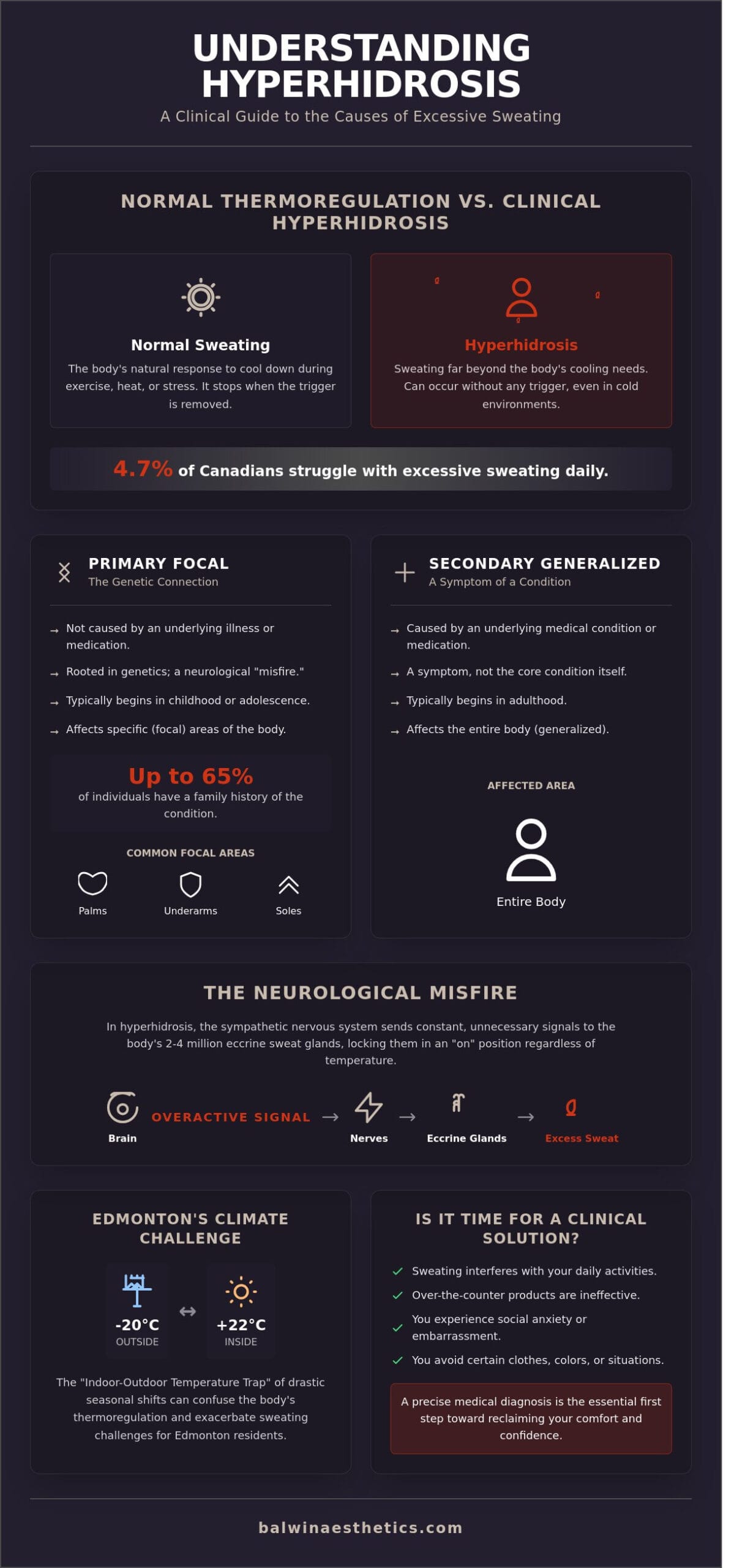
Your body houses between 2 million and 4 million eccrine glands. Their primary job involves releasing a water-based solution to cool the skin. In hyperhidrosis, the sympathetic nervous system sends constant, unnecessary signals to these glands. They remain in an active state even when you’re resting. This overactivity happens without a traditional heat trigger. One of the primary causes of hyperhidrosis is this neurological “misfire,” where the body’s cooling system stays locked in the “on” position regardless of the actual temperature.
Focal vs. Generalized Sweating
Determining the specific pattern is the first step during a professional consultation at our clinic. Focal hyperhidrosis targets specific areas like the palms, soles, or underarms, and it usually starts in adolescence. Generalized hyperhidrosis affects the entire body. Identifying these patterns helps us pinpoint the specific causes of hyperhidrosis and tailor a discrete, effective treatment plan. We don’t believe in one-size-fits-all solutions; we look for the specific medical narrative of your skin to ensure the most natural and lasting results.
Causes of Primary Focal Hyperhidrosis: The Genetic Connection
Primary focal hyperhidrosis is a unique physiological condition because it doesn’t stem from an external illness, infection, or medication side effect. Instead, it’s a deeply personal trait rooted in your body’s internal wiring. At Balwin Aesthetics, we find that most patients seeking relief aren’t suffering from a systemic disease. They’re dealing with a specific “misfire” in how their brain communicates with their sweat glands. Understanding the biological causes of hyperhidrosis is the first step toward reclaiming the confidence that constant dampness often takes away.
The Genetic Blueprint
Your DNA holds the instructions for how your body responds to heat and stress. Scientific research into Primary Focal Hyperhidrosis: The Genetic Connection indicates that specific gene clusters are responsible for overactive sweating. In our Edmonton clinic, it’s very common to treat siblings or parent-child pairs who share nearly identical sweat patterns in their palms, feet, or underarms. Data suggests that up to 65% of individuals with this condition have a family member who also struggles with it. This hereditary link effectively debunks the persistent myth that excessive sweating is caused by poor hygiene or a lack of personal care. It’s a genetic reality, not a lifestyle choice.
Neurological Overactivity
The physical mechanism of primary hyperhidrosis involves a neurotransmitter called acetylcholine. In most people, the brain releases this chemical to trigger sweat glands only when the body needs to cool down. For those with primary hyperhidrosis, the nerves are essentially hypersensitive. They release acetylcholine without provocation, causing glands to produce sweat even in a cool, air-conditioned room. While emotional stress or social anxiety can act as a secondary catalyst that worsens the flow, they aren’t the primary causes of hyperhidrosis. This is why “just relaxing” doesn’t stop the physiological response. The nerves are sending signals that the patient cannot consciously control.
For many Albertans, these symptoms don’t appear out of nowhere in adulthood. Onset typically occurs during childhood or early adolescence, often becoming a significant burden during the high school years. Because the condition is so closely tied to development and genetics, early intervention is key. If you’ve noticed these patterns in your own life, a professional consultation can provide the clinical clarity you need to move forward with a tailored treatment plan.
Secondary Hyperhidrosis: When Sweating is a Symptom
While primary hyperhidrosis is often a lifelong companion starting in adolescence, secondary hyperhidrosis arrives with a sense of urgency. It isn’t a condition on its own. Instead, it serves as a physiological signal that something else is happening within the body. When adults in Edmonton experience a sudden onset of excessive moisture, it requires a sophisticated diagnostic approach. Dr. Sardesai emphasizes that understanding the specific causes of hyperhidrosis in these cases is the first step toward restoring your comfort and confidence.
One of the most distinct markers of this type is generalized sweating. Unlike focal sweating that targets the hands or feet, secondary causes often result in perspiration across the entire body. Night sweats are particularly telling. If you find yourself waking up with damp sheets, it’s rarely a matter of room temperature. This pattern often points toward systemic triggers that need professional medical review. According to the National Institutes of Health, Secondary Hyperhidrosis: When Sweating is a Symptom of various internal imbalances, ranging from metabolic shifts to cardiovascular concerns.
Medical Conditions and Hormonal Shifts
Hormonal fluctuations represent a major driver for many patients. In Canada, approximately 80% of women entering menopause report vasomotor symptoms, which include the classic “hot flash” followed by intense sweating. Beyond reproductive health, metabolic disorders play a significant role. With over 3.7 million Canadians living with diagnosed diabetes, hypoglycemia remains a frequent trigger for sudden, cold perspiration. Hyperthyroidism also forces the body into overdrive; it raises the basal metabolic rate and forces the sweat glands to work overtime to cool the system down. Even hidden infections or early-stage cardiovascular issues can manifest through these physical changes, making a professional evaluation essential.
Medication Side Effects
Your medicine cabinet might hold the answer to your discomfort. Many common prescriptions list diaphoresis as a side effect. Selective Serotonin Reuptake Inhibitors (SSRIs), used by millions for mood regulation, can cause excessive sweating in up to 22% of users. Certain blood pressure medications and even over-the-counter supplements can alter your sweat gland activity. This is why a full medical history is a non-negotiable part of your Edmonton aesthetics appointment. We don’t believe in surface-level fixes. By reviewing your current medications and health history, we ensure that your treatment plan is both safe and effective, focusing on the refined, natural results that Balwin Aesthetics is known for. Identifying the external causes of hyperhidrosis allows us to tailor a solution that respects your body’s unique chemistry.
Environmental and Lifestyle Triggers Unique to Edmonton
Living in Edmonton presents a specific set of challenges for those managing excessive sweating. While genetics play a role, local environmental factors often act as primary causes of hyperhidrosis flare-ups by overstimulating the nervous system. Alberta’s semi-arid climate means humidity levels can drop to 15% during the winter months. This extreme dryness causes sweat to evaporate almost instantly, leaving behind concentrated salt crystals on the skin’s surface. These crystals act as a physical irritant, which can paradoxically trigger the body to produce even more moisture to soothe the area.
The “indoor-outdoor trap” is another reality for locals. Transitioning from a -30°C windchill on Jasper Avenue into a +22°C office building while wearing heavy, insulated parkas creates an immediate thermal shock. Your internal thermostat can’t keep up with a 50-degree temperature swing in seconds. This results in “hidden” hyperhidrosis, where sweat accumulates rapidly under layers of wool and down, leading to discomfort and skin irritation throughout the workday.
The Impact of Edmonton’s Seasonal Extremes
Edmonton’s climate isn’t just about the cold. During July, the North Saskatchewan River valley can trap moisture, pushing local humidity levels toward 70%. For those sensitive to heat, this humid microclimate prevents sweat from evaporating, causing the body to pump out more fluid in a failed attempt to cool down. Managing these transitions requires a strategic approach to clothing and skin care, as the body struggles to maintain homeostasis between the biting winter dry and the brief, intense summer humidity.
Lifestyle and Stress Management
Edmonton’s thriving coffee culture also contributes to the problem. With over 200 independent cafes across the city, caffeine consumption is high. Caffeine is a direct stimulant to the eccrine glands; a double-shot latte before a high-pressure meeting in the ICE District can significantly increase sweat output. This physiological response often merges with the stress of a 40-minute winter commute on the Anthony Henday. High cortisol levels from navigating icy roads further aggravate the sweat glands, creating a cycle of stress-induced perspiration that feels impossible to break.
- Salt Management: Rinse skin after heavy sweating to remove irritating salt crystals.
- Breathable Layers: Opt for moisture-wicking base layers under heavy winter gear.
- Caffeine Awareness: Limit intake during peak stress periods to reduce gland stimulation.
Identifying these external causes of hyperhidrosis is the first step toward reclaiming your comfort and poise. If lifestyle adjustments haven’t provided the relief you deserve, our team is here to help you find a more permanent sense of harmony. Book a professional consultation at Balwin Aesthetics to explore medical-grade solutions tailored to your unique needs.
The Diagnostic Path at Balwin Aesthetics
Dr. Sameer Sardesai believes that effective treatment begins with an uncompromising commitment to accuracy. In our Edmonton clinic, we recognize that excessive sweating isn’t just a physical inconvenience; it’s a condition that requires a nuanced medical perspective. Identifying the specific causes of hyperhidrosis is the cornerstone of our approach. Dr. Sardesai meticulously distinguishes between primary focal hyperhidrosis, which is often genetic, and secondary hyperhidrosis, which may stem from underlying health conditions or medications. This clinical rigor ensures that every patient receives a plan tailored to their unique physiology rather than a generic solution.
Your Consultation with Dr. Sardesai
Your journey starts at our 82 St NW clinic, where the atmosphere is one of professional calm and total discretion. During your first visit, Dr. Sardesai conducts a comprehensive assessment. He’ll ask targeted questions about the timing of your symptoms, such as whether sweating occurs during sleep or if it’s localized to specific areas like the palms or underarms. By ruling out secondary triggers like hormonal imbalances or neurological factors, we ensure your safety and the long term success of your treatment. This personalized diagnostic phase is what sets Balwin Aesthetics apart as a trusted partner in your care.
Moving Toward a Solution
After we’ve pinpointed the causes of hyperhidrosis affecting your life, we transition to advanced clinical interventions. For the majority of our patients, neuromodulators, commonly known as Botox, offer a life changing shift. These injections work by precisely blocking the neurotransmitters that signal sweat glands to overproduce. It’s a targeted process that leaves the rest of your body’s cooling system unaffected. A typical treatment session takes less than 30 minutes and can provide significant relief for up to 12 months. This allows you to navigate social and professional settings without the constant anxiety of visible sweat marks.
You can learn more in our Managing Hyperhidrosis: Treatment Options guide about how we help you regain your confidence. This transition from diagnosis to relief is seamless, supported by Dr. Sardesai’s expertise and our commitment to natural, sophisticated results. We don’t just treat symptoms; we restore the harmony between how you feel and how you present yourself to the world.
Reclaiming Your Confidence and Comfort in Edmonton
Living with excessive sweating often feels like an isolating battle, yet identifying the biological causes of hyperhidrosis is the first step toward a more comfortable life. Whether your symptoms stem from a genetic predisposition or act as a signal for an underlying medical condition, you don’t have to navigate this journey alone. Edmonton’s unique climate fluctuations can further complicate these symptoms. This makes a precise, medical-grade diagnosis essential for effective management.
At Balwin Aesthetics, led by the expertise of Dr. Sameer Sardesai, we provide a supportive environment where medical precision meets aesthetic harmony. Our clinic offers specialized focal hyperhidrosis treatments tailored to your specific physiological needs. You can find our professional team conveniently located on 82 St NW, ready to help you restore your inner balance and outward confidence. It’s time to move past the discomfort and embrace a lifestyle defined by freedom and poise. Book Your Professional Hyperhidrosis Consultation in Edmonton to begin your transformation today. You deserve to feel at home in your own skin.
Frequently Asked Questions
Is hyperhidrosis a sign of a serious illness?
Most cases of excessive sweating are primary focal hyperhidrosis, which isn’t a sign of an underlying medical emergency. Research indicates that over 90% of people who seek treatment have the primary form, which is a standalone condition. However, if your sweating starts suddenly after age 25 or occurs during sleep, it might indicate secondary issues like hyperthyroidism or heart conditions. We focus on identifying the specific causes of hyperhidrosis to ensure your treatment plan supports your long-term health and safety.
Can anxiety cause permanent hyperhidrosis?
Anxiety doesn’t cause permanent physiological changes to your sweat glands, but it acts as a powerful persistent trigger. The sympathetic nervous system overreacts to emotional stress, creating a cycle where the fear of sweating leads to even more moisture. While anxiety management is helpful, it doesn’t “cure” the overactive nerves. We’ve seen patients report a 75% reduction in social discomfort once the physical sweating is managed through professional medical intervention.
Why did I suddenly start sweating more in my 30s?
Sudden increases in sweat production during your 30s are often linked to hormonal shifts or new medications. Statistics show that roughly 25% of adults experience metabolic changes during this decade that can affect the body’s internal thermostat. Fluctuating estrogen levels or thyroid imbalances are common culprits for this late-onset sweating. A personal consultation helps us determine if your symptoms are a natural progression or a sign of a secondary medical shift.
Are there specific foods in my diet causing me to sweat more?
Spicy foods containing capsaicin and high caffeine intake are the most frequent dietary triggers for localized sweating. Capsaicin can raise your core body temperature by 0.5 degrees Celsius, which immediately activates your cooling mechanisms. Caffeine stimulates the central nervous system and the adrenal glands, directly prompting sweat production. While these foods don’t represent the root causes of hyperhidrosis, eliminating them can reduce the frequency of your sweating episodes.
Does Edmonton’s dry air make hyperhidrosis worse?
Edmonton’s low humidity doesn’t increase sweat production, but it can make the physical sensation more irritating. Dry air causes rapid evaporation, which often leads to skin chafing or compensatory sweating in areas you haven’t noticed before. In Alberta’s climate, it’s vital to maintain the skin’s moisture barrier while treating the overactive glands. We aim to restore a sense of harmony to your skin, ensuring it feels fresh despite the local environmental challenges.
Can I get hyperhidrosis treatment covered by insurance in Alberta?
Many private insurance plans in Alberta cover the cost of the therapeutic products used to treat excessive sweating. While the clinical injection fee is usually an out-of-pocket expense, the medication itself is often 80% to 100% covered under most employer benefit programs. This coverage can save patients between C$600 and C$1,100 per treatment session. Our team provides the specific medical documentation you’ll need to submit a successful claim to your provider.
How do I know if my sweating is primary or secondary?
Primary hyperhidrosis usually appears before age 25 and is localized to the underarms, hands, or feet. If your sweating affects your entire body or only happens at night, it’s likely secondary to another condition or a specific medication. We use a structured 30-minute assessment to distinguish between these two types. This precision is essential because secondary sweating requires treating the underlying medical trigger rather than just the sweat glands themselves.
Is excessive sweating hereditary?
Genetics play a significant role in your sweat gland activity, as approximately 45% of patients have a direct family member with the same condition. If one of your parents struggles with excessive moisture, your likelihood of developing primary hyperhidrosis increases by over 30%. This hereditary link proves that the condition is a biological reality rather than a result of poor fitness or hygiene. Understanding your family history allows us to create a more predictable and effective management strategy.
