

What if the most intimidating phase of your skin’s renewal was actually the clearest evidence that your treatment is working exactly as intended? It’s natural to feel a sense of trepidation when researching what to expect after a chemical peel, especially when you’re worried about looking “burnt” or choosing the wrong post-care products. You desire a refined, glowing complexion, but the vulnerability of this biological reset requires professional-grade protection against environmental stressors.
We understand that true beauty is rooted in safety and professional expertise. This guide provides a medically-backed recovery timeline and expert aftercare strategies to help you manage side effects with absolute confidence. You’ll discover how to protect your results from hyperpigmentation, why professional supervision is vital following the latest FDA safety warnings on high-concentration acids, and the precise steps needed to transition from the initial peeling phase to a state of lasting, natural harmony.
Chemical Peel Recovery Essentials: Day-by-Day Phases & Aftercare
- Understand the specific phases of a “controlled injury” and how your chosen peel depth determines your unique healing path toward collagen stimulation.
- Gain a clear day-by-day understanding of what to expect after a chemical peel to confidently manage the transition from initial peeling to a renewed glow.
- Learn how to simplify your skincare routine by prioritizing physical sunblock and pausing active ingredients like Retin-A to protect your delicate skin investment.
- Identify critical “red flags” and know exactly when to consult your specialist to ensure your recovery remains on a safe and professional track.
- Discover why the 14-day mark is the essential window for evaluating your final results and planning your next steps for maintaining a harmonious complexion.
The Chemical Peel Recovery Timeline: A Day-by-Day Guide
A chemical peel is essentially a “controlled injury” designed to stimulate the production of new collagen and elastin deep within the dermis. This intentional disruption of the skin’s surface might sound intimidating, but it’s the foundation of true rejuvenation. The inflammatory response acts as a necessary biological trigger that signals the body to initiate cellular repair and skin rejuvenation. By shedding old, damaged cells, you prepare for the “reveal” phase where fresh tissue emerges to create a more harmonious complexion.
Understanding what to expect after a chemical peel begins with identifying the depth of your treatment. Light peels often result in subtle flaking, while medium or deep peels involve a more intensive biological reset. This distinction dictates your specific timeline and the intensity of the side effects you’ll manage during the healing process. We focus on a tailored approach to ensure your skin’s unique character is preserved while achieving a refreshed, natural look.
To better understand the visual progression of this healing journey, watch this helpful video:
The First 48 Hours: Redness and Sensitivity
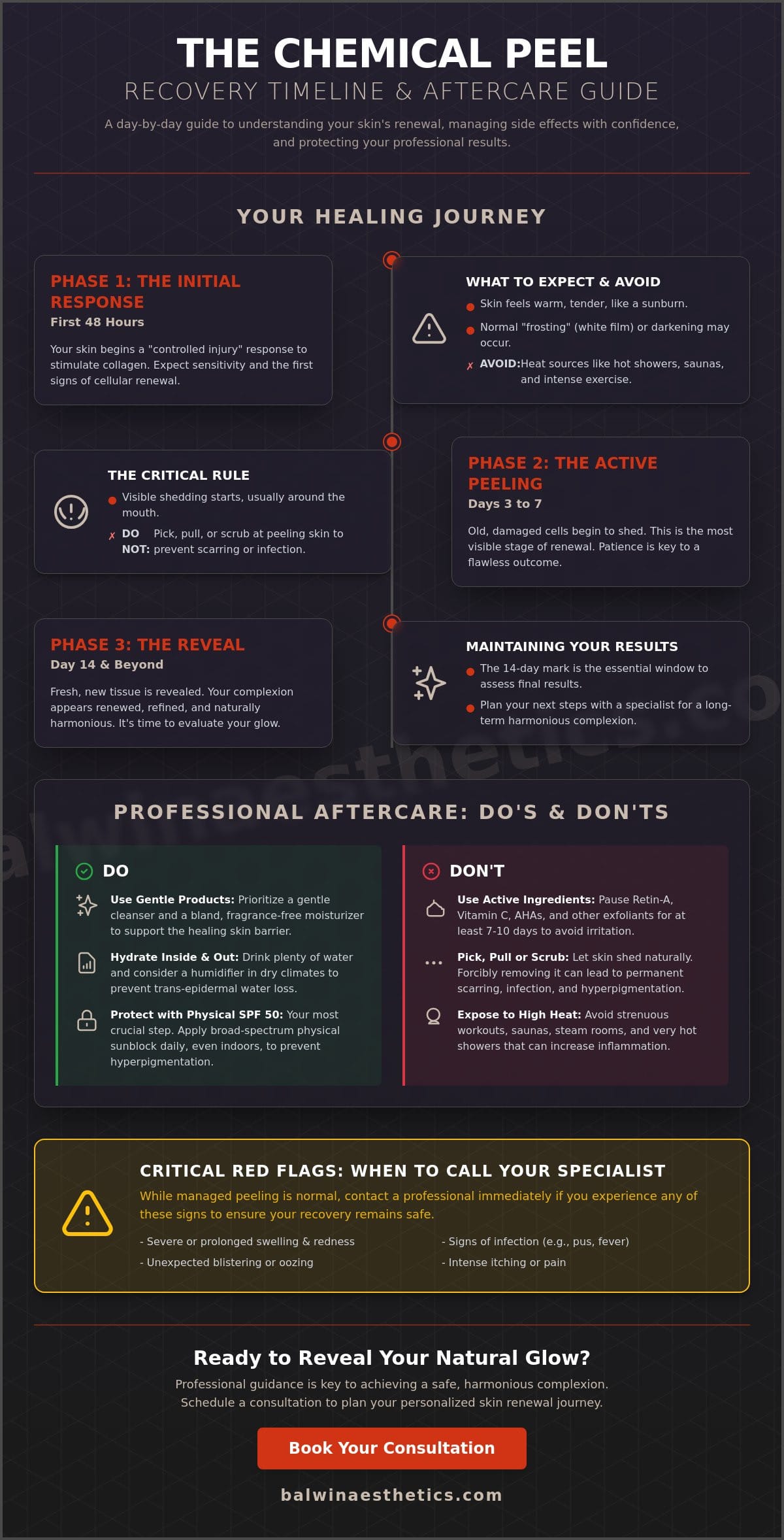
Immediately following your procedure, your skin will likely feel warm and tender, similar to a mild sunburn. You may observe “frosting”—a temporary white film—or areas of skin darkening as the acid interacts with your tissue. These are normal milestones in the healing process. During this window, it’s vital to avoid all heat sources, including hot showers, saunas, and strenuous exercise, as these can exacerbate inflammation and compromise your professional results.
Days 3 to 7: The Active Peeling Phase
Around day three, the shedding process typically becomes visible, usually starting around the high-movement areas of the mouth and nose before migrating outward. You must resist the urge to pick, pull, or scrub at the peeling skin; doing so increases the risk of permanent scarring or infection. For a detailed visual guide on managing this stage, refer to our chemical peel recovery in Edmonton resource, which outlines the daily progression toward a refined, natural glow.
Professional Aftercare: Protecting Your Skin Investment
The recovery phase is where your investment in your skin’s health is truly solidified. To maintain the integrity of your new tissue, we advocate for a disciplined, minimalist approach. For at least 7-10 days, you’ll need to pause all “active” ingredients such as Retin-A, Vitamin C, and AHAs. These potent compounds can cause excessive irritation to a healing barrier that is currently focused on cellular repair. Instead, prioritize a gentle cleanser and a bland, fragrance-free moisturizer. While understanding what to expect after a chemical peel includes managing the peeling itself, these topical choices are what prevent underlying inflammation from turning into lasting damage.
Hydration is a dual-process that requires attention both internally and externally to support the skin barrier as it reforms. According to the Mayo Clinic’s guide to chemical peels, consistent moisture and diligent sun protection are the primary defenses against post-procedure complications. Physical sunscreens are superior post-peel because they provide an immediate reflective shield without the heat-generating chemical reactions that can exacerbate post-procedure sensitivity.
Skincare Adjustments for the Edmonton Climate
Edmonton’s unique climate, characterized by low indoor humidity and dry Alberta air, can accelerate trans-epidermal water loss during your recovery. If your skin feels uncomfortably tight, we suggest using a humidifier in your bedroom to provide a supportive microclimate. Incorporating occlusive ointments can also prevent the skin from feeling “cracked” in our dry environment. Your broader skin rejuvenation plan must account for these seasonal shifts to ensure your results remain vibrant and natural.
The Golden Rule: Sun Protection and SPF
UV protection is your most important daily ritual. Apply a broad-spectrum SPF 50 every morning, even on cloudy days or when staying indoors. Clouds don’t filter the UVA rays that can trigger hyperpigmentation on vulnerable skin. We also recommend wearing wide-brimmed hats for mechanical protection during your commute. If you’re looking for a curated selection of medical-grade products designed for your specific needs, connecting with our team for a follow-up can provide that extra layer of security and confidence.
Maximizing Results: When to See Your Specialist Again
The true beauty of a professional treatment reveals itself once the initial healing phase concludes. By the 14-day mark, your skin has typically settled, and the fresh, vibrant tissue is fully visible. This is the optimal window to evaluate your progress. While Cleveland Clinic on chemical peel aftercare notes that recovery speed depends on the depth of the acid used, most patients see their final results emerge during this second week. Understanding what to expect after a chemical peel involves recognizing that this “new” skin is still maturing and requires continued professional guidance.
Safety is the cornerstone of the Balwin Aesthetics experience. While minor sensitivity is expected, you must monitor for specific “red flags” that require a professional assessment. Please contact us immediately if you experience excessive swelling, persistent oozing, or a fever. These symptoms are rare but require swift attention to ensure your recovery remains safe. For those seeking significant correction of stubborn pigmentation or deep texture issues, Dr. Sameer Sardesai often recommends a series of 3 to 6 peels. This phased approach allows for progressive dermal remodeling without compromising the skin’s natural integrity.
Synergistic Treatments for Enhanced Beauty
We often achieve the most harmonious results by combining different aesthetic modalities. For example, Botox Edmonton injections can be strategically timed with your peels to soften movement-based lines while the peel refines the skin’s surface. Another sophisticated option involves alternating chemical peels with microneedling. This combination targets both the epidermis and the deeper dermis, creating a comprehensive plan for collagen synthesis and long-term skin health.
Booking Your Follow-Up Consultation
Your journey doesn’t end when the peeling stops. We suggest scheduling a review to adjust your home skincare regimen based on your new skin profile. As your skin becomes smoother and more receptive, the products you used previously might need fine-tuning. This follow-up allows us to identify the next steps for maintaining your radiant, natural-looking results and ensures that your skin remains in a state of perfect balance.
Embracing Your Journey to Refined Radiance
Navigating the days following your treatment doesn’t have to be a source of anxiety. When you have a clear understanding of what to expect after a chemical peel, the transition from initial sensitivity to a vibrant, natural glow becomes an empowering experience rather than a period of uncertainty. By respecting the biological timeline of cellular renewal and prioritizing professional-grade protection against Edmonton’s unique climate, you ensure that every phase of healing serves your ultimate aesthetic goals. Whether you’re managing the first 48 hours of redness or evaluating your final results at the 14-day mark, consistency remains your greatest ally in achieving lasting skin harmony.
Under the expert guidance of Dr. Sameer Sardesai, our clinic provides customized medical-grade peel formulations tailored to your unique facial character. As a leader in Edmonton-based expert skin rejuvenation, we are committed to a process that values safety as much as it does aesthetic excellence. We invite you to book your personalized chemical peel consultation with Balwin Aesthetics today to begin your path toward a more confident, self-assured version of yourself. Your skin possesses a remarkable ability to renew itself; we’re simply here to provide the precision and care it deserves.
Frequently Asked Questions
How long does it take to look “normal” after a chemical peel?
Most patients return to a “normal” social appearance within 7 to 10 days, though this timeline depends on the specific depth of your treatment. Light peels often resolve in 3 to 5 days, while medium treatments require a full week for the active shedding to subside. By day 14, any lingering pinkness typically transitions into the clear, luminous complexion that signifies a successful biological reset.
Can I wear makeup during the chemical peel recovery process?
We recommend waiting at least 7 days or until the peeling process is entirely complete before applying any makeup. Introducing foreign pigments and binders to vulnerable skin can trigger inflammation or lead to unwanted infections. Once your specialist confirms that the new skin barrier has stabilized, you can safely resume your cosmetic routine, preferably using high-quality mineral products that allow the skin to breathe.
What happens if I accidentally pick at my peeling skin?
Manually picking or pulling at shedding skin significantly increases the risk of permanent scarring and hyperpigmentation. When you force the “reveal” phase, you expose immature tissue to the air before it has developed its own natural protection. This can lead to uneven texture and prolonged redness. It’s vital to allow the old cells to detach on their own through consistent hydration and gentle cleansing.
Is it normal to break out after a chemical peel?
Experiencing a temporary breakout is a normal part of what to expect after a chemical peel, as the treatment draws deep-seated impurities to the surface. This process, often called purging, occurs because the acid stimulates rapid cellular turnover. These minor blemishes are usually short-lived and indicate that your pores are being thoroughly refined. If you feel concerned about the intensity of a breakout, our experts can provide a tailored solution to calm the skin.
