
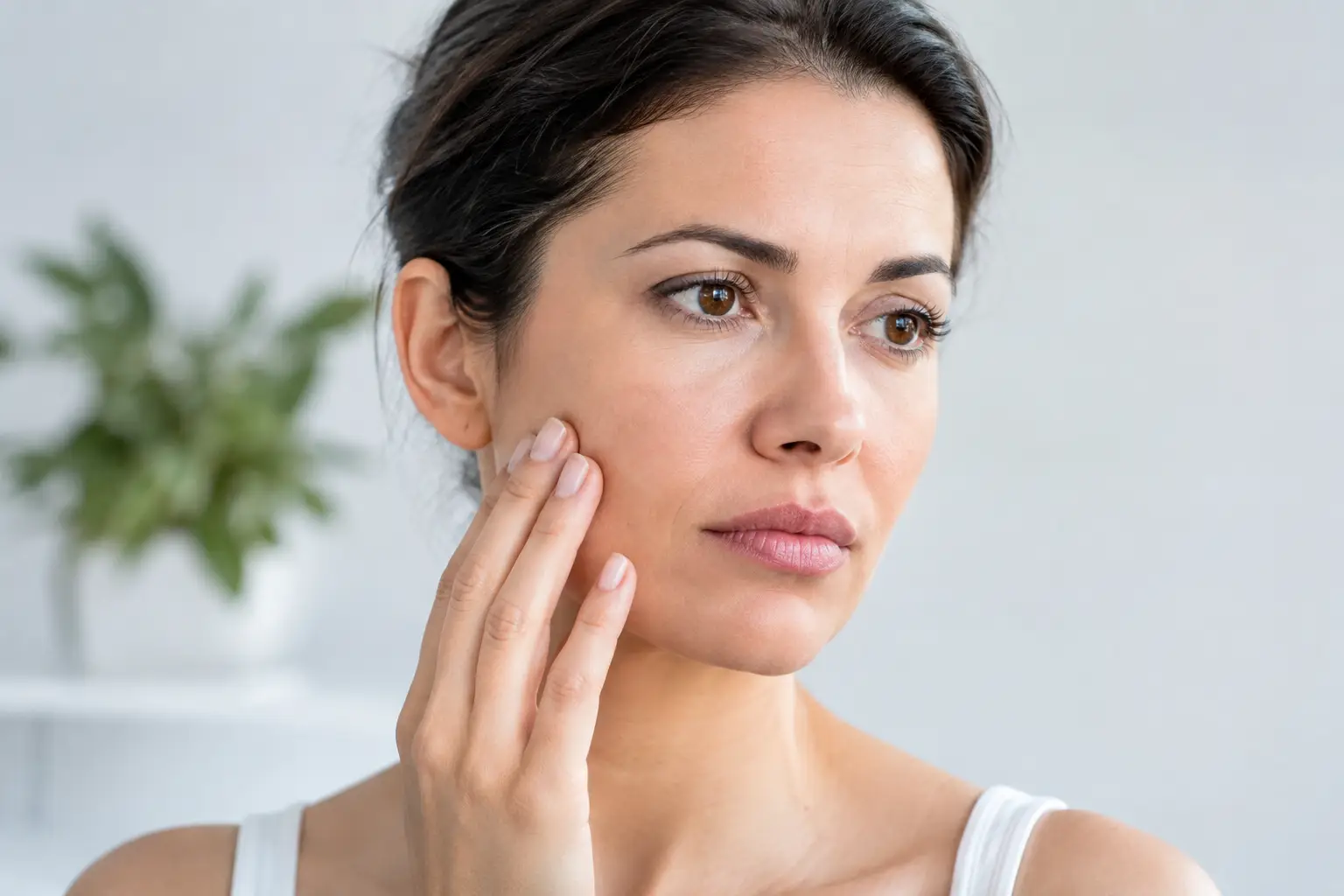
A face can look tired, hollow, or less defined even when the skin itself is relatively smooth. That is because aging is not only about lines and wrinkles. When patients ask, what causes facial volume loss, the answer usually involves gradual changes beneath the surface: shifts in facial fat, reduced collagen, bone remodeling, and changes in skin support.
Facial volume loss is a normal part of aging, but it does not affect every face in the same way. Some people first notice flatter cheeks. Others see shadows beneath the eyes, hollowing at the temples, deeper smile lines, or a softer jawline. Understanding the cause helps create a more thoughtful treatment plan – one that restores balance rather than simply adding fullness.
What Causes Facial Volume Loss Over Time?
The face is supported by a layered structure of bone, fat compartments, muscle, ligaments, and skin. Over time, each of these layers can change. The result is not always a dramatic loss of volume. Often, volume has shifted downward or become less evenly distributed, creating a more tired or drawn appearance.
Changes in Facial Fat Compartments
Facial fat is not one continuous layer. It is organized into separate compartments that provide contour and soft support through the cheeks, temples, under-eye area, and lower face. With age, some compartments shrink while others descend or become more prominent.
For example, reduced midface volume can make the under-eye area appear more hollow and allow nasolabial folds to look deeper. Loss of support at the temples may create a narrower, more skeletal facial shape. In the lower face, descent of tissue can contribute to jowls and reduced jawline definition. This is why treating only the line that is visible is not always the best approach. Restoring support higher in the face may produce a more natural result.
Bone Remodeling and Structural Support
The facial skeleton also changes with age. Bone remodeling can gradually reduce support around the eye sockets, cheeks, upper jaw, and jawline. These changes are subtle, but they influence the overlying soft tissue.
As structural support decreases, the cheeks may appear flatter, the area around the mouth may look less supported, and the lower face can begin to look heavier. A skilled injector considers this foundation when evaluating facial aging. The goal is not to recreate a younger face exactly, but to improve proportion and support in a way that still looks like you.
Collagen, Elastin, and Hyaluronic Acid Decline
Collagen gives skin strength, elastin helps it rebound, and naturally occurring hyaluronic acid helps retain moisture and softness. Production of all three decreases over time. Skin becomes thinner, less resilient, and less able to hold tissue in its former position.
This change can make volume loss more visible. Even modest hollowing may look more pronounced when the skin is less firm or dehydrated. Fine lines, crepey texture, and laxity often occur alongside volume changes, which is why many patients benefit from a plan that addresses both skin quality and facial contour.
Muscle Activity and Repetitive Movement
Expression is part of a healthy, natural-looking face, but repeated muscle movement can eventually contribute to etched lines and folds. Dynamic wrinkles from smiling, squinting, frowning, or raising the brows do not directly cause volume loss. However, when they occur alongside reduced skin support and volume, they can make facial aging appear more pronounced.
Neuromodulator treatments such as Botox can soften certain expression lines by relaxing targeted muscles. They do not replace lost facial volume, but they may complement a broader rejuvenation plan when appropriate.
Lifestyle Factors That Can Make Volume Loss More Noticeable
Genetics and age are major drivers, yet lifestyle can affect how quickly volume loss becomes visible and how the skin responds to it. Smoking is particularly significant because it impairs circulation and accelerates collagen breakdown. Chronic sun exposure can also damage collagen and elastin, contributing to thinner, less supported skin.
Significant weight loss may reduce facial fullness, especially in the cheeks and temples. This is not inherently unhealthy, and a leaner face can be a desired outcome for some people. Still, rapid or substantial changes in weight can reveal hollowing that was previously less noticeable.
Other factors can include poor sleep, ongoing stress, dehydration, illness, and nutritional deficiencies. These do not always create true structural volume loss, but they can make the face look temporarily depleted or emphasize existing shadows. A careful consultation distinguishes between a temporary change in appearance and a concern that may respond well to aesthetic treatment.
Where Facial Volume Loss Usually Appears First
Volume loss often develops gradually, so patients may notice photographs looking different before they identify a single area of concern. Common areas include the temples, cheeks, tear troughs, pre-jowl area, lips, and the region around the mouth.
The midface is especially important. When the cheeks lose support, it can affect the appearance of the under-eyes, smile lines, and jawline at the same time. Conversely, not every concern is caused by volume loss. Puffiness under the eyes, for instance, may be related to fat pads, fluid retention, anatomy, or skin laxity. Adding filler without a full assessment can worsen rather than improve certain concerns.
This is one reason physician-led evaluation matters. Facial rejuvenation should account for your anatomy, skin quality, prior treatments, health history, and the way your face moves in real life.
Can Dermal Fillers Restore Lost Volume?
Dermal fillers are commonly used to restore or refine facial volume without surgery. Many fillers are made with hyaluronic acid, a substance that naturally occurs in the body. Depending on the product and treatment area, filler may be used to support the cheeks, soften temple hollowing, improve chin or jawline balance, or refine lines around the mouth.
The best results are usually conservative and strategic. Rather than filling every line, an experienced provider may prioritize areas that restore facial support and proportion. This approach can help the face look rested and refreshed without appearing overfilled.
Results and longevity vary based on the treatment area, filler type, metabolism, and individual anatomy. Some patients need only subtle correction, while others may benefit from treatment in stages. A personalized plan also allows the provider to reassess how the face responds before adding more product.
When Skin Treatments May Be Part of the Plan
Filler is not the only option for patients concerned about facial aging. If texture, fine lines, pigmentation, or laxity are major concerns, skin-focused treatments may be equally valuable. Microneedling, PRP, chemical peels, and certain laser treatments can support collagen renewal and improve overall skin quality.
These treatments do not replace deeper structural volume in the way filler can, but they can improve the surface of the skin and help facial rejuvenation look more complete. The right combination depends on whether the primary issue is hollowing, sagging, wrinkles, texture, pigmentation, or several concerns occurring together.
Choosing a Natural-Looking Approach
A natural result begins with an accurate diagnosis. Facial volume loss is not a single problem with a single solution, and treatment should not be based on a trend, a filtered photo, or a desire to copy someone else’s facial shape.
At Balwin Aesthetics, individualized consultations focus on the relationship between facial structure, skin quality, and your personal goals. A measured plan can address the areas that matter most while preserving the expressions and features that make your face uniquely yours.
If you are noticing hollow cheeks, deeper folds, under-eye shadows, or a loss of definition, an in-person assessment can clarify what is changing and which options are appropriate. The most effective rejuvenation often looks less like a transformation and more like looking well-rested, balanced, and confidently yourself.
