
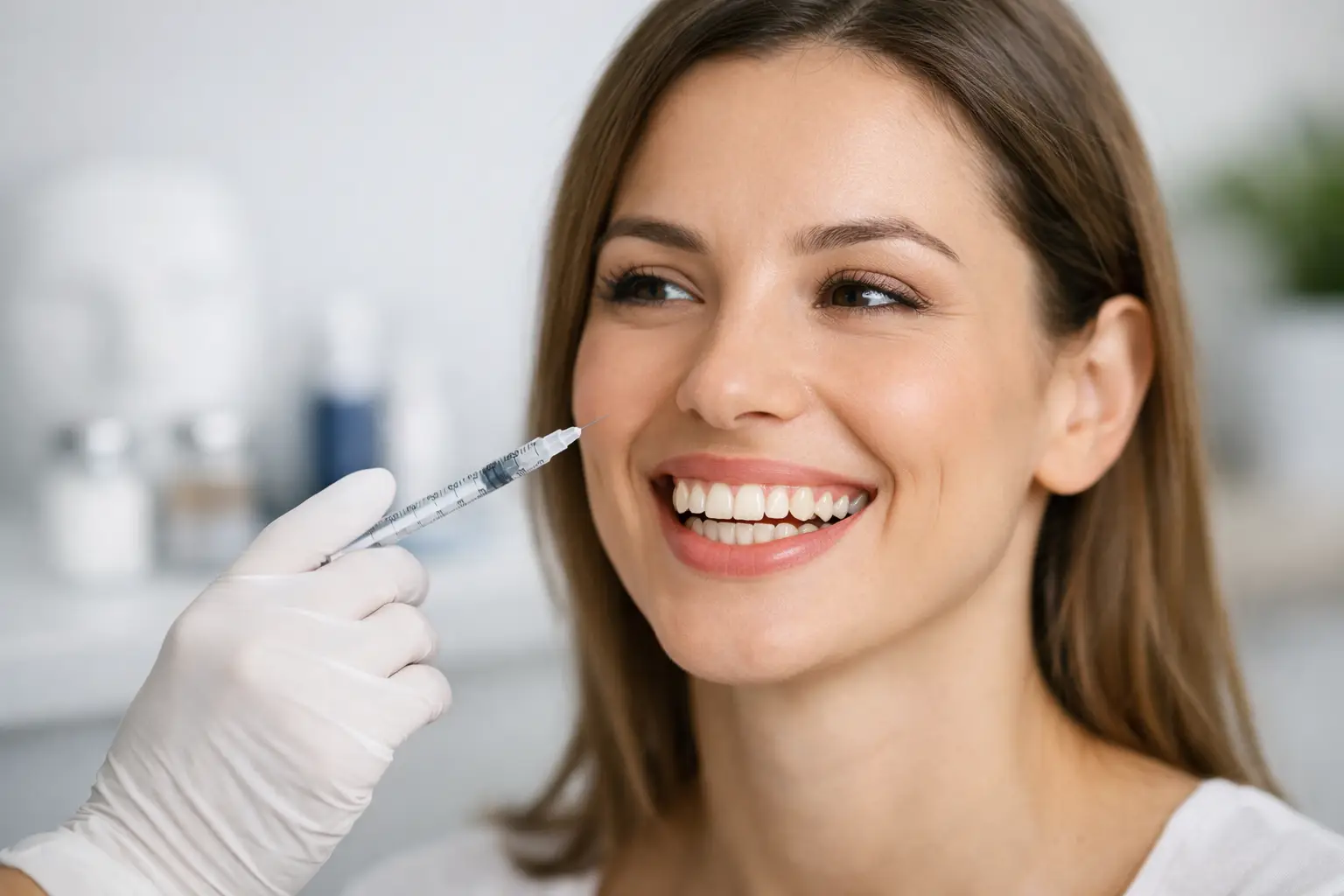
A smile can show more gum tissue than you would prefer even when your teeth are healthy and well cared for. For many people, the concern is not their smile itself, but how strongly the upper lip lifts when they laugh or smile for a photo. Botox for gummy smile is a precise, non-surgical option that can soften this movement and create a more balanced smile without changing your teeth.
The key word is precise. A natural-looking result depends on understanding why your gums show, how your lip moves, and how much adjustment will suit your facial expressions. When treatment is approached conservatively by a qualified medical injector, the goal is not to remove personality from your smile. It is to preserve its warmth while reducing the amount of gum exposure that feels distracting to you.
What Causes a Gummy Smile?
A gummy smile, also called excessive gingival display, has several possible causes. In some cases, the upper lip rises more than average because the muscles that elevate it are particularly active. This is the situation Botox can often address effectively.
However, gum show can also relate to the length of the upper lip, the position of the teeth and jaw, altered tooth eruption, or the shape of the gums. Some people have a combination of factors. This is why a photo alone is not enough to determine the right treatment. A medical assessment should include how your lips rest at ease, how they move during a natural smile, your dental history, and the overall proportions of your face.
If hyperactive upper-lip muscles are the primary cause, a small amount of neuromodulator may be an excellent fit. If tooth position or gum anatomy is the main concern, dental or surgical options may be more appropriate. Honest recommendations matter, especially when the best result may require a different approach.
How Botox for Gummy Smile Works
Botox is a neuromodulator that temporarily reduces communication between a targeted muscle and the nerve signals that tell it to contract. For gummy smile treatment, it is placed in carefully selected areas around the upper lip where the lip-elevator muscles are active.
As these muscles relax slightly, the upper lip does not pull as high when you smile. The result is less visible gum tissue and a smile that can appear more proportionate. The treatment does not fill the lips, reshape the gums, or affect the health of your teeth.
The amount used is typically small. That is a benefit, but it also leaves little room for imprecise placement or overcorrection. Too much product, or treatment in the wrong location, can interfere with normal upper-lip movement and affect the way a smile looks. A physician-led consultation and injector experience are particularly valuable for a treatment where subtle changes make a visible difference.
What the Appointment Is Like
A gummy smile Botox appointment is generally brief. Your provider will first assess your facial movement, often asking you to smile naturally and fully. They may mark the planned injection points before using a fine needle to place a small, customized dose.
Most patients describe the injections as quick pinches. There is no required downtime, and you can usually return to work or regular plans afterward. Minor redness, tenderness, or pinpoint swelling at the injection sites can occur, but these effects commonly settle quickly.
You will generally be advised to avoid rubbing or massaging the treated area immediately after your appointment. Your provider may also recommend avoiding strenuous exercise, excessive heat exposure, and lying flat for a short period. Follow the specific aftercare instructions you receive, as recommendations can be tailored to your treatment plan and medical history.
When Will You See Results?
Botox does not change muscle activity instantly. Most people begin noticing a gradual softening of upper-lip elevation within several days, with the full effect typically visible around two weeks after treatment. This timeline is one reason it is wise to schedule well before a major event rather than immediately before it.
Results commonly last about three to four months, although this varies. Your metabolism, muscle strength, dose, and prior neuromodulator treatments can all influence longevity. Regular maintenance can help you preserve your preferred result, but treatment should always be reassessed rather than automatically repeated at the same dose.
A follow-up review can be useful for first-time patients. It allows the provider to evaluate your result after the product has fully settled and make informed recommendations for future visits. The best dosing plan is often refined over time as your provider learns how your facial muscles respond.
Who Is a Good Candidate?
The ideal candidate is someone whose gummy smile is mainly caused by an overactive upper lip and who wants a temporary, minimally invasive option. You should have realistic expectations: Botox can reduce gum display, but it will not correct every structural cause of a gummy smile.
It may be a particularly appealing choice if you are not ready for more involved dental or surgical treatment, or if you would like to see how a more relaxed upper-lip position suits your appearance before considering other options. Because the effect is temporary, it offers flexibility.
A consultation is essential if you have a history of facial asymmetry, prior lip procedures, neuromuscular conditions, allergies to treatment ingredients, or are pregnant or breastfeeding. Be open about all medications and supplements you take. Your provider needs this information to assess safety and determine whether treatment should be postponed or avoided.
Natural Results Depend on Restraint
For a gummy smile, more Botox is not necessarily better. An overly relaxed upper lip can look flat, make speech feel unusual, or reduce the ability to show teeth naturally when smiling. The most refined results usually come from a measured approach that respects your anatomy.
Your provider should consider more than gum show alone. Lip shape, tooth display, facial symmetry, smile width, and how animated your expressions are all influence the treatment plan. A result that looks attractive on one person may not be right for another.
Before-and-after photos can be helpful when they show consistent lighting, angle, and expression. Still, they should serve as a conversation starter rather than a guarantee. Your anatomy and muscle activity are unique, and a personalized assessment is more meaningful than trying to replicate someone else’s result.
Safety and Possible Side Effects
Botox has a long history of cosmetic use, but it remains a medical treatment. Choosing a qualified provider, receiving authentic product, and having an appropriate assessment are central to patient safety.
Common side effects are usually mild and temporary. They can include slight bruising, swelling, tenderness, redness, or a small headache. Less commonly, the treatment may create temporary smile asymmetry, excessive upper-lip relaxation, or an unwanted change in facial expression. These risks are why careful injection technique and conservative dosing are so important.
Seek medical guidance promptly if you experience symptoms that feel unusual or concerning after any injectable treatment. A reputable clinic will also explain what is normal during recovery, what should prompt a call, and when to return for assessment.
Botox Compared With Other Gummy Smile Treatments
Botox is not the only way to address gum display. Depending on the cause, alternatives may include orthodontic treatment, gum contouring, crown lengthening, lip repositioning surgery, or jaw-related treatment. These options can create more permanent changes, but they may also involve greater cost, recovery, and commitment.
For a muscle-driven gummy smile, Botox is often the least invasive starting point. It has no surgical recovery and allows you to evaluate a subtle change before pursuing a permanent procedure. On the other hand, repeated maintenance appointments are required to sustain the effect. The right choice depends on whether you prioritize convenience, longevity, correction of an underlying structural issue, or a combination of these factors.
At Balwin Aesthetics, treatment planning begins with listening to what you see in the mirror and what you hope to change. A thoughtful consultation can determine whether Botox is likely to deliver the balanced, natural-looking smile you want or whether another recommendation would better serve your goals.
A gummy smile does not need to be “fixed” to be beautiful. But if it affects how confidently you smile, a carefully customized treatment can offer a subtle change that still looks unmistakably like you.
