
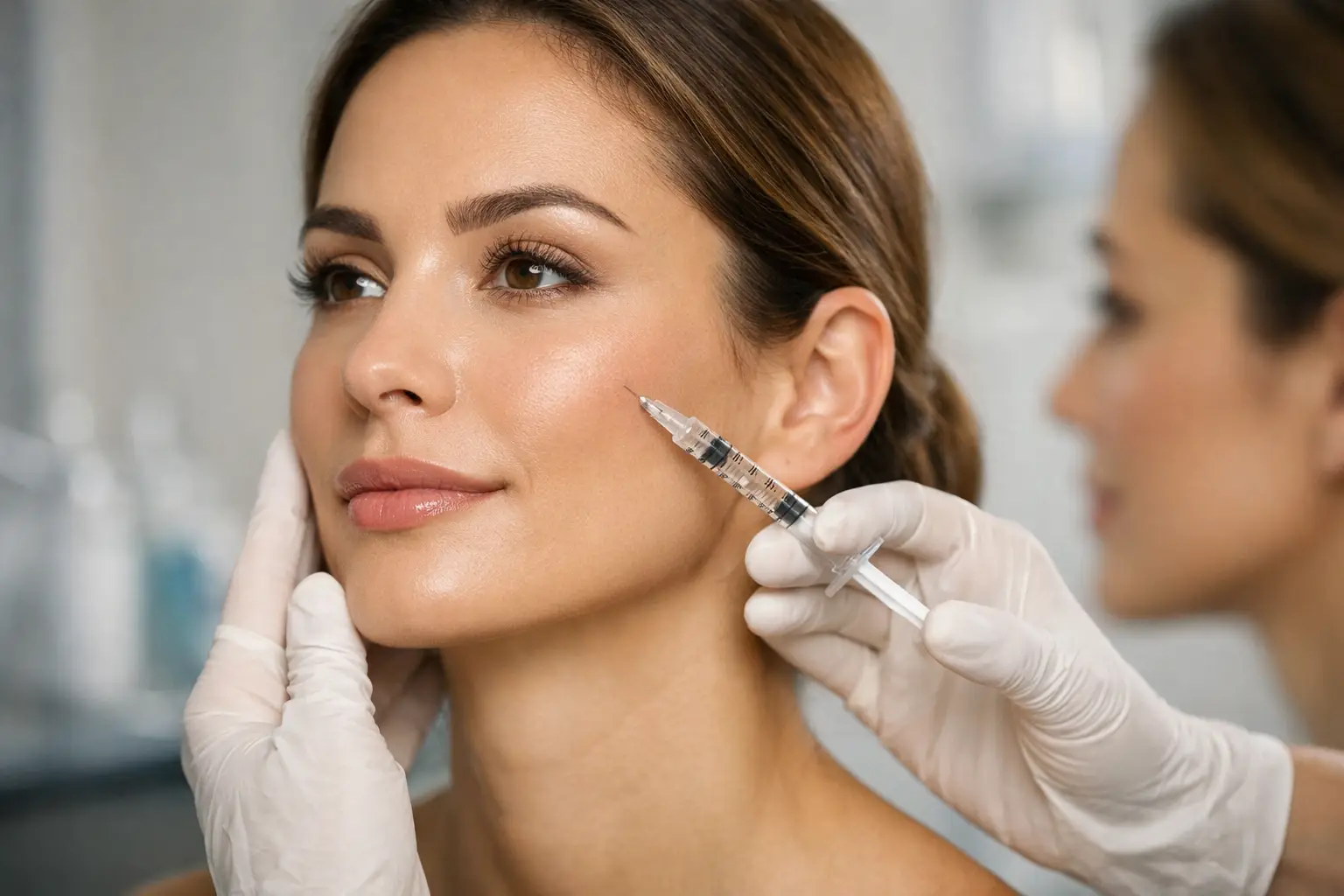
A face can appear tired, heavy, or less defined even when the skin itself is healthy. Often, the issue is not a single line or fold. It is a shift in the relationship between the cheeks, under-eye area, jawline, and lower face. Cheek filler for facial balance is designed to address that relationship thoughtfully, restoring strategic midface support rather than simply making the cheeks look larger.
When planned conservatively, cheek enhancement can soften a hollow or flattened midface, improve the transition beneath the eyes, and create more harmony between facial features. The goal is not a dramatically sculpted appearance. It is a refreshed, proportionate result that still looks like you.
Why the Cheeks Matter to Facial Proportion
The cheeks are a central structural feature of the face. They influence how light reflects across the midface, where the eye area appears to begin, and how the lower face is perceived. When cheek volume diminishes with age, the face may look less supported. Nasolabial folds can become more noticeable, the under-eye area may appear more hollow, and the jawline can seem less defined by comparison.
Volume changes are not the only reason someone may consider cheek filler. Some people naturally have flatter cheek contours, asymmetry, or a narrow midface that feels out of balance with a stronger chin, jawline, or forehead. Others have already treated lines or lips and realize the result would look more cohesive with support higher in the face.
This is why a quality assessment considers the whole face. Treating one concern in isolation can occasionally create a result that feels incomplete. A physician-led approach evaluates facial proportions, bone structure, skin quality, muscle movement, and the way age-related volume changes affect each patient differently.
What Cheek Filler for Facial Balance Can Improve
Cheek filler is most often used to restore or add volume in carefully selected areas of the midface. Depending on your anatomy and goals, treatment may focus on the outer cheekbones for subtle lift, the front of the cheeks for youthful fullness, or deeper midface areas that need structural support.
A personalized plan may help improve several concerns at once. These can include a flattened midface, shadows below the eyes, mild facial asymmetry, early sagging around the lower face, or a lack of transition between the cheeks and jawline. For some patients, enhancing the cheek area can make other features appear more balanced without directly treating them.
That said, filler is not a universal answer for every concern. Deep under-eye hollows, significant skin laxity, pronounced jowling, or advanced volume loss may require a different approach or a combination of treatments. In some cases, skin-renewal treatments, neuromodulators, or surgical consultation may be more appropriate. An honest recommendation should reflect what will provide the most natural and worthwhile outcome, not simply what can be injected.
The Difference Between Support and Overfilling
One of the most common concerns about cheek filler is looking overfilled. This concern is valid, particularly when filler is placed too superficially, too centrally, or in an amount that does not suit the patient’s facial structure.
Natural cheek enhancement is usually about placement, product selection, and restraint. Rather than adding volume everywhere, an experienced injector identifies the points where support will have the greatest visual effect. Often, a modest amount placed at the right depth can create a more refined result than a larger amount placed without a clear plan.
Facial balance also changes with age. A treatment approach that suits a person in their twenties may not be appropriate for someone experiencing midface descent or skin laxity in their forties, fifties, or beyond. The most flattering outcome respects the face’s existing shape rather than trying to impose a trend-driven contour.
At Balwin Aesthetics, facial assessment is centered on individualized planning and natural-looking enhancement. The right treatment should complement your features and leave others noticing that you look rested or refreshed, not asking what you had done.
What Happens During a Cheek Filler Consultation
A consultation should begin with listening. Your provider will ask what you notice in photos, what concerns you when you look in the mirror, and what type of result feels realistic for your lifestyle and preferences. Some patients want subtle restoration; others want more visible definition. Both goals require an assessment of what is safe and appropriate.
Your medical history also matters. Be prepared to discuss previous injectable treatments, allergies, medications, bleeding tendencies, pregnancy or breastfeeding status, and any history of cold sores or certain autoimmune conditions. This information helps determine whether treatment should proceed, be modified, or be postponed.
The provider will then assess facial symmetry, the quality of the skin, soft-tissue volume, cheek projection, and the relationship between the midface and lower face. Photos may be taken for treatment planning and progress tracking. A good consultation is not rushed. You should understand where filler may be placed, what it is expected to improve, potential risks, expected longevity, and whether you may benefit from staging treatment over more than one visit.
The Treatment Experience and Recovery
Most cheek filler treatments use hyaluronic acid-based dermal fillers, which are selected based on the desired level of support and the treatment area. Hyaluronic acid is a naturally occurring substance that attracts water, making it useful for restoring volume and contour. One advantage of this category of filler is that it can generally be dissolved if medically necessary.
Treatment typically involves a series of precisely placed injections using a needle, cannula, or a combination of both. A topical numbing agent may be used, and many fillers also contain lidocaine to improve comfort. The appointment itself is often relatively brief, although a thoughtful facial assessment and treatment plan should never be rushed.
Mild swelling, tenderness, redness, or bruising can occur afterward. These effects are usually temporary, but swelling can make the cheeks look fuller initially. It is wise to avoid strenuous exercise, excessive heat, alcohol, and facial massage unless your provider gives different instructions. If you have an important event, allow enough time for bruising and swelling to settle.
Serious complications are uncommon but possible with any injectable treatment. Vascular complications, infection, nodules, and prolonged swelling require prompt clinical attention. This is one reason choosing a qualified, medically trained injector and a properly supervised clinic matters. You should receive clear aftercare instructions and know how to contact your provider if you have concerns.
How Long Does Cheek Filler Last?
Longevity varies by filler type, placement, metabolism, amount used, and individual facial movement. Many patients enjoy results for approximately 12 to 24 months, though the appearance changes gradually over time. Structural cheek areas may retain filler longer than more mobile areas of the face.
Maintenance should not be automatic or based solely on a calendar. The best timing depends on whether your facial balance still looks pleasing, how the product has settled, and whether additional treatment would genuinely improve the result. Over-treating simply to maintain a certain level of fullness can work against a natural aesthetic.
Who Is a Good Candidate?
Good candidates are adults in good general health who want to improve midface contour, address age-related volume loss, or create more harmony among their facial features. Realistic expectations are essential. Filler can enhance proportion and support, but it cannot change underlying bone structure or replace surgery when significant laxity is present.
Cheek filler may not be suitable during pregnancy or breastfeeding, with an active skin infection, or when certain medical conditions are uncontrolled. Patients with a history of prior filler may need additional evaluation, especially if the product type or injection location is unknown. Transparency about past treatments allows the provider to make safer decisions.
The most successful results begin with a simple principle: your cheeks should support your face, not distract from it. A personalized consultation can help determine whether cheek filler is the right next step for a balanced, polished, and naturally refreshed appearance.
