
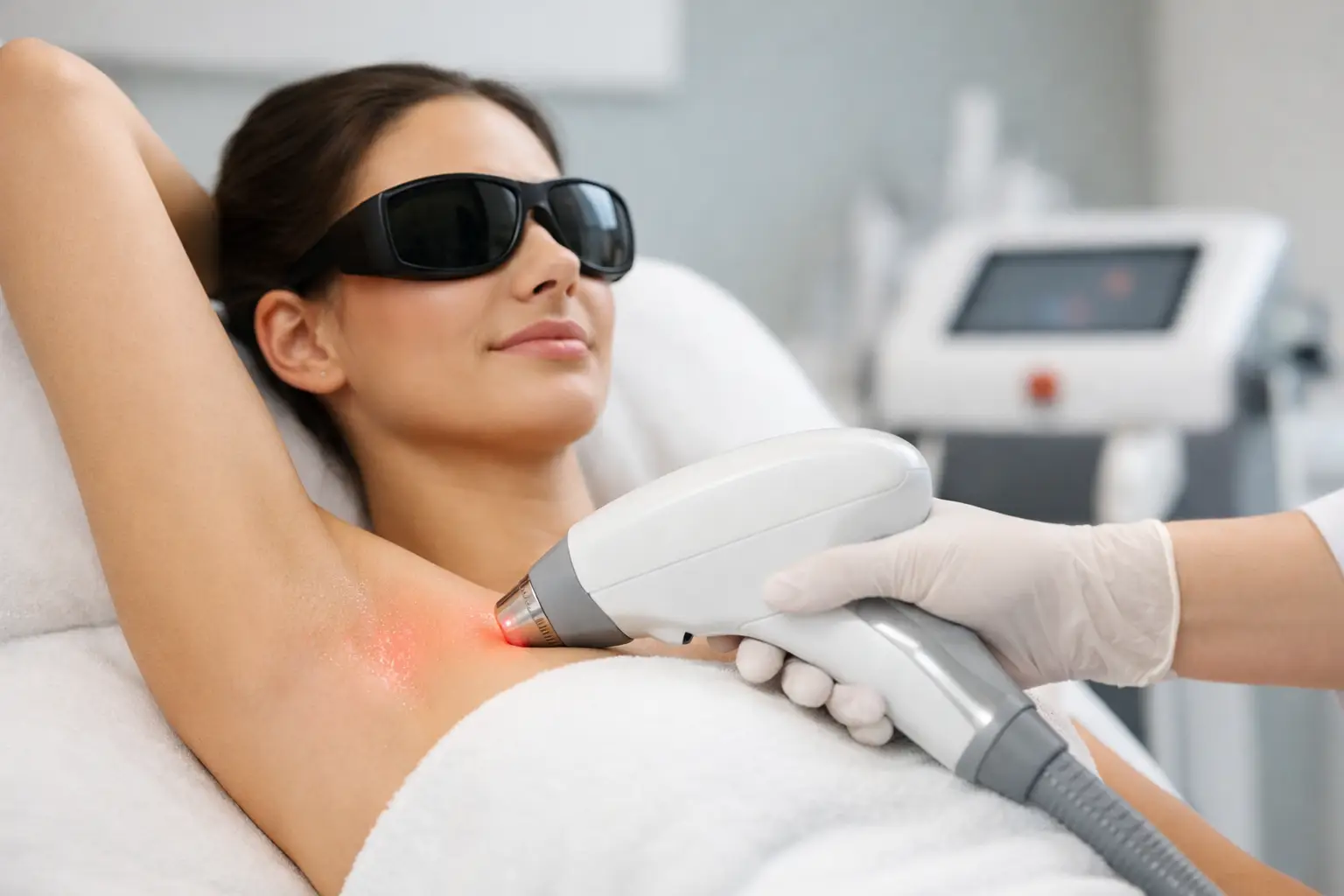
If you are considering treatment, one of the first questions you will probably ask is, does laser hair removal hurt? The honest answer is that most people feel some discomfort, but it is usually brief, very manageable, and far less intense than they expected. For many patients, the sensation is easier to tolerate than waxing and much more predictable from one session to the next.
That said, comfort is not the same for every person or every treatment area. Your pain tolerance, the type of laser being used, the density of the hair, and the skill of the provider all play a role. A physician-led clinic should be able to explain what you are likely to feel, adjust settings appropriately, and help you decide whether laser hair removal is the right fit for your goals.
Does laser hair removal hurt during treatment?
Most patients describe laser hair removal as a quick snapping or flicking sensation on the skin. A common comparison is a rubber band lightly snapping against the area being treated. Some also describe a feeling of heat or pinpricks, especially in areas with coarse, dense hair.
The good news is that the discomfort does not usually linger. Each pulse lasts only a moment, and modern systems often include built-in cooling to make treatment more comfortable. That cooling matters. It helps protect the skin surface while reducing the heat sensation that can make a session feel more intense.
Pain is also very area-specific. The legs or arms often feel easier than the upper lip, bikini line, or underarms. Areas where the skin is thinner or where hair is thicker can be more sensitive. Even then, most patients find the sessions tolerable because they are relatively fast.
Why the sensation varies from person to person
There is no single answer that applies to everyone because several factors affect how laser hair removal feels.
Hair thickness is a major one. Lasers target pigment in the hair follicle, so darker, coarser hair tends to absorb more energy. That can make treatment more effective, but it can also make the pulses feel stronger. Finer hair often feels less intense, though it may also respond differently over time.
Skin sensitivity matters too. If your skin tends to react strongly to shaving, waxing, exfoliants, or heat, you may notice more temporary discomfort. Hormonal timing, stress, sleep, and even caffeine intake can influence sensitivity on the day of treatment.
The technology being used is another important variable. Not all laser systems are equal, and not all settings should be approached the same way. A properly selected device and a customized treatment plan can improve both safety and comfort, especially for patients with deeper skin tones or more reactive skin.
The most sensitive areas to treat
Patients often want to know which areas hurt the most before they book. In general, the upper lip, bikini area, underarms, and jawline tend to be more sensitive. These areas often have dense hair growth, more nerve endings, or thinner skin.
By contrast, larger areas such as the lower legs, arms, chest, or back may feel easier even though the session itself can take longer. The sensation is still present, but it is often more spread out and easier to anticipate.
Facial areas can be a little unpredictable. Some patients tolerate the chin or sideburn area very well, while others find the upper lip surprisingly sharp. That does not mean it is too painful to treat. It usually means your provider should be honest about what to expect and move carefully through more delicate areas.
Does laser hair removal hurt more than waxing?
For many people, no. In fact, one reason patients switch to laser is that they are tired of the repeated discomfort of waxing, ingrown hairs, and ongoing maintenance.
Waxing removes hair by pulling it out from the root all at once, which can be more painful and traumatic to the skin, especially in sensitive areas. Laser hair removal feels different. Instead of one broad painful pull, you feel a series of quick targeted pulses. Many patients say the treatment is easier overall because the discomfort is brief and the long-term payoff is better.
There is also a practical difference. Waxing has to be repeated indefinitely. Laser hair removal is performed as a series, with reduction over time. So even if the treatment causes temporary discomfort, many patients feel it is a worthwhile trade for smoother skin and less ongoing irritation.
What helps make laser hair removal more comfortable?
Preparation makes a noticeable difference. Shaving the area as instructed before your appointment is one of the simplest ways to improve comfort. If hair is left above the skin surface, the laser can singe that hair and create more heat than necessary.
Avoiding sun exposure before treatment is also important. Tanned or irritated skin may be more reactive and less ideal to treat. A good provider will often recommend pausing harsh active skincare ingredients on nearby areas if they increase sensitivity.
During treatment, cooling technology and thoughtful technique can significantly improve the experience. This is where medical oversight and provider judgment matter. Using settings that are both effective and appropriate for your skin type is not just a safety issue. It is also a comfort issue.
Some clinics may recommend a topical numbing cream for smaller or more sensitive areas, though this is not always necessary. It depends on the treatment area, your pain tolerance, and the treatment plan. Patients sometimes assume stronger treatment always means better treatment, but that is not necessarily true. The right settings balance efficacy, safety, and tolerability.
What does it feel like afterward?
After treatment, the skin often feels warm, mildly tender, or similar to a light sunburn for a short period. Redness around the hair follicles is common and usually expected. This reaction often settles within hours, though some patients may notice mild sensitivity for a day or two.
This after-effect is typically very manageable. Cooling the area, avoiding excessive heat, and following your aftercare instructions can help reduce irritation. You should not expect prolonged pain. If a treatment leaves you with significant ongoing discomfort, blistering, or unusual skin changes, that is something your provider should assess promptly.
Temporary sensitivity does not mean something went wrong. It often means the follicles responded to treatment. The key is that the reaction should be expected, explained clearly, and monitored appropriately.
When discomfort may be a sign to pause
A certain amount of discomfort is normal, but treatment should never feel chaotic, unsafe, or poorly explained. If the pain feels far more intense than you were told to expect, or if your skin is overly irritated before the session begins, it may be better to adjust or postpone treatment.
This is especially relevant if you have recently had sun exposure, started a new retinoid, used self-tanner, or have an active rash or breakout in the treatment area. A quality consultation should cover these details before the laser is ever turned on.
At Balwin Aesthetics, patient education and individualized treatment planning are part of what makes the process feel more predictable. That matters because confidence in the provider often reduces anxiety, and anxiety can heighten the experience of pain.
Is it worth it if you are worried about pain?
For most patients, yes. If unwanted hair is a constant source of frustration, ingrown hairs, razor burn, or time-consuming maintenance, laser hair removal is often worth the temporary discomfort. The question is less whether it hurts at all and more whether the level of discomfort is manageable for the result you want.
Most patients find that it is. Sessions are quick, discomfort is short-lived, and many people notice that treatments become easier as hair becomes finer and less dense over time. There are trade-offs, of course. You will need a series of sessions, and some areas may remain more sensitive than others. But for patients who want a long-term reduction in hair growth, the experience is usually very reasonable.
If you are hesitant, the best next step is not guessing. It is having a proper consultation with a qualified provider who can assess your skin, discuss the likely sensation in your treatment areas, and set realistic expectations from the start.
A good laser hair removal experience is not about pretending the treatment is completely sensation-free. It is about choosing a clinic that treats comfort, safety, and results with the same level of attention.
