
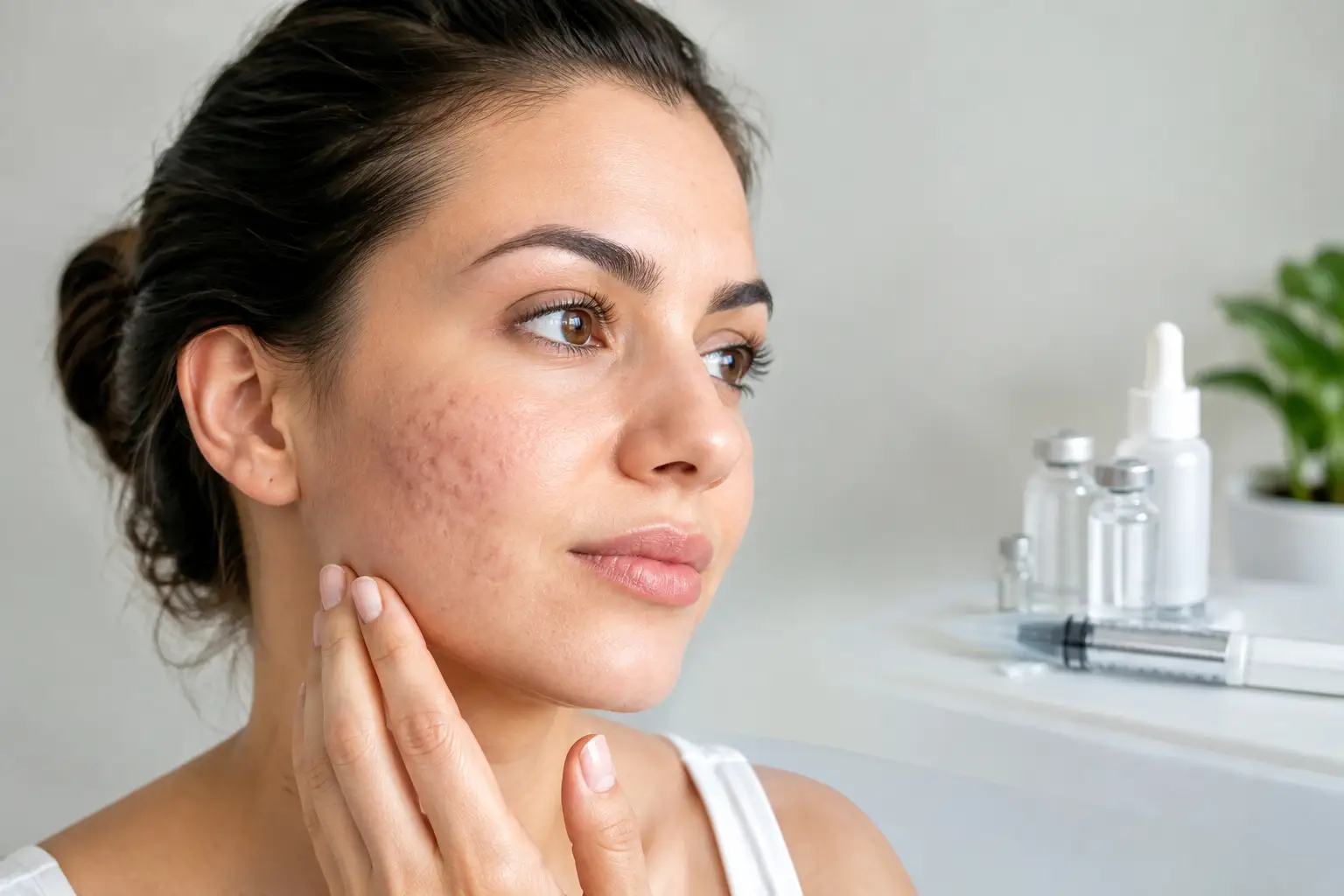
Acne may be temporary, but the marks it leaves behind can feel far more persistent. This guide to acne scar procedures explains how physician-led treatment plans address different scar types, improve skin texture gradually, and help you make a confident, informed decision about your care.
The first step is recognizing that acne scars are not all the same. A treatment that helps soften broad, shallow depressions may do very little for narrow, deep scars. The most refined results usually come from matching the procedure to the scar pattern, your skin tone, your lifestyle, and the amount of downtime you are comfortable with.
Why Acne Scar Type Determines the Procedure
Acne scarring develops when inflammation disrupts the skin’s normal healing process and affects collagen beneath the surface. Some scars sit below the surrounding skin, while others are raised. Most people have more than one type, which is why a single treatment is not always the right answer.
Rolling scars create a wavy, uneven appearance and are often tethered to deeper tissue. Boxcar scars are wider depressions with more defined edges. Ice-pick scars are narrow and deep, resembling small punctures in the skin. Post-acne redness and dark spots are common concerns as well, but they are not technically scars. They may respond well to treatments that target pigment or visible blood vessels rather than treatments designed to remodel collagen.
During a thoughtful consultation, a physician evaluates scar depth, skin texture, active breakouts, pigmentation risk, medical history, and previous treatments. This assessment helps determine whether your skin is best served by a resurfacing approach, collagen induction, targeted scar release, or a combination plan.
A Guide to Acne Scar Procedures and What They Treat
Microneedling for collagen support
Microneedling creates controlled microchannels in the skin to encourage the natural production of collagen and elastin. Over a series of treatments, it can improve the look of mild to moderate rolling scars, shallow boxcar scars, enlarged pores, and overall uneven texture.
This treatment is appealing for clients who want a minimally invasive option with limited downtime. Skin is often pink or red for a short period afterward, similar to a mild sunburn. Results develop gradually because collagen remodeling takes time. Many patients benefit from a series of sessions spaced several weeks apart.
Microneedling may also be paired with platelet-rich plasma, or PRP, when appropriate. PRP uses a concentrated portion of your own blood to support the skin’s healing response. While it is not a replacement for a properly selected scar treatment, it can complement microneedling for clients seeking a more regenerative approach.
Chemical peels for surface texture and discoloration
Chemical peels use carefully selected solutions to exfoliate the skin at varying depths. Lighter peels can help refresh dull skin, reduce post-acne discoloration, and improve minor textural irregularities. More intensive peels can offer more dramatic resurfacing, but they also require greater caution, preparation, and recovery time.
Peels are not typically the first choice for deep ice-pick scars or heavily tethered rolling scars. They can, however, play a valuable role in a broader treatment plan, especially when lingering pigment makes scars appear more noticeable. The right peel depends on skin type, sensitivity, current skincare products, and the risk of post-inflammatory hyperpigmentation.
Laser resurfacing for texture and tone
Laser treatments can improve acne scars by creating controlled thermal injury in targeted areas of the skin, prompting new collagen formation and resurfacing damaged tissue. Depending on the laser technology and treatment settings, laser resurfacing may address textural scarring, discoloration, redness, and visible pores.
There is a meaningful trade-off between intensity and downtime. More aggressive resurfacing can produce a stronger correction for suitable candidates, but recovery may involve several days of redness, swelling, peeling, and diligent aftercare. Gentler laser approaches generally involve less downtime but may require more sessions to achieve a comparable improvement.
Skin tone deserves careful consideration. Some patients have a greater risk of pigment changes after laser treatment, particularly when treatment settings are not appropriately selected or aftercare is inconsistent. Physician supervision, proper pre-treatment preparation, and strict sun protection help reduce unnecessary risk.
Subcision and filler for tethered scars
Rolling scars are sometimes held down by fibrous bands beneath the skin. In these cases, topical products and surface resurfacing alone may not fully release the indentation. Subcision is a procedure that uses a specialized instrument to carefully break these tethering bands beneath the scar.
Once the scar is released, a small amount of dermal filler may be considered in select cases to support the depressed area and create a smoother transition with surrounding skin. This approach requires precise technique and a clear understanding of facial anatomy. It is generally best reserved for scars that are truly depressed or tethered, not for every acne mark.
Bruising and swelling can occur after subcision or filler, and temporary results may be seen before the final outcome settles. For the right patient, these treatments can be particularly helpful as part of a combination plan.
Targeted treatment for deeper scars
Deep ice-pick scars often require a more targeted strategy than broad resurfacing alone. A physician may discuss focal chemical reconstruction techniques or other specialized procedures intended for individual deep scars. These are more precise treatments and should be planned conservatively, particularly for patients prone to pigmentation changes or prolonged inflammation.
Not every clinic offers every scar procedure, and that is appropriate. The goal is not to force every concern into one treatment category. It is to identify the safest, most effective option and refer when a specialized intervention is needed.
What Results and Recovery Really Look Like
Acne scar treatment is a process, not a one-visit transformation. Most procedures improve scars rather than erase them completely. A realistic goal is smoother-looking skin, softer shadowing, more even texture, and greater confidence without making the skin look overtreated.
Results are influenced by scar type, the severity of existing tissue damage, age, skin quality, ongoing acne activity, and how consistently you follow aftercare guidance. Collagen-based treatments often continue improving for several months after the final session. Taking progress photos in consistent lighting can be more helpful than judging your skin day to day.
Recovery varies by procedure. After microneedling, mild redness and sensitivity are common. After a chemical peel or laser treatment, you may experience peeling, temporary darkening of pigment, swelling, or crusting depending on the depth of treatment. Avoiding direct sun exposure, using recommended skincare, and resisting the urge to pick or exfoliate prematurely protect the healing skin.
If you still have active acne, controlling breakouts should be part of the plan. New inflammatory lesions can create new scars and may affect the timing of certain procedures. A personalized treatment plan can address both active acne management and long-term scar correction.
Choosing a Safe, Personalized Treatment Plan
The safest acne scar treatment begins with an honest conversation about your goals. Consider how much improvement you want, how much downtime your schedule allows, your comfort with a treatment series, and your history of sensitivity or pigmentation. Be cautious of promises that one procedure can correct every scar type or deliver dramatic results with no recovery.
At Balwin Aesthetics, physician-led consultations are designed to replace uncertainty with clear guidance. A well-designed plan may begin with a conservative treatment, assess your response, and build gradually toward more advanced options when appropriate. This approach protects skin health while pursuing natural-looking refinement.
Your skin does not need to look filtered to look better. The right procedure plan respects its individual characteristics, improves what bothers you most, and gives each stage of healing the time it deserves.
