
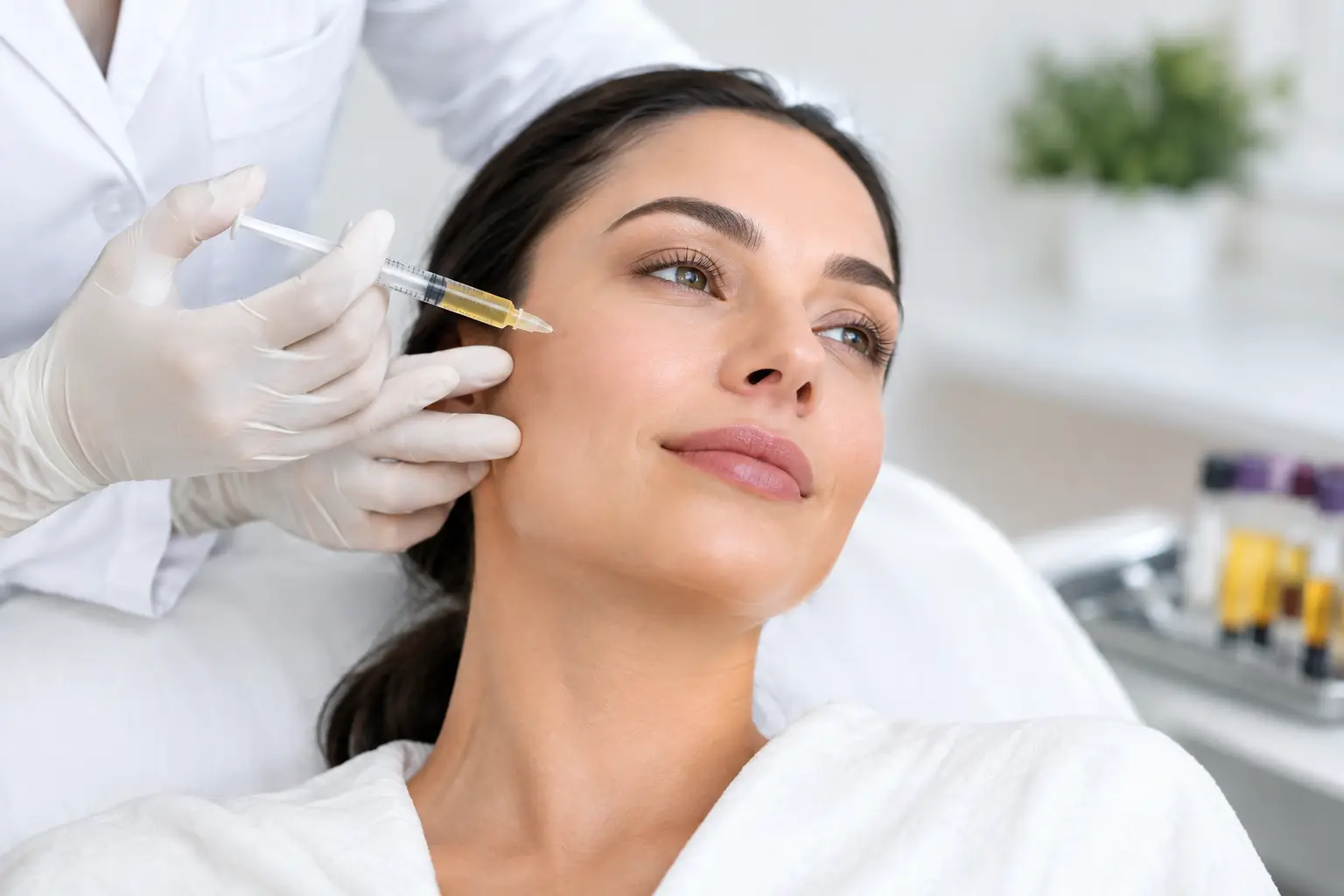
PRP is often requested by patients who want their skin to look healthier, smoother, and more rested without changing the character of their face. This guide to PRP facial rejuvenation explains what the treatment can realistically do, how it is performed, and why a personalized medical assessment matters before you begin.
What Is PRP Facial Rejuvenation?
PRP stands for platelet-rich plasma, a concentrated portion of your own blood that contains platelets and naturally occurring growth factors. In aesthetic medicine, PRP is used to support the skin’s natural repair processes and encourage collagen production. The goal is not to create artificial volume or freeze expression. It is to improve overall skin quality gradually.
A small blood sample is collected and processed in a centrifuge to separate the platelet-rich plasma. The PRP may then be applied during microneedling, injected into selected areas, or used as part of a treatment plan designed around your concerns.
Because PRP is sourced from your own blood, it appeals to patients looking for a biologically based approach to facial rejuvenation. That said, “natural” does not mean every patient is automatically a candidate. Proper screening, sterile technique, and an experienced medical provider remain essential.
What Concerns Can PRP Help Address?
PRP is best known for improving skin texture, tone, and early signs of aging. It may be a strong option for patients who feel their skin looks tired, crepey, dull, or less resilient but do not necessarily need significant structural correction.
PRP treatment may help improve the appearance of fine lines, acne scarring, enlarged pores, uneven texture, and mild photodamage. It is also frequently considered for the delicate under-eye area, where some patients prefer a regenerative treatment approach over added filler. Results in this area can be subtle and depend on whether the concern is primarily skin quality, hollowness, pigmentation, or puffiness.
PRP has limits. It will not replace lost facial volume as predictably as dermal filler, lift significant skin laxity, erase deep folds, or correct every form of discoloration. In many cases, the most natural-looking plan combines PRP with treatments such as microneedling, neuromodulators, fillers, chemical peels, or laser-based skin renewal. The right combination depends on your anatomy, skin condition, timeline, and comfort with downtime.
PRP Injections vs. PRP Microneedling
The method used affects the treatment experience and the concern being addressed.
PRP injections
With PRP injections, platelet-rich plasma is placed beneath or within the skin in carefully selected areas. This approach may be considered for fine lines, textural concerns, and areas where skin quality is the priority. Your provider will assess facial anatomy closely, particularly around the eyes, where precision is critical.
PRP with microneedling
During PRP microneedling, a controlled device creates very small channels in the skin while PRP is applied to the treatment area. Microneedling itself stimulates collagen production, while PRP is used to complement the skin’s recovery response. This option is often chosen for more diffuse concerns such as rough texture, acne scars, and uneven tone across the cheeks, forehead, or lower face.
Neither method is universally better. Injections may be more targeted, while microneedling can be useful when the goal is broad skin renewal. Some patients benefit from a series of microneedling treatments, while others may need a different approach entirely.
What Happens During a PRP Appointment?
A physician-led consultation should come before treatment. Your provider will review your health history, medications and supplements, prior cosmetic procedures, skincare routine, and goals. They should also examine your skin in appropriate lighting and discuss what PRP can and cannot accomplish for your specific concern.
On treatment day, the process generally begins with a blood draw. The sample is placed in a centrifuge, which separates the platelet-rich plasma from other blood components. Your skin is cleansed, and a topical numbing cream may be used depending on the treatment technique.
The PRP is then injected or incorporated into microneedling. Treatment time varies by area and method, but most appointments are comfortably completed within an hour to 90 minutes. You may leave with redness, mild swelling, pinpoint bleeding from microneedling, or tenderness at injection sites. These effects are generally temporary.
At Balwin Aesthetics, treatment recommendations are based on a careful assessment rather than a one-size-fits-all protocol. A refined result begins with choosing the right treatment, not simply choosing the newest one.
Recovery and Aftercare
Most PRP treatments involve limited downtime, but recovery is not identical for everyone. After PRP injections, mild bruising, swelling, and tenderness can occur. Following PRP microneedling, redness often resembles a moderate sunburn for one to three days, although dryness or flaking may continue briefly as the skin settles.
For the first day, patients are typically advised to avoid touching the treatment area unnecessarily, intense exercise, heat exposure, saunas, and makeup unless their provider gives different instructions. Avoid applying active skincare ingredients such as retinoids, exfoliating acids, or strong vitamin C products until your skin has recovered and your provider approves restarting them.
Sun protection is particularly valuable after treatment. Freshly treated skin is more vulnerable to irritation and pigment changes, especially in patients prone to hyperpigmentation. A gentle cleanser, moisturizer, and broad-spectrum sunscreen are usually the foundation of post-treatment care.
Before your appointment, your provider may ask you to pause certain supplements or medications that can increase bruising risk, if medically appropriate. Never stop prescribed medication without guidance from the clinician who manages it.
When Will You See Results?
PRP is a gradual treatment. Some patients notice a healthier glow within the first few weeks, but collagen remodeling takes time. Improvements in texture, fine lines, and overall skin quality often become more visible over several weeks to months.
The number of sessions depends on the concern being treated. A patient seeking general skin refreshment may have different needs than someone treating acne scars or pronounced textural change. Many treatment plans involve a series, often spaced several weeks apart, followed by maintenance as recommended by the provider.
Results also depend on factors outside the treatment room. Sun exposure, smoking, nutrition, sleep, stress, skincare habits, hormonal changes, and the natural aging process all influence how skin looks and behaves over time.
Who Should Consider PRP, and Who Should Wait?
Good candidates are generally healthy adults who want progressive, natural-looking improvement in skin quality and understand that PRP is not an instant transformation. Patients with early signs of aging, acne scarring, dullness, or uneven texture may be appropriate candidates after evaluation.
PRP may need to be postponed or avoided in people with certain blood disorders, active skin infections, uncontrolled medical conditions, platelet dysfunction, or those taking particular medications. Pregnancy and breastfeeding may also change which aesthetic treatments are appropriate. Your provider should discuss these considerations openly rather than treating PRP as a routine cosmetic service.
A thoughtful consultation is also the time to talk about expectations. If your main concern is deep volume loss, advanced sagging, severe pigmentation, or active inflammatory acne, another treatment may offer a more direct benefit. Choosing the correct treatment protects both your safety and your investment.
Questions to Ask Before Booking
Ask who will perform your treatment, how PRP is prepared, and whether the provider has evaluated your skin and facial anatomy in person. You should also ask about expected recovery, the recommended number of sessions, possible side effects, and what results are realistic for your concern.
Be cautious of promises that PRP can replace surgery, permanently erase wrinkles, or produce the same outcome for every patient. High-quality aesthetic care is individualized. The most credible recommendation may be PRP, a combination plan, or a clear explanation that a different treatment better matches your goals.
If you are considering PRP facial rejuvenation, focus less on finding a quick fix and more on finding a medically guided plan that respects your features, skin health, and desired level of change. The best result should look like you on a well-rested, healthy-skin day.
