
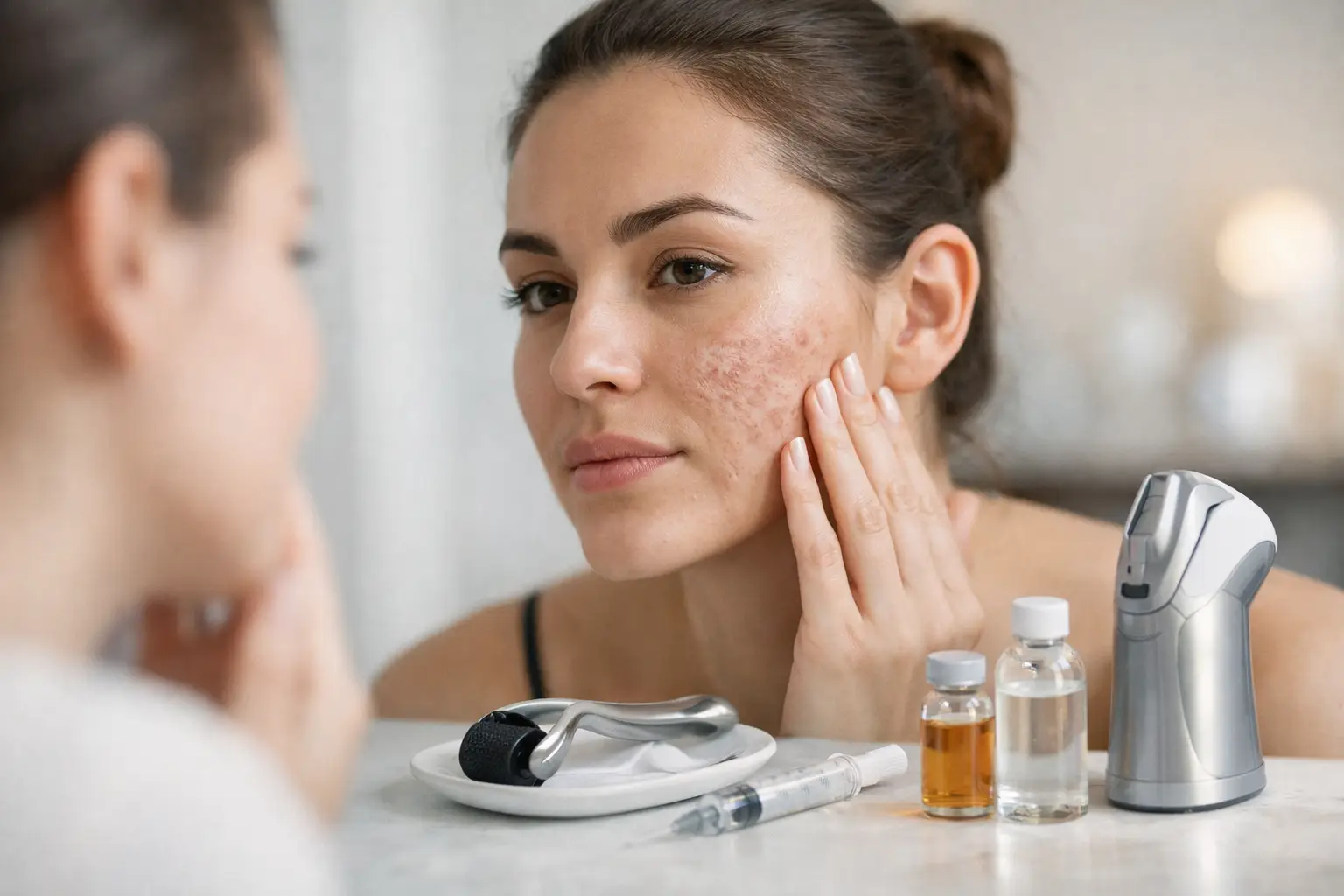
If makeup settles into uneven texture or certain lighting makes old breakouts feel more visible than they are, acne scarring can become frustrating long after acne itself has cleared. The best options for acne scarring are not one-size-fits-all. The right treatment depends on the type of scar, your skin tone, how much downtime you can tolerate, and whether you want gradual improvement or a more aggressive approach.
That is where a medically guided plan makes a real difference. Many people assume all acne scars respond the same way, but rolling scars, boxcar scars, ice pick scars, and post-acne discoloration behave very differently. Treating them as if they are the same often leads to disappointing results.
What counts as acne scarring?
Patients often use the term acne scarring to describe any mark left behind after a breakout. In practice, there are two broad categories. The first is true scarring, which includes depressed or textured areas caused by damage to collagen in the skin. The second is post-inflammatory discoloration, which can leave red, pink, brown, or purple marks even when the skin surface feels smooth.
This distinction matters because discoloration may respond well to chemical peels, brightening skincare, or certain laser treatments, while indented scars usually need collagen-stimulating procedures. If your main concern is texture, creams alone are rarely enough.
Best options for acne scarring by scar type
The best treatment plan usually combines techniques rather than relying on a single procedure. A consultation should start with scar mapping, skin assessment, and an honest discussion about goals.
Microneedling for mild to moderate textural scars
Microneedling is one of the most versatile options for acne scarring, especially for shallow rolling scars and overall uneven texture. The treatment creates controlled micro-injuries in the skin, which encourages collagen remodeling over time.
Patients often like microneedling because it is minimally invasive and typically comes with manageable downtime. Skin may look red and feel tight for a few days, but recovery is generally easier than with more aggressive resurfacing. Results develop gradually, which is both a strength and a limitation. Improvement can look natural and progressive, but most people need a series of treatments rather than one session.
Microneedling can be especially appealing for patients who want collagen support with less interruption to work and social schedules. It is not always enough for deeper, sharply defined scars, but it is often an excellent foundation treatment.
PRP can enhance collagen response
When platelet-rich plasma is paired with microneedling, the goal is to support healing and enhance skin renewal. PRP uses your own processed platelets, applied or delivered during treatment, to complement the collagen-building process.
Not every patient needs PRP, and it is not a magic upgrade for every case. Still, for the right candidate, it can be a valuable addition when the goal is smoother skin quality with a natural regenerative approach.
Chemical peels for discoloration and superficial texture
Chemical peels are often underestimated in acne scar treatment because they are associated with brightness and glow rather than structural improvement. In reality, the right peel can help significantly with post-acne pigmentation, dullness, and mild surface irregularity.
Peels vary in strength and depth. Lighter peels may involve minimal downtime and work well as a series, while stronger peels can produce more noticeable peeling and require careful aftercare. They are particularly useful when scars are accompanied by lingering pigment changes, which is common in many skin types.
A peel will not erase deep indented scars. What it can do is improve the overall clarity and refinement of the skin so scars become less obvious. For many patients, that difference is meaningful.
Laser treatments for resurfacing and collagen remodeling
Laser treatments can be among the best options for acne scarring when texture is more pronounced or when discoloration and scarring coexist. Different lasers target different concerns. Some focus on pigment or redness, while resurfacing lasers work more directly on texture by stimulating collagen and renewing the skin surface.
This category tends to offer stronger correction potential, but it also comes with more variables. Skin type, scar depth, sun exposure history, and tolerance for downtime all matter. Some laser treatments involve several days of redness and peeling, while others are gentler and require a series to build results.
For the right patient, laser treatment can be a high-value option because it addresses both the surface and deeper support structure of the skin. The trade-off is that treatment selection needs to be precise. A generic laser recommendation is not enough.
Why combination treatment often works best
Acne scarring rarely shows up in a single pattern. A patient may have boxcar scars on the cheeks, a few deeper tethered areas, and leftover discoloration along the jawline. That is why combination treatment is often the most effective approach.
Microneedling may help with broad texture. A peel may improve tone and post-inflammatory marks. Laser treatment may refine more stubborn areas or improve overall skin quality. Layering treatments strategically can create better results than repeating one treatment that only addresses part of the problem.
This also helps set realistic expectations. Most acne scars improve, but they do not usually disappear completely. A strong plan aims for smoother texture, softer shadowing, better light reflection, and more even skin tone. Those changes can be substantial, even if perfection is not the goal.
How to choose among the best options for acne scarring
The best choice is not simply the strongest treatment. It is the treatment that fits your skin safely and gives you the most meaningful improvement for your specific scar pattern.
If your scars are mild and your schedule is tight, microneedling or a series of peels may be a sensible place to start. If your concern is more advanced textural change, laser resurfacing may deserve serious consideration. If your skin also has active breakouts, that needs to be managed alongside scar treatment, because continuing inflammation can undermine progress.
Skin tone is another important factor. Some procedures require extra caution in deeper skin tones because of the risk of pigment changes. That does not mean effective treatment is off the table. It means the plan should be customized, conservative where needed, and guided by clinical experience.
What results should you realistically expect?
A trustworthy consultation should never promise flawless skin. Acne scar treatment is usually a process, not a one-visit fix. Depending on the treatment and scar severity, noticeable improvement may take several months as collagen remodels and the skin gradually refines.
For many patients, 30 to 70 percent improvement is a realistic range, but that number varies widely. Mild scars can respond beautifully. Deep, narrow scars are more resistant. The most satisfied patients are usually the ones who understand that progress comes in stages and who choose treatment based on long-term skin quality, not quick hype.
Photos are often helpful here because gradual change can be easy to miss in the mirror. Better texture, smoother makeup application, and less visible shadowing in natural light are all signs that treatment is working.
What to ask before starting treatment
Before committing to any acne scar procedure, ask what type of scars you have, how many sessions are likely needed, what recovery will look like, and what risks apply to your skin type. You should also ask whether your provider is treating discoloration, true scars, or both.
This is especially important in a physician-led setting, where treatment planning should reflect not only cosmetic goals but also skin safety. At Balwin Aesthetics, that kind of personalized assessment is central to achieving refined, natural-looking improvement rather than overtreatment.
Supporting your results at home
In-clinic treatment does the heavy lifting, but home care still matters. Daily sunscreen is essential because UV exposure can worsen post-acne marks and interfere with recovery. Gentle skincare, consistent hydration, and acne control also help protect your investment.
Strong exfoliants and trend-driven products can be tempting, especially when you want faster results. In reality, overdoing at-home actives can trigger irritation and set your skin back. A simpler, medically guided routine is often the better choice while undergoing scar treatment.
The most effective acne scar plan is the one built around your skin, not someone else’s before-and-after photo. With the right diagnosis, the right sequence of treatments, and realistic expectations, smoother and more even-looking skin is an achievable goal.
