
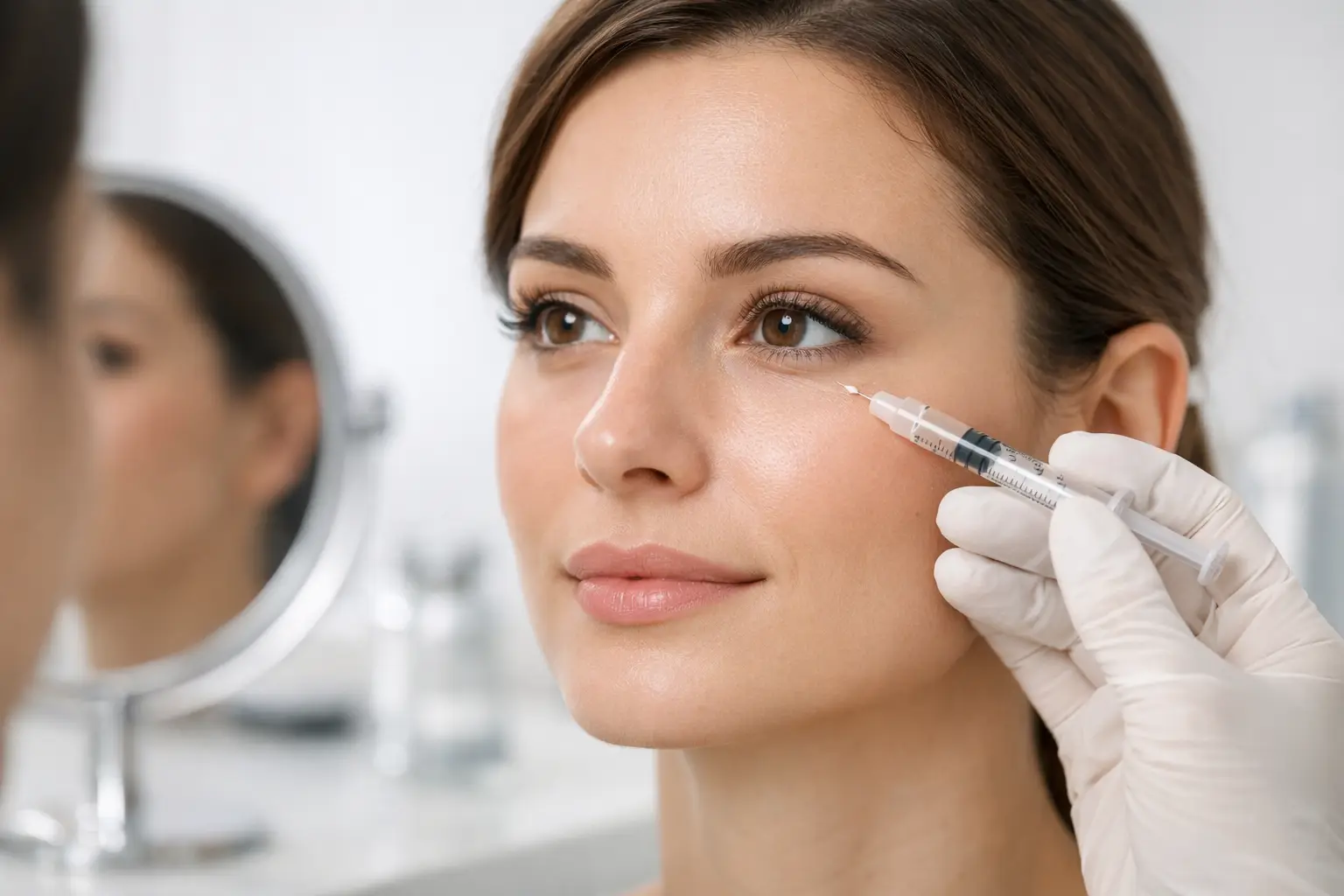
Tired-looking eyes can make you seem older or more worn out than you feel, even when the rest of your face looks refreshed. This guide to under eye fillers explains what the treatment can and cannot do, who tends to be a good candidate, and why careful technique matters so much in this area.
What under eye fillers are designed to treat
Under eye filler is typically used to soften hollowing in the tear trough, which is the groove that can run from the inner corner of the eye toward the upper cheek. When that area loses support, it can create a shadow that reads as dark circles, fatigue, or facial volume loss.
That shadow is not always caused by pigment. In many patients, the issue is structural. A recessed under eye area, thinning skin, and changes in cheek support can all make the eyes look darker and more sunken. In those cases, filler may improve the transition between the lower eyelid and cheek so the area looks smoother and less hollow.
This is also where expectations need to stay realistic. Filler does not treat every cause of under eye concerns. If darkness comes mainly from pigmentation, visible blood vessels, puffiness, or excess lower lid skin, filler may offer little benefit or may even make the area look worse if used in the wrong patient.
A practical guide to under eye fillers and candidacy
The best candidates usually have a true volume deficit rather than swelling. They may notice a hollow that creates a tired appearance, especially in certain lighting or in photos. Younger patients can have this anatomy naturally, while others develop it over time as facial support changes with age.
A good consultation should look beyond the under eye itself. Midface volume, skin thickness, lower eyelid tone, and any history of allergies or fluid retention all matter. In some cases, treating the cheek first creates better support and improves the under eye indirectly. In others, filler is not the first recommendation at all.
You may be a stronger candidate if your main concern is hollowness and your skin quality is reasonably good. You may be a weaker candidate if you have prominent eye bags, significant laxity, chronic swelling, or very thin skin that already shows irregularities easily. This is one of the reasons physician-led assessment is especially valuable for the tear trough area.
Why this treatment requires a conservative approach
The under eye is one of the most technically sensitive areas in aesthetics. The skin is thin, the anatomy is delicate, and even small amounts of product can change the appearance noticeably. More filler does not mean a better result here.
A conservative plan often produces the most natural outcome. The goal is not to erase every line or create a completely flat under eye. The goal is to reduce hollowing in a way that looks rested, balanced, and believable in normal life, not just in a treatment chair.
This is also why injector choice matters. Technique, product selection, depth of placement, and judgment all affect the final result. A rushed or overly aggressive approach can lead to puffiness, lumpiness, or a bluish cast under the skin.
What type of filler is usually used
Most under eye treatments use a hyaluronic acid filler. Hyaluronic acid is a substance already found in the body, and in aesthetics it is valued for its flexibility and reversibility. Not every hyaluronic acid filler is appropriate for the tear trough, though. Some are too thick or too hydrophilic, meaning they attract more water and may increase swelling in a delicate area.
Experienced injectors tend to choose products with characteristics that suit thin tissue and subtle correction. The amount used is usually modest. Patients are often surprised by how little filler is needed when the treatment is done precisely.
In some cases, under eye filler is combined with treatment in the cheeks to support the area more harmoniously. That decision depends on your anatomy rather than a one-size-fits-all formula.
What to expect during the appointment
Your appointment should begin with a detailed facial assessment and a discussion of your goals. Good medical history matters, including prior filler, past reactions, current medications, and any tendency toward bruising or swelling.
The treatment itself is generally quick. After cleansing the skin, your injector may mark the area and place the filler using either a needle or a cannula, depending on technique and anatomy. Most patients describe the procedure as very tolerable. Some fillers also contain lidocaine to improve comfort.
You may see an immediate change, but the final result is not judged on the same day. Mild swelling, tenderness, or bruising can temporarily alter the appearance. It usually takes a little time for the area to settle.
Recovery and aftercare
Downtime is usually limited, but that does not mean the area should be ignored after treatment. Mild swelling and bruising are common, especially around the eyes where blood vessels are plentiful and the skin is thin.
Patients are often advised to avoid strenuous exercise, excess heat, and alcohol for a short period after treatment because these can worsen swelling or bruising. Sleeping with the head slightly elevated the first night may also help. Makeup is usually delayed for a brief window, based on your injector’s instructions.
A subtle result often looks better each day as the tissue calms down. If you tend to swell easily, it may take longer before the final outcome is clear. This is normal and should be part of the treatment conversation from the start.
Risks and side effects to understand
Every injectable treatment carries risks, and under eye filler deserves a particularly thoughtful consent process. The most common short-term effects include swelling, bruising, tenderness, and temporary asymmetry. Small irregularities can happen, especially early on before the product fully settles.
Less common but important concerns include persistent puffiness, visible filler, lumpiness, and the Tyndall effect, which is a bluish appearance caused by superficial placement. Some patients are simply not anatomically suited to filler in this area, even when the product itself is good.
There are also rare but serious vascular complications associated with dermal fillers. While uncommon, they reinforce why treatment should be performed by a qualified medical professional who understands facial anatomy, prevention, and emergency management. Safety should never be treated as a minor detail when the eye area is involved.
How long under eye fillers last
Longevity varies. Many patients enjoy improvement for several months to a year or more, but the exact timeline depends on the product used, the amount placed, individual metabolism, and the anatomy being treated.
Under eye filler can sometimes appear to last longer than filler in more mobile areas because the region does not move as much as the lips, for example. That said, long-lasting does not always mean ideal forever. Follow-up matters because some patients need a small adjustment, while others do best waiting longer before adding more.
A thoughtful injector will usually be cautious about repeat treatment. Layering too much filler over time is one of the easiest ways to lose a natural look under the eyes.
When filler may not be the best option
One of the most important parts of any guide to under eye fillers is knowing when not to proceed. If your primary issue is fat pad protrusion, lower lid laxity, or significant skin excess, surgery may be more appropriate than filler. If the concern is mostly pigment, skin-focused treatments may make more sense.
Some patients benefit more from a combination plan. Skin quality treatments, neuromodulators, laser-based options, or PRP may be considered depending on the cause of the concern. The right answer is not always filler, and a trustworthy consultation should say so clearly.
At Balwin Aesthetics, that individualized approach matters because refined results depend on matching the treatment to the anatomy rather than forcing every concern into the same solution.
How to choose the right provider
If you are considering under eye filler, credentials and experience should carry real weight. Ask who is performing the treatment, how often they treat the tear trough area, and how they decide whether someone is a good candidate. A provider who is comfortable saying no is often the one most focused on your outcome.
Look for an approach that prioritizes natural results, conservative dosing, and full facial assessment. Under eye filler should not feel like a quick retail service. It should feel like a medical-aesthetic decision made with precision.
You should also feel that your concerns are being translated honestly. If you say you look tired, a strong provider will explain whether that tired look comes from hollowness, pigment, puffiness, skin laxity, or a mix of factors. That clarity helps prevent disappointing results.
The best under eye filler result is often the one no one can identify. People may simply think you look more rested, less shadowed, and more like yourself on a good day. That is usually the standard worth aiming for.
