
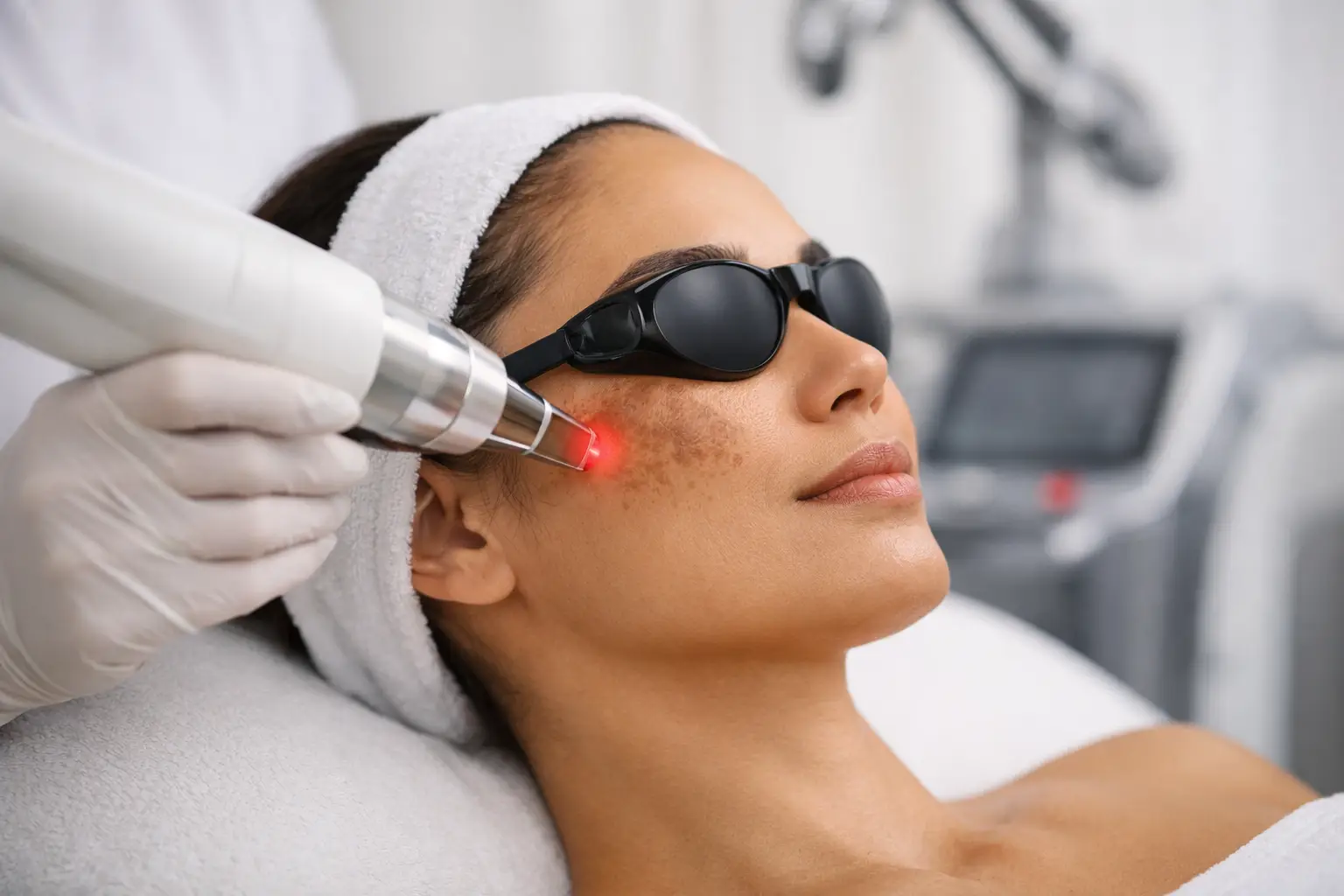
Pigment changes rarely stay small for long. What starts as a few sun spots, post-acne marks, or uneven patches can gradually affect how smooth and clear your skin looks overall. For many patients, laser treatment for pigmentation becomes the next step when topical skincare, peels, or home remedies are no longer giving meaningful improvement.
What laser treatment for pigmentation actually targets
Pigmentation is not one single problem. It is a broad category that includes sun damage, freckles, age spots, post-inflammatory hyperpigmentation, and in some cases deeper or hormonally driven pigment such as melasma. That distinction matters because the cause, depth, and pattern of pigment all influence whether a laser is likely to help.
Laser energy works by targeting excess pigment in the skin. The pigment absorbs the light, breaks apart, and is then gradually cleared by the body. In simpler terms, the treatment is designed to be selective. It aims to treat unwanted pigment while preserving the surrounding skin as much as possible.
That said, not every brown mark should be treated the same way. Some lesions respond quickly. Others need a more cautious plan, especially in patients with medium to deeper skin tones or with pigment conditions that are easily reactivated by heat or irritation.
Who is a good candidate for laser treatment for pigmentation?
A good candidate is someone with a clearly identified pigment concern, realistic expectations, and a willingness to follow pre- and post-treatment instructions carefully. Patients often do well when they are treating sun spots, freckles, or certain types of post-inflammatory pigmentation after acne or irritation.
The right candidate is not defined only by the pigment itself. Skin tone, tanning history, current skincare routine, and any history of melasma or easy discoloration all matter. If your skin is recently tanned, easily triggered, or prone to prolonged darkening after inflammation, your provider may recommend pretreatment skincare, a different device, or even an alternative to laser.
This is where physician-led assessment becomes especially valuable. A proper consultation should determine whether the issue is superficial pigment, deeper dermal pigment, vascular redness that mimics discoloration, or a mixed concern that needs more than one treatment approach.
Why the consultation matters more than the device name
Patients often come in asking for a specific laser they have seen online. In reality, the best treatment plan is based less on marketing and more on diagnosis. Two people with what looks like the same discoloration in a mirror may need very different treatment plans.
A careful evaluation should cover your skin type, how long the pigmentation has been present, whether it worsens with sun or hormones, what treatments you have already tried, and whether you are using active products such as retinoids or exfoliating acids. Your provider should also ask about medications, recent sun exposure, and any history of cold sores, scarring, or delayed healing.
This level of planning helps reduce unnecessary risk. It also improves results because it avoids treating the wrong problem with the wrong energy settings.
What kinds of pigmentation respond best
Sun-induced spots and scattered brown lesions are often among the most responsive concerns. These are the marks many patients notice after years of cumulative UV exposure. They tend to look more defined and are frequently easier to target than diffuse or hormonally driven pigmentation.
Freckles may also respond well, depending on the skin type and treatment goals. Some patients want softening rather than full removal, especially if freckles are part of their natural look and they simply want a more even complexion.
Post-inflammatory hyperpigmentation can improve with laser treatment, but this is where nuance matters. If the pigment developed after acne, picking, irritation, or a previous procedure, the skin may already be reactive. In those cases, timing, device choice, and skin preparation are important.
Melasma deserves special caution. Laser treatment for pigmentation is not always the best first-line option for melasma, and in some cases it can worsen the condition if performed too aggressively. Many patients with melasma do better with a broader strategy that may include prescription topicals, strict sun protection, pigment-regulating skincare, and carefully selected in-office treatments.
What treatment day is usually like
Most sessions are relatively quick, though the exact timing depends on the size of the area being treated. Your skin is typically cleansed first, and protective eyewear is used. Some treatments feel like a snapping or warming sensation, while others are more intense and may require a numbing plan or cooling support.
After treatment, the skin may look red, slightly swollen, or temporarily darker where the pigment has been targeted. This can be expected. In many cases, the treated spots darken before they lighten and gradually flake away over the following days.
Downtime varies. Some patients return to normal activities quickly, especially after lighter treatments. Others may need several days of social downtime if the pigment becomes visibly darker before it clears. A realistic conversation about recovery is part of good treatment planning.
Results are real, but rarely instant
One of the most common misconceptions is that pigmentation can be removed in a single session every time. Some superficial spots do improve dramatically after one treatment, but many patients need a series. The number of sessions depends on how much pigment is present, how deep it is, and how your skin responds.
Even after successful treatment, maintenance matters. Pigment has a habit of returning when the underlying trigger remains in place. Sun exposure is the obvious example, but heat, hormones, inflammation, and inadequate skincare can also contribute.
For that reason, treatment should be viewed as part of a larger skin health plan rather than a one-time reset. A strong maintenance routine often protects your investment and helps results last longer.
Risks, side effects, and why safety matters
When performed appropriately, laser treatment for pigmentation can be highly effective. But it is still a medical procedure, and it should be approached that way. The most common short-term effects include redness, swelling, temporary darkening, and mild sensitivity.
More significant risks can include blistering, prolonged irritation, infection, or post-inflammatory hyperpigmentation. In some patients, especially those with darker skin tones or active tanning, the skin may respond unpredictably if treatment is too aggressive.
This does not mean laser is unsafe for everyone outside a narrow skin type range. It means treatment should be individualized. Device selection, settings, pretreatment preparation, and aftercare all need to be tailored to the patient in front of the provider.
At a physician-led clinic such as Balwin Aesthetics, that emphasis on assessment and customization is not a luxury. It is central to safe, refined outcomes.
How to support better results after treatment
Aftercare is not an afterthought. It directly affects healing and your final result. Most patients are advised to avoid sun exposure, heat, friction, and irritating skincare while the skin recovers. Gentle cleansing, regular moisturizing, and diligent mineral or broad-spectrum sunscreen use are usually essential.
This is also the time to be honest about habits. If daily sun protection tends to be inconsistent, or if you regularly use strong at-home exfoliants without guidance, those patterns can interfere with progress. Good results come from both the procedure and what happens between appointments.
For some patients, combining laser with other treatments or topical care can create a better overall outcome. Pigmentation often exists alongside textural changes, redness, or acne history, so treatment plans may need to address more than color alone.
How to know if it is worth it
The treatment is often worth considering when pigmentation is making the skin look older, duller, or less even despite proper skincare. It can also be worthwhile for patients who want clearer skin without the extended downtime associated with more aggressive resurfacing procedures.
Still, the best candidates are not just looking for quick change. They are looking for the right change. That means understanding what can realistically improve, what may take time, and what may need a different approach altogether.
If you are considering laser treatment for pigmentation, the smartest first step is not choosing a device. It is choosing a clinic that will evaluate your skin carefully, explain the trade-offs honestly, and build a plan around safe, natural-looking improvement. Clearer skin usually starts with that level of precision.
