
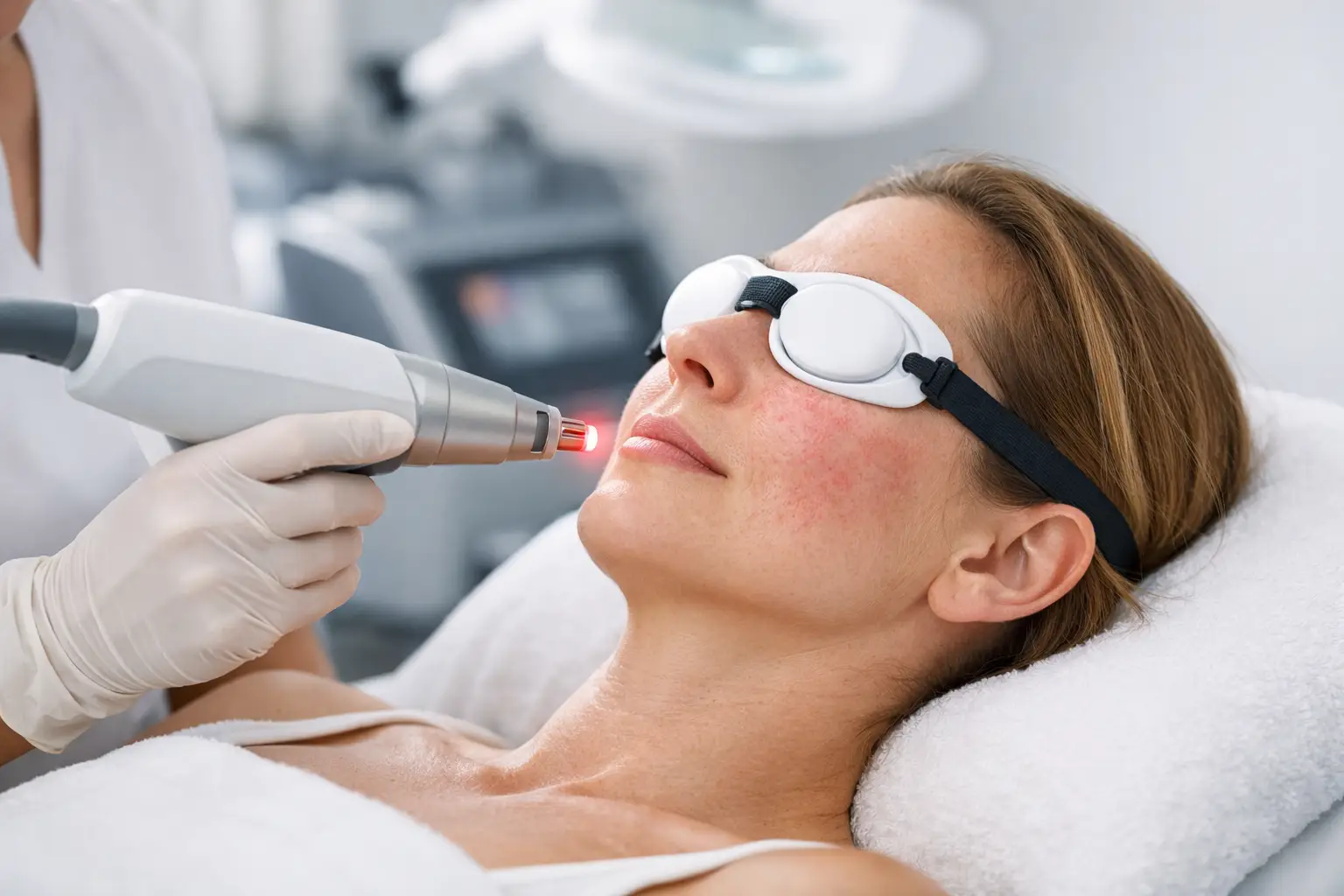
Persistent facial redness can make skin feel difficult to manage, particularly when flare-ups are triggered by heat, stress, exercise, alcohol, or certain skincare products. For people with visible facial blood vessels or ongoing redness, laser treatment for rosacea can offer a meaningful improvement without surgery or extensive downtime. The goal is not to change how you look. It is to reduce the vascular redness that can overshadow your natural complexion and help skin appear calmer and more even.
Rosacea is a chronic skin condition, so no device treatment should be presented as a permanent cure. However, the right laser plan can significantly reduce visible redness and vessels, often making flare-ups less noticeable and easier to manage with a thoughtful skincare routine and medical guidance.
How laser treatment for rosacea works
Rosacea-related redness is often caused by dilated superficial blood vessels and increased vascular activity in the skin. Vascular laser treatments use carefully selected wavelengths of light that are absorbed by hemoglobin, the pigment in red blood cells. The energy heats targeted vessels while minimizing disruption to surrounding skin.
Over time, the body clears the treated vessels, which can reduce diffuse redness, flushing, and the fine visible capillaries often seen around the nose, cheeks, and chin. The treatment is highly targeted, but results depend on the type of rosacea, the degree of vascular redness, skin tone, the device selected, and the settings used.
Not every form of rosacea responds to laser treatment in the same way. Laser and light-based procedures are most useful for persistent redness, frequent flushing, and visible blood vessels. They are less effective as a stand-alone solution for acne-like bumps, eye symptoms, or thickened skin. Those concerns may require prescription medication, skincare adjustments, or care from a dermatologist alongside aesthetic treatment.
Which devices may be used for rosacea redness?
A physician-led consultation is essential because the term laser is often used broadly. Different technologies serve different purposes, and the safest choice is not always the strongest setting or the most aggressive treatment.
Pulsed dye lasers are commonly used for red vascular concerns. They are designed to target redness and small blood vessels and may be appropriate for clients with persistent facial erythema or broken capillaries. Depending on the settings and skin response, temporary swelling or purplish bruising may occur, though non-bruising approaches are also possible.
Nd:YAG lasers can target deeper or more resistant vessels and may be considered when visible vessels are larger or deeper. Intense pulsed light, or IPL, is not technically a laser, but it is another light-based option that may help with diffuse redness and certain pigmentation concerns. The best option depends on your individual skin and treatment goals, not on a device name alone.
At Balwin Aesthetics, treatment planning should begin with an assessment of your redness pattern, sensitivity, medical history, current products, and desired level of downtime. This approach supports natural-looking improvement while reducing avoidable risk.
What happens during a rosacea laser appointment?
Your provider will begin by cleansing the treatment area and reviewing the plan. Protective eyewear is required. A cooling method may be used during treatment to improve comfort and protect the skin’s surface.
Most clients describe the sensation as a brief snap of warmth against the skin. Treatment time varies with the size of the area, but facial sessions are often relatively efficient. Afterward, skin may look pink or feel warm, similar to a mild sunburn. Some swelling is common, especially around the cheeks or under-eye area, and small vessels may temporarily look darker before they fade.
A single session can make a visible difference, but rosacea is rarely best treated as a one-visit concern. Many patients benefit from a series of treatments spaced several weeks apart, followed by maintenance visits as needed. Your provider can recommend a realistic schedule after evaluating how your skin responds.
Recovery and aftercare: protecting sensitive skin
Downtime after vascular laser treatment is usually manageable, but your skin deserves gentle care. Redness and mild swelling may last from a few hours to several days. If a treatment is intentionally performed at a setting that causes bruising, recovery can take longer. This trade-off may be worthwhile for some stubborn vessels, but it should be discussed before treatment.
For the first several days, avoid heat exposure that can aggravate flushing, including hot showers, saunas, strenuous workouts, and very hot beverages. Use a gentle cleanser, a simple fragrance-free moisturizer, and broad-spectrum sunscreen every day. Sun protection is particularly important because UV exposure can worsen rosacea and may affect the quality of your result.
Your provider may also ask you to pause potentially irritating products, such as retinoids, exfoliating acids, scrubs, or benzoyl peroxide, for a specified period. Do not restart active skincare products based on guesswork. Sensitive skin reacts differently from person to person, and personalized instructions matter.
Who is a good candidate?
Adults with stable but bothersome facial redness, flushing, or visible vessels may be good candidates for laser treatment. It can be a strong option for people who want a refined improvement in skin tone without surgery and who understand that maintenance may be part of long-term rosacea management.
The ideal time for treatment is when your skin is not severely irritated, sunburned, or actively inflamed. A provider may recommend delaying treatment if you have an active infection, open skin, a recent tan, or a history that increases the risk of pigment changes or poor healing. Pregnancy, certain medications, and a history of cold sores should also be discussed during consultation.
Skin tone deserves careful consideration. Vascular treatments can be performed safely for many skin types, but darker skin tones may require more conservative device selection and settings to lower the risk of post-inflammatory pigment changes. This is one reason physician oversight and experience with diverse skin concerns are so valuable.
Results: what is realistic?
The best results look like healthier, more balanced skin rather than a face that appears treated. Many clients notice a reduction in visible redness and vessels after a series of sessions, but the degree of change varies. Larger vessels may respond differently than general flushing, and rosacea triggers can still cause temporary redness after treatment.
Laser treatment works best as one part of a broader management plan. Daily sunscreen, barrier-supportive skincare, trigger awareness, and medical treatment when needed can all help preserve results. If redness returns over time, a maintenance appointment may restore the improvement.
Be cautious of promises that a single treatment will permanently eliminate rosacea. A responsible provider will explain the expected benefits, possible side effects, number of sessions, and alternatives before recommending a procedure. The goal is informed decision-making, not pressure.
Questions to ask before booking
Before committing to treatment, ask which device is recommended for your specific redness and why. You should also understand the expected downtime, the possibility of bruising or pigment changes, how many sessions are likely to be needed, and what aftercare is required. If you use prescription rosacea medication or have a history of skin sensitivity, share that information early.
A consultation is also the right time to discuss whether your concern is truly rosacea, visible facial vessels, sun-related redness, or a combination of issues. Accurate diagnosis helps create a treatment plan that is both safer and more effective.
When facial redness affects how confident you feel, the most useful next step is a personalized assessment rather than a one-size-fits-all solution. With appropriate technology, conservative technique, and ongoing skin care, laser treatment can help bring the focus back to your natural features instead of persistent redness.
