
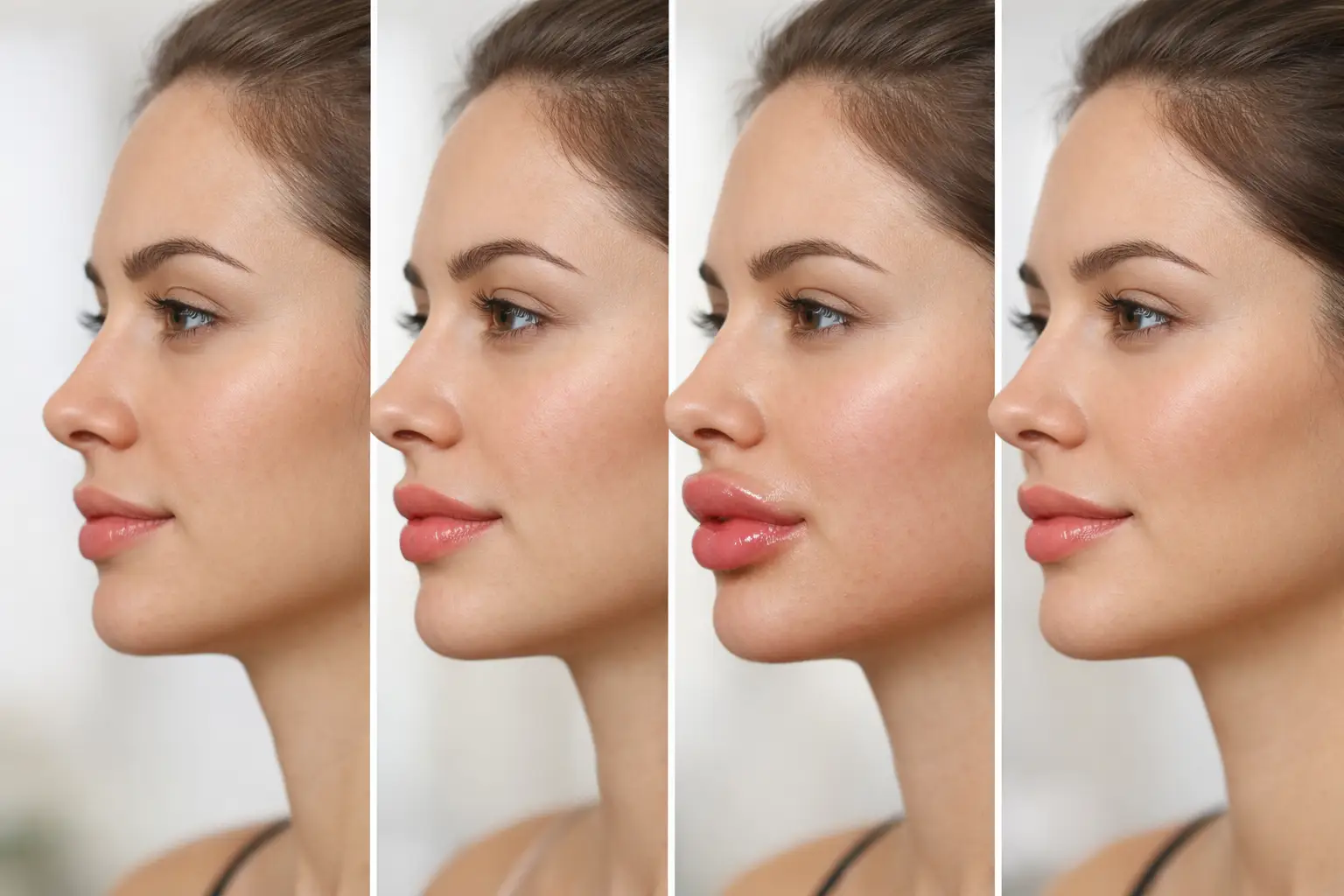
If your lips look noticeably fuller a few hours after treatment, that does not mean your final result has arrived. Lip filler swelling day by day can change more than many patients expect, especially during the first 72 hours. Knowing what is typical helps you stay calm, avoid overcorrecting too soon, and judge your result at the right time.
Lip filler is placed into a highly vascular, mobile area. That matters because lips tend to swell more than many other treatment areas, even when the procedure is performed carefully and conservatively. The product itself attracts water, and the injection process creates temporary tissue irritation. Together, those factors can make early volume look exaggerated before the lips settle into a softer, more natural shape.
Lip filler swelling day by day: what is normal?
There is a fairly predictable recovery pattern, but it is still normal for one side to look slightly puffier than the other early on. Small differences in anatomy, sleeping position, and how your body responds to treatment can all influence the first few days.
Day 0: right after treatment
Immediately after lip filler, you may see a mix of swelling, redness, and pinpoint marks where the needle entered the skin. Some patients also notice mild firmness or a slightly uneven look. At this stage, the lips often appear larger than expected, and that can be unsettling if it is your first treatment.
This early fullness is not the finished result. In many cases, the lips can look tight or overfilled for the rest of the day, particularly if a hydrating hyaluronic acid filler was used. Gentle cooling, keeping your head elevated, and avoiding heat can help limit additional swelling.
Day 1: often the puffiest point
For many patients, the morning after treatment is when swelling looks most dramatic. Lips may feel stiff, tender, and heavier than usual. It is also common to see asymmetry that was not obvious immediately after the appointment.
This is the stage when people are most tempted to panic or assume something has gone wrong. In most cases, it has not. Day 1 swelling can make the border look blurred, the upper lip look more pronounced, or small areas feel lumpy. Unless there is severe pain, blanching, or unusual discoloration, this is often part of normal recovery.
Day 2 to Day 3: still swollen, starting to settle
By the second and third day, many patients notice that swelling is still present but no longer increasing. Bruising may become more visible during this window, especially if you are prone to it. Tenderness usually starts to improve, although lips may still feel firm when talking, smiling, or eating.
This is also when mild irregularities may feel easier to notice. That does not automatically mean the filler is misplaced. Swelling is rarely uniform, so lips can look uneven before they look balanced.
Lip filler swelling day by day through the first week
The first week is usually when the biggest visual changes happen. This is why experienced injectors do not assess the true cosmetic result too early.
Day 4 to Day 5: a more accurate preview
Around this point, many patients begin to feel more comfortable with their appearance. The lips often start looking less inflated and more defined. If bruising occurred, it may still be present, but the shape is usually easier to evaluate than it was on Day 1.
That said, this is still not the final stage. Some residual swelling can linger, particularly in patients who have had more product placed, have naturally sensitive tissue, or are new to filler. If one area still feels slightly firmer, that can also be normal as the tissue continues to calm down.
Day 6 to Day 7: swelling is usually much improved
By the end of the first week, most swelling has significantly decreased. The lips tend to feel softer and look more proportionate to the rest of the face. Most patients can now tell whether they like the overall enhancement, although tiny adjustments in shape and softness may continue.
If your lips still seem fuller than you expected, that does not always mean they are overfilled. Hyaluronic acid fillers continue to integrate with the tissue over time, and the area can keep settling beyond the seven-day mark.
What happens after week one?
Many injectors prefer to evaluate lips at about two weeks. That timing gives the filler a chance to settle and lets the tissue recover from the procedure itself. By then, lingering swelling is usually minimal, bruising has largely resolved, and the lips look closer to their true outcome.
This matters because making decisions too early can lead to unnecessary correction. A patient who feels too full on Day 2 may actually look balanced by Day 10. On the other hand, a patient who seems underfilled once swelling resolves may be a better candidate for a careful touch-up rather than adding more product too soon.
Why some people swell more than others
Not everyone follows the exact same timeline. Injection technique, amount of filler used, individual anatomy, and your own inflammatory response all play a role. Patients having lip filler for the first time often feel swelling more intensely because the tissue is not yet familiar with treatment. More volume usually means more swelling, but not always.
Lifestyle factors can also affect recovery. Intense exercise, alcohol, heat exposure, salty foods, and sleeping flat immediately after treatment may contribute to more noticeable swelling in some patients. A history of easy bruising or sensitivity can also make the process feel more dramatic, even when healing is still normal.
What you can do to reduce swelling
A measured approach usually works best. Use a clean cold compress in short intervals rather than pressing firmly on the lips. Sleep with your head slightly elevated the first night or two. Stay hydrated, avoid strenuous workouts for the first 24 hours, and hold off on saunas, steam rooms, and very hot beverages if your injector has advised that.
It is also wise not to massage the lips unless your provider specifically instructs you to do so. Patients sometimes try to smooth out firmness on their own, but unnecessary pressure can irritate the area further. If something feels off, it is better to ask your injector than to self-correct.
When swelling may not be normal
Typical swelling improves gradually. It may fluctuate a little, but the overall trend should move in the right direction. Symptoms that deserve prompt medical attention include severe or worsening pain, pale or white patches on the skin, dusky discoloration, significant warmth with spreading redness, or swelling that seems disproportionate and keeps intensifying.
Cold sores can also be triggered by lip injections in patients who are prone to them. If you develop grouped blisters or a burning sensation that feels different from ordinary tenderness, contact your provider. The goal is not to assume every change is dangerous, but to recognize that lips should be monitored carefully because they are a delicate treatment area.
Why injector choice affects recovery
The product matters, but the injector matters just as much. Conservative placement, detailed anatomical knowledge, and a plan that respects your natural lip shape can reduce the risk of an overdone result and make swelling easier to manage. Physician-led clinics also tend to be better positioned to assess complications quickly and guide you through recovery with appropriate medical oversight.
For patients who want refined, natural-looking volume, this is especially important. Good lip filler should not rely on swelling to look impressive. It should still make sense on your face once healing is complete.
How to judge your final result fairly
The best time to evaluate your lips is usually around two weeks after treatment, not the same day and not the next morning. Early swelling can distort shape, exaggerate volume, and create temporary asymmetry. Waiting allows you to see what the filler is actually doing rather than what inflammation is doing.
If you still have concerns at that point, a follow-up visit is the right next step. A thoughtful injector can tell the difference between residual swelling, product settling, and a result that may benefit from adjustment. At Balwin Aesthetics, that kind of decision is guided by anatomy, balance, and the goal of keeping results polished rather than overfilled.
Lip filler recovery is rarely perfectly linear, and that is often the part patients do not realize until they experience it themselves. Give your lips time, follow aftercare closely, and judge the result only after the tissue has had a chance to settle into its natural shape.
