
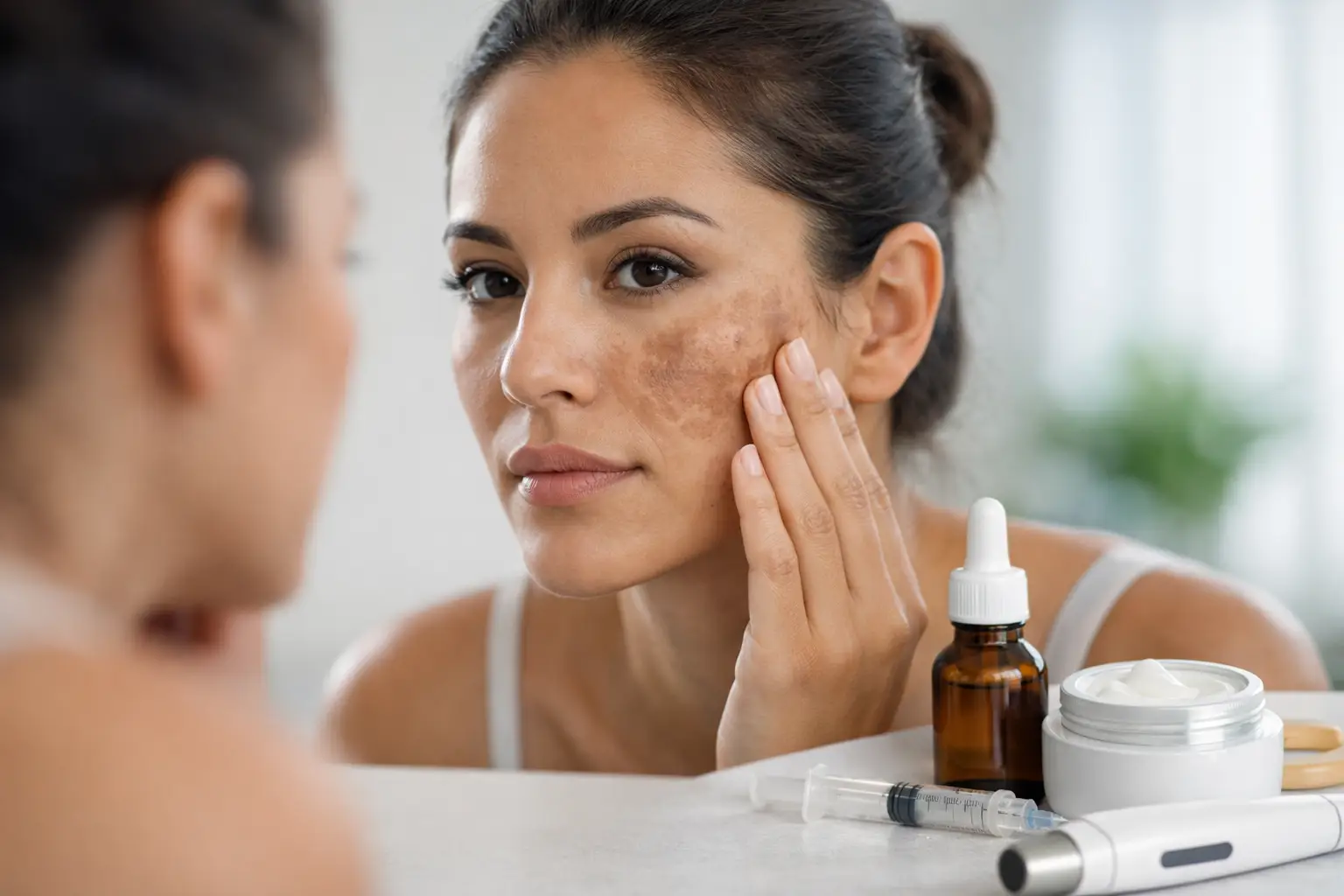
Melasma can be one of the most frustrating pigment concerns to treat because it does not behave like a simple sun spot. It often fades, flares, and returns with heat, hormones, sun exposure, or even irritation from the wrong skincare. That is why the best treatment for melasma is rarely a single product or procedure. In most cases, the right answer is a personalized plan that controls triggers, reduces excess pigment gradually, and protects the skin from rebound.
What makes melasma different from other pigmentation?
Melasma usually shows up as patchy brown, gray-brown, or tan discoloration on the cheeks, forehead, upper lip, and jawline. Unlike isolated dark spots from acne or sun damage, melasma tends to be more diffuse and symmetrical. It is also influenced by internal factors such as hormones and genetics, which is one reason it can be so persistent.
Another challenge is that melasma is easily worsened by inflammation. Treatments that are too aggressive may seem appealing because they promise fast results, but they can trigger more pigment in the long run. This is where expert guidance matters. A medically supervised approach helps distinguish melasma from other causes of pigmentation and reduces the risk of making it darker.
The best treatment for melasma is usually combination care
If you are hoping for one universal fix, melasma can be disappointing. The most reliable approach combines daily prevention, prescription or professional-grade topical care, and carefully selected in-office treatments when appropriate. The exact mix depends on your skin tone, the depth of pigmentation, your history of sensitivity, and how active the melasma is.
For many patients, topical treatment and sun protection form the foundation. Procedures can be helpful, but they tend to work best when the skin is already stabilized rather than inflamed. Think of melasma management as control rather than cure. The goal is clearer, more even-looking skin with fewer flare-ups over time.
Sun protection is not optional
This is the part many people underestimate. Even the most advanced treatment plan will struggle if UV exposure and visible light are not controlled. Melasma is highly reactive to sunlight, and in some patients, even brief daily exposure can keep it active.
A broad-spectrum sunscreen worn every day is essential, ideally with tinted iron oxides if visible light is a known trigger. Hats, seeking shade, and reapplying sunscreen matter more than most people realize. Without this step, other treatments are often less effective and results are harder to maintain.
Topical treatment often does the heavy lifting
Prescription lightening agents remain a mainstay for melasma. Hydroquinone is one of the most established options because it reduces the production of excess pigment. Depending on the patient, it may be used alone or in a compounded formula with ingredients such as tretinoin and a mild anti-inflammatory agent.
Other topical options include azelaic acid, kojic acid, cysteamine, tranexamic acid, retinoids, and carefully chosen brightening products. These can be useful for maintenance, for patients who cannot tolerate hydroquinone, or as part of a longer-term strategy. What matters most is selecting products that improve pigment without over-irritating the skin barrier.
In-office options for melasma: helpful, but selective
Professional treatments can improve melasma, but not every device or peel is a good fit. This is one area where overly aggressive treatment can backfire. The best in-office plan is usually conservative, strategic, and paired with proper pre- and post-treatment skincare.
Chemical peels
Superficial chemical peels can be effective for some patients with melasma, especially when there is more surface-level pigmentation. The key word is superficial. Gentle, series-based peels often perform better than deep peels because they lower the risk of inflammation and post-inflammatory hyperpigmentation.
The best candidates are typically patients whose melasma is stable, who are following a strong home regimen, and who have been properly assessed for skin type and sensitivity. Peels are not a shortcut, but they can support brighter, more even tone when used thoughtfully.
Microneedling with the right protocol
Microneedling may have a role in certain melasma cases, particularly when paired with professional topical delivery and conservative settings. It can help support skin renewal, but it has to be approached carefully. Too much depth or too much inflammation can work against the goal.
This is why physician-led treatment planning is important. In the right patient, microneedling can be part of a broader pigment strategy. In the wrong setting, or with poor aftercare, it may provoke irritation and prolong the problem.
Laser treatment for melasma
Laser treatment is often one of the first things people ask about, but it is not automatically the best treatment for melasma. Some lasers can improve pigment, while others can worsen it, especially in darker skin tones or in patients with active, unstable melasma.
Low-energy, carefully selected laser approaches may help certain patients, but success depends on device choice, treatment settings, skin type, and overall pigment management. Melasma is not the same as a single brown spot, and treating it as if it were can lead to disappointment. The right laser, in the right hands, may be useful. The wrong laser can create more inflammation and more pigment.
What about oral tranexamic acid?
For some patients with stubborn or recurring melasma, oral tranexamic acid may be considered under medical supervision. This treatment has shown promising results in selected cases because it addresses pathways involved in pigment formation. It is not appropriate for everyone, and a medical history review is necessary because there are important safety considerations.
This option highlights an important point: melasma treatment should never be one-size-fits-all. A plan that works well for one patient may not be suitable for another, particularly when hormonal factors, pregnancy history, clotting risks, or medication interactions are involved.
Why melasma keeps coming back
One of the most discouraging parts of melasma is recurrence. Patients often do well for a period of time, then notice the pigment returning after summer, after a beach vacation, during hormonal shifts, or after trying a harsh new product. That does not mean treatment failed. It usually means maintenance was always going to be part of the process.
Melasma has a chronic, relapsing pattern. Good treatment should include both an improvement phase and a maintenance phase. Once the pigment is lighter, the focus often shifts to ongoing sun protection, a simplified brightening routine, and periodic professional care as needed.
How to choose the best treatment for melasma for your skin
The best treatment plan starts with the right diagnosis. Not every dark patch on the face is melasma, and not every patient has the same depth of pigmentation. Some have more epidermal pigment, some have deeper dermal involvement, and many have a mixed pattern. Skin tone also matters because the risk of post-inflammatory hyperpigmentation changes the treatment strategy.
A thorough consultation should look at when the pigment started, whether it worsens with heat or hormones, what skincare you are using, and whether you have already tried peels, hydroquinone, or laser. This history often reveals why the pigment is lingering and what the skin is likely to tolerate.
At a physician-led aesthetics clinic, the advantage is not simply access to stronger treatments. It is the ability to choose the right level of treatment. Sometimes that means prescription topicals and barrier repair before any procedure. Sometimes it means a cautious series of peels or pigment-focused laser sessions. And sometimes it means avoiding a popular treatment because the risk is higher than the likely benefit.
The common mistake: treating melasma too aggressively
Patients dealing with melasma are often motivated to fix it quickly, which is understandable. But melasma usually rewards consistency more than intensity. Scrubs, strong acids, frequent heat-based treatments, and unplanned mixing of active ingredients can all make the skin more reactive.
Better results usually come from a calm, structured plan. That means protecting the skin barrier, minimizing triggers, and adjusting treatment based on response rather than pushing through irritation. In practice, the safest route is often the most effective one.
If you are trying to decide where to start, begin with a professional evaluation and a realistic timeline. Melasma can improve significantly, but it responds best to expert diagnosis, customized treatment, and long-term maintenance. At Balwin Aesthetics, that kind of plan is designed around both visible results and skin health, which is exactly what melasma requires.
