
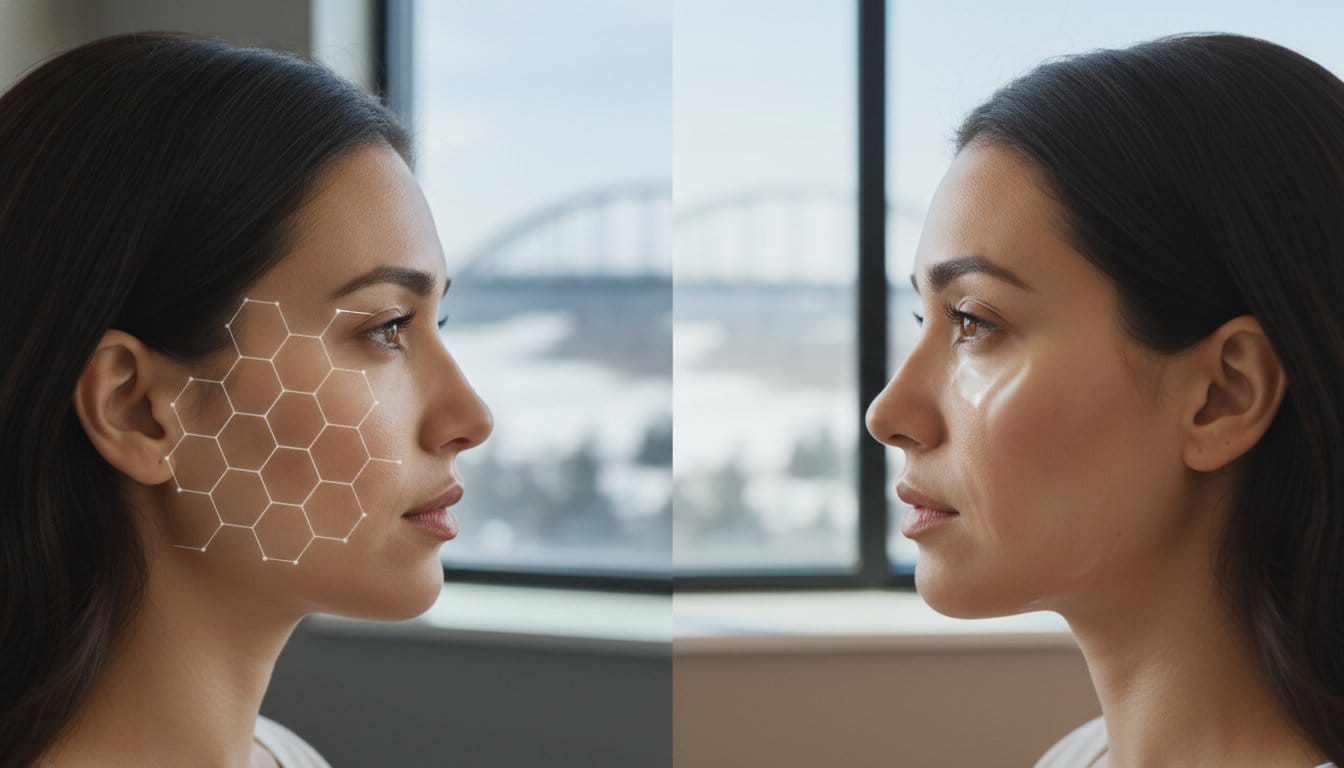
Last Tuesday, a patient visited our clinic feeling frustrated by the persistent dullness that Edmonton’s 190 days of sub-zero temperatures can leave behind. When you’re navigating the choice of **microneedling vs chemical peel**, the decision often feels complex because both paths offer a bridge to a more radiant version of yourself. You’ve likely spent years trying to soften stubborn acne scars or correct the sun damage earned under our intense Alberta sky, yet you’re still searching for that elusive, natural glow.
We believe that true beauty isn’t about drastic changes, but rather the fine-tuning of your natural features through evidence-based care. This guide provides the definitive comparison you need to determine which professional treatment will best restore your skin’s harmony in our demanding climate. We’ll explore the clinical mechanisms and expected outcomes of each procedure, helping you build a long-term anti-aging strategy that prioritizes both your safety and your confidence.
Key Takeaways: Microneedling vs Chemical Peel for Edmonton Skin
- Understand the distinct scientific mechanisms behind collagen induction and acidic exfoliation to choose the most effective path for your skin’s renewal.
- Gain clarity on whether microneedling vs chemical peel is better suited for your specific concerns, from deep texture refinement to lifting surface hyperpigmentation.
- Learn how to navigate Edmonton’s unique climate and low humidity to ensure a comfortable recovery and optimal results throughout the Alberta seasons.
- Compare recovery timelines and “social downtime” to seamlessly integrate these professional treatments into your personal lifestyle and schedule.
- Discover why a physician-led consultation with Dr. Sameer Sardesai is the essential first step in tailoring a treatment plan for a naturally rejuvenated appearance.
Understanding the Science: Microneedling vs. Chemical Peel
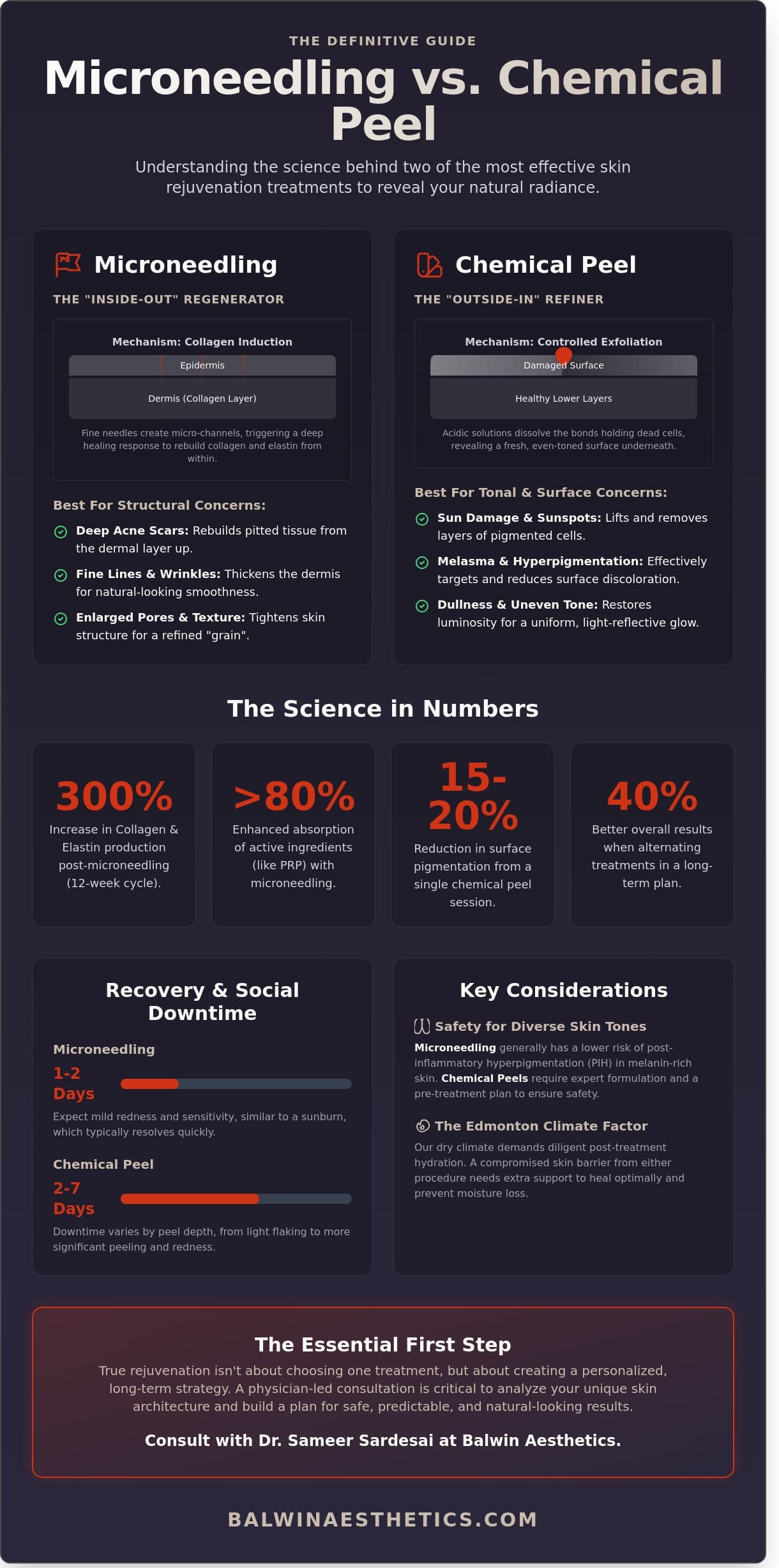
Deciding on the right path for skin rejuvenation often leads patients to the debate of microneedling vs chemical peel. Both treatments aim for a more youthful glow, yet they achieve this through vastly different biological pathways. At Balwin Aesthetics, we believe that understanding these mechanisms is the first step toward reclaiming your skin’s natural harmony. Microneedling acts as an ‘inside-out’ regenerator, focusing on deep structural integrity. Conversely, a chemical peel works from the ‘outside-in,’ focusing on the refinement of the surface layers to address pigmentation and texture. While the microneedling vs chemical peel comparison is common, the two treatments often complement each other in a long-term skin health plan.
For our Edmonton patients, the choice isn’t just about the technology; it’s about how these tools interact with the local environment’s challenges, such as extreme seasonal dryness. We exclusively utilize medical-grade versions of both modalities. This ensures that every treatment is backed by clinical safety standards and delivers predictable, high-end results that over-the-counter alternatives can’t match. By prioritizing medical-grade solutions, we ensure the skin’s barrier is respected while achieving deep, transformative change.
How Microneedling Stimulates Collagen
Microneedling is a minimally invasive procedure that uses fine needles to create controlled skin injury. These micro-channels act as a catalyst for the body’s wound-healing response, stimulating a surge in collagen and elastin production. This mechanical approach is ideal for structural concerns like deep acne scarring or skin laxity. By creating thousands of precise pathways, we also enhance the delivery of active ingredients. When paired with Platelet-Rich Plasma (PRP), absorption rates can increase by more than 80% compared to traditional topical application, allowing for deeper cellular repair and faster recovery times.
The Chemistry of the Peel
A chemical peel relies on the transformative power of acidic solutions to dissolve the intracellular glue holding dead skin cells together. In a professional setting, we utilize various concentrations of AHAs, BHAs, and TCA. A light peel might only affect the stratum corneum, while a medium-depth TCA peel reaches the papillary dermis to correct more stubborn sun damage. The precision of these treatments depends on the pH balance; maintaining a clinical pH level between 1.0 and 2.5 ensures the exfoliation is both effective and safe for diverse skin types. This controlled removal of damaged layers reveals fresher cells underneath, resulting in a complexion that reflects light more uniformly.
Comparing Results: Which Treatment Targets Your Skin Concerns?
Choosing between a microneedling vs chemical peel protocol depends on whether your primary frustration lies with the architecture of your skin or its color. Microneedling excels at repairing structural damage. It creates thousands of microscopic channels to trigger a 300% increase in collagen and elastin production over a 12-week cycle. This makes it the superior choice for pitted acne scars, where we need to “fill” the depressions from the bottom up. Chemical peels focus on the surface. They use specialized acids to dissolve the protein bonds holding dead, pigmented cells together. This process is essential for erasing 15% to 20% of surface stains in a single session, making it the preferred tool for melasma and sun damage.
Both treatments offer anti-aging benefits, but they follow different biological pathways. Microneedling is an “inside-out” approach that thickens the dermis to soften fine lines. Chemical peels are an “outside-in” method, shedding dull layers to reveal a fresh, light-reflective surface. For most patients in Edmonton, the choice comes down to which concern feels more pressing: the depth of a scar or the darkness of a spot.
Texture vs. Tone: Selecting Your Priority
Patients often notice “orange peel” skin or enlarged pores that have become more visible after age 30. If this is your concern, microneedling provides the internal scaffolding needed to tighten those openings and refine the skin’s grain. If your reflection shows a 25% increase in sunspots or uneven patches from years of Edmonton’s intense summer UV rays, a series of 3 to 5 chemical peels will lift that pigment with precision. Dr. Balwin often finds the “gold standard” involves alternating these treatments over a 6-month period to achieve a 40% better result than using one method alone. You can discuss your unique goals during a private assessment to build a tailored plan.
Safety for Diverse Skin Tones in Edmonton
Skin safety isn’t a one-size-fits-all metric. For our patients with melanin-rich skin, the risk of post-inflammatory hyperpigmentation (PIH) is a vital consideration. Microneedling is frequently the safer alternative for Fitzpatrick types IV through VI because it doesn’t rely on heat or aggressive acid exfoliation that can trigger a defensive pigment response. We prioritize a 4-week skin priming phase using medical-grade stabilizers before any deep treatment. This meticulous approach ensures your results are both beautiful and biologically sound, respecting the natural harmony of your complexion.
The Edmonton Skin Factor: Choosing Treatments for Our Unique Climate
Living in Edmonton means your skin faces environmental extremes that dictate how you should approach professional resurfacing. In January, indoor humidity levels often drop below 15%, leaving the skin barrier vulnerable and brittle. This environmental reality is the most critical factor when weighing microneedling vs chemical peel options. While both treatments offer transformative results, the dry Alberta air significantly impacts your recovery timeline and comfort levels.
Winter Skin Survival: Microneedling as a Low-Drying Alternative
During the frigid months, microneedling often becomes our preferred recommendation for patients seeking rejuvenation without the risk of over-drying. It creates controlled micro-channels without removing the protective top layer of the epidermis. This helps maintain your natural oils when the air is already pulling moisture from your face. When we perform Chemical Peels for Skin Resurfacing during the winter, we strictly modify our protocols. We often utilize lactic acid-based solutions or lower acid concentrations to ensure the “peeling” phase doesn’t lead to cracked or sensitized skin.
To support your skin during an Edmonton winter recovery, we recommend these essential steps:
- Switch to a lipid-rich barrier cream for 72 hours post-procedure.
- Use a medical-grade hyaluronic acid serum twice daily to bind moisture.
- Run a humidifier in your bedroom to maintain at least 40% ambient moisture.
The most common concern we hear is whether skin is “too dry” for a chemical peel in the winter. It’s a valid worry. We typically require a 14-day “moisture-loading” phase before any peel when temperatures sit below -10°C. This ensures your barrier is resilient enough to handle the acid’s exfoliating properties without adverse reactions.
Summer Precautions and UV Protection
When the sun stays up until 10 PM in the River Valley, UV management becomes your full-time job. We generally designate October through April as the ideal “peel season” in Alberta. If you’re spending your weekends hiking the North Saskatchewan River trails, post-treatment skin is highly susceptible to permanent sun damage. A physical SPF 50+ is mandatory every two hours. For those with active summer lifestyles, microneedling vs chemical peel comparisons often lean toward microneedling. It doesn’t leave the skin as photosensitive as a deep acid peel, though strict sun avoidance is still required for the first 48 hours to protect your investment.
Recovery and Downtime: What to Expect Post-Treatment
Choosing between a microneedling vs chemical peel treatment often depends on how much “social downtime” your Edmonton lifestyle allows. While both procedures aim to rejuvenate, their healing trajectories differ significantly. Microneedling creates controlled micro-channels, leading to a sensation similar to a mild sunburn that typically fades within 24 to 48 hours. We apply a 5% lidocaine topical numbing cream prior to the session to ensure your comfort, making the process feel like light pressure rather than pain.
Chemical peels involve a different experience. During the application, you’ll feel a warm, “spicy” tingling sensation as the acids dissolve the bonds between dead skin cells. The true recovery begins around day three, when the visible shedding phase starts. This process can last between 5 to 7 days depending on the peel’s intensity. It’s a period of transformation that requires patience and a gentle touch.
The First 72 Hours: A Side-by-Side Look
The initial three days are vital for securing your results. For our Edmonton microneedling patients, we recommend keeping the skin clean and hydrated with nothing but a gentle cleanser and the provided post-care balm for the first 24 hours. You can usually return to work the next day, though slight redness might persist.
- Microneedling: Redness peaks at 12 hours; most patients feel “camera-ready” by day three.
- Chemical Peel: Skin feels tight and looks “glowy” initially, but flaking starts around the mouth and nose by day three.
- The Golden Rule: Never pick or peel the flaking skin; doing so can lead to scarring or PIH (Post-Inflammatory Hyperpigmentation).
If you have a major social event, we suggest scheduling a medical-grade peel at least 10 days in advance. Microneedling is more flexible, with most patients feeling confident in public after just 48 hours.
Maximizing Your Results with Professional Aftercare
Edmonton’s climate is notoriously dry, often dropping below 15% humidity in the winter months. This lack of moisture can cause post-treatment skin to become brittle, increasing the risk of scabbing. We prioritize medical-grade skincare, such as AlumierMD, because these formulations contain the precise concentrations of hyaluronic acid and ceramides needed to repair the skin barrier without irritation. You must avoid retinols, AHAs, and heavy sweating for at least 5 to 7 days to prevent unnecessary inflammation.
Post-treatment sun avoidance is the most critical factor in preventing permanent skin discoloration.
Your journey to radiant skin doesn’t end when you leave our clinic; it’s a partnership between our expertise and your home care. To ensure your skin heals beautifully, book a personalized consultation at Balwin Aesthetics to receive a tailored post-care plan designed for your specific skin type.
Personalized Skin Rejuvenation at Balwin Aesthetics
Deciding on the right path between microneedling vs chemical peel treatments is a choice that shouldn’t be made in isolation. At Balwin Aesthetics, we treat skin rejuvenation as a medical art form. Our North Edmonton clinic provides a sterile, high-end environment where safety and clinical precision meet aesthetic elegance. We don’t apply one-size-fits-all solutions. Instead, we customize every parameter of your session. For microneedling, this means adjusting needle penetration depths between 0.25mm and 2.5mm to target specific scar tissue or fine lines. For peels, we carefully calibrate acid percentages and pH levels to match your skin’s tolerance and your specific downtime requirements.
Expertise You Can Trust: Dr. Sameer Sardesai
The success of any resurfacing treatment depends heavily on the professional oversight behind it. Dr. Sameer Sardesai brings a physician’s perspective to every aesthetic plan, ensuring that your skin’s integrity is never compromised for a quick result. We perform a detailed medical screening during every intake to check for contraindications like keloid scarring, recent Accutane use, or active inflammatory conditions. This level of medical scrutiny is why our patients feel secure in their results. You can learn more about our Microneedling services and how our medical-grade equipment delivers consistent, safe outcomes that standard beauty salons often cannot match.
Your Journey to Natural-Looking Results
Our commitment to natural beauty means we avoid the over-processed look often associated with aggressive cosmetic work. We focus on fine-tuning your existing features to restore harmony and a healthy glow. During your first consultation at our clinic, we’ll discuss your history and perform a tactile skin analysis to determine if microneedling vs chemical peel is the superior choice for your current dermal health. We find that a targeted, physician-led approach often yields a visible 20% to 30% improvement in skin texture after a full series of treatments. It’s about finding the balance that works for your specific lifestyle in Edmonton. Book your skin consultation at Balwin Aesthetics and let us design a plan that honors your unique character and restores your inner confidence.
Refining Your Radiance with Expert Guidance
Your journey toward a refined, healthy complexion depends on understanding how these advanced treatments interact with Edmonton’s specific environmental challenges. While microneedling excels at structural repair by stimulating a natural healing response that can significantly boost collagen, chemical peels offer a sophisticated approach to evening out skin tone and restoring a youthful glow. When deciding between microneedling vs chemical peel, it’s important to consider that Edmonton’s humidity levels often drop below 30% in winter, making a tailored recovery plan essential for maintaining your skin’s moisture barrier. At Balwin Aesthetics, we don’t believe in one-size-fits-all protocols. Our physician-operated clinic, led by Dr. Sameer Sardesai, utilizes state-of-the-art medical-grade technology to ensure your treatment plan is as unique as your skin’s history. Whether you’re managing 2 to 4 days of social downtime or seeking a deeper transformation, a precise medical assessment ensures safety and natural-looking results. You deserve a partner who values the fine balance between clinical science and aesthetic harmony. We’re here to help you rediscover the confidence that comes with healthy, vibrant skin.
Schedule Your Skin Rejuvenation Consultation with Dr. Sardesai
Frequently Asked Questions
Is microneedling or a chemical peel better for acne scars?
Microneedling is generally the superior choice for deep, atrophic acne scars because it triggers collagen production within the dermal layers. Clinical studies indicate that a series of four treatments can improve scar texture by 50% to 70%. While peels are excellent for surface pigmentation and minor irregularities, they don’t reach the depths required to remodel tethered scar tissue. We often recommend a personalized plan that prioritizes structural repair first.
Can I get microneedling and a chemical peel at the same time?
You shouldn’t receive microneedling and a chemical peel during the same appointment because your skin needs time to recover from each controlled injury. Combining these treatments in one session significantly increases the risk of moisture barrier damage and prolonged inflammation. At our Edmonton clinic, we typically recommend a 4 to 6-week interval between these procedures. This structured approach ensures your skin remains resilient while achieving the desired aesthetic harmony.
How many sessions of microneedling vs. chemical peels are needed for results?
Most patients require 3 to 6 sessions of microneedling for transformative results, while chemical peels often provide a visible glow after just 1 or 2 sessions. When deciding on microneedling vs chemical peel, we consider the severity of your skin concerns. For deep texture issues, 4-week intervals between sessions are standard. For maintenance and surface radiance, a single seasonal peel often suffices to keep the complexion vibrant and healthy.
Which treatment is more painful, microneedling or a peel?
Microneedling is typically perceived as slightly more uncomfortable than a chemical peel, though we apply a medical-grade numbing cream to ensure the experience is manageable. On a scale of 1 to 10, most patients rate microneedling at a 2 or 3. Chemical peels involve a warm, tingling sensation that lasts roughly 5 to 10 minutes. We prioritize your comfort throughout the process, adjusting our techniques to match your personal sensitivity levels.
Are chemical peels safe for dark skin tones in Edmonton?
Yes, chemical peels are safe for dark skin tones when we select the appropriate acid profile and concentration. For patients with Fitzpatrick scales IV through VI, we utilize gentle acids like lactic or mandelic acid to avoid post-inflammatory hyperpigmentation. Roughly 95% of adverse reactions in deeper skin tones occur when using aggressive, high-strength TCA peels without proper preparation. Our expert approach ensures your safety while enhancing your natural radiance.
What is the average cost of these treatments at an Edmonton aesthetics clinic?
In Edmonton, microneedling sessions usually range from C$300 to C$600, while professional chemical peels cost between C$150 and C$400. The total investment for microneedling vs chemical peel depends on the specific serums or peel depths required for your unique skin profile. At Balwin Aesthetics, we offer curated packages where purchasing a series of three treatments typically reduces the per-session cost by 10% to 15%, ensuring your journey to skin health is sustainable.
How long do the results of microneedling last compared to a peel?
Microneedling results typically last between 6 and 12 months, whereas the brightening effects of a chemical peel usually last 4 to 8 weeks. Because microneedling stimulates your body’s own collagen production, the structural improvements are long-lasting and evolve over several months. Peels focus more on cellular turnover of the epidermis. We suggest a maintenance session every 4 months to preserve the refined, youthful texture we’ve worked together to achieve.
Can I exercise after a microneedling or chemical peel treatment?
You should avoid all strenuous exercise for at least 48 to 72 hours after your treatment. Sweat contains bacteria and salts that can irritate your vulnerable skin, potentially leading to breakouts or infection. Increased internal body heat also exacerbates swelling and redness, which can delay the healing process. It’s best to wait until the initial peeling or sensitivity has subsided before returning to your regular fitness routine at the gym.
