
Hair thinning usually shows up gradually – more scalp at the part line, less density at the temples, extra shedding in the shower, and the growing sense that your hair no longer frames your face the way it used to. For many patients, prp for hair thinning becomes appealing at exactly that point: when they want to respond early, avoid surgery, and choose a treatment that feels medically grounded rather than trend-driven.
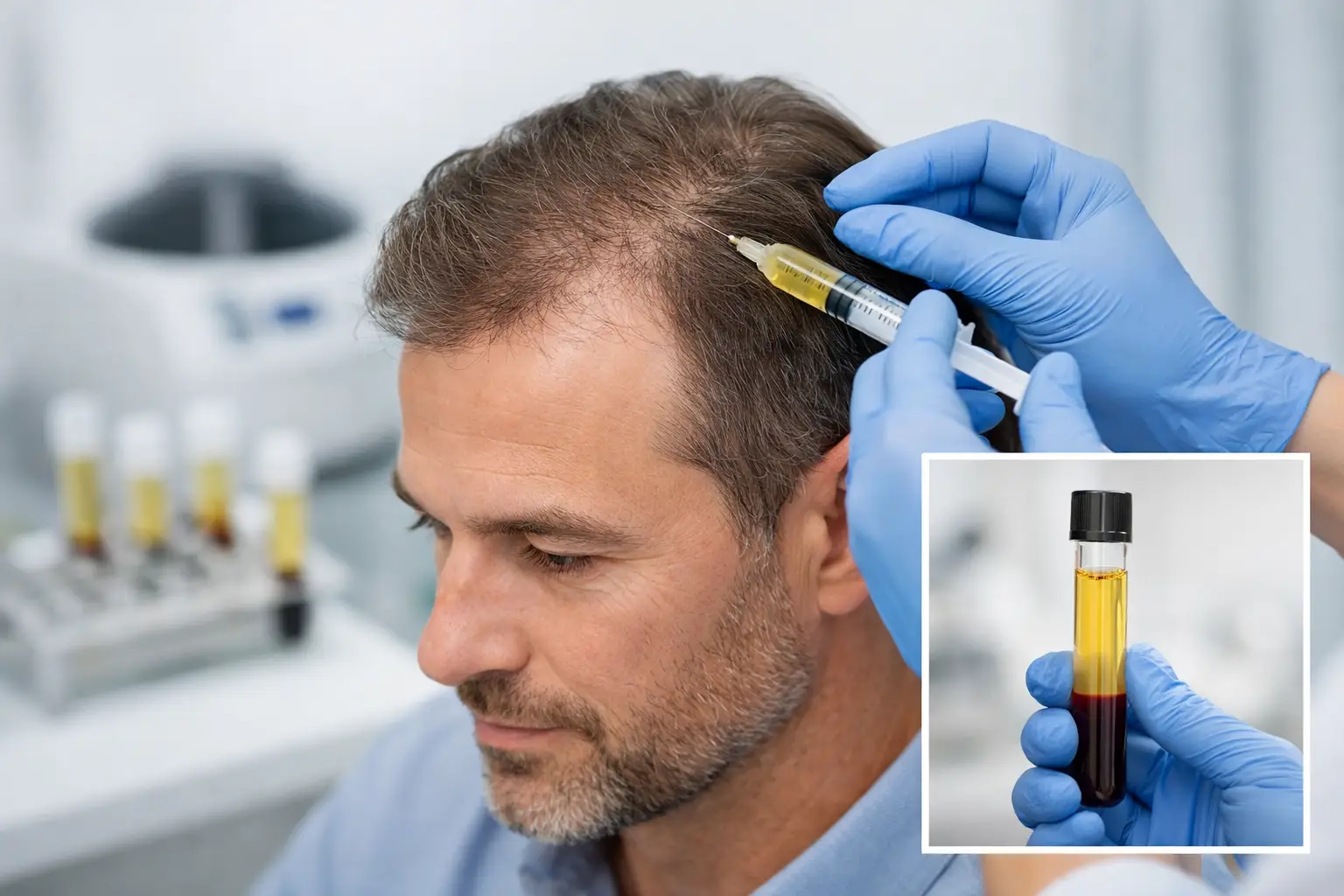
PRP, short for platelet-rich plasma, uses a concentrated portion of your own blood to support the scalp and hair follicles. In a clinical setting, a small blood sample is drawn, processed to separate and concentrate the platelets, and then injected into areas of concern on the scalp. Platelets contain growth factors that may help stimulate follicles, improve the scalp environment, and encourage stronger, thicker hair growth over time.
How PRP for hair thinning works
PRP is not a filler for the scalp and it is not a quick cosmetic cover-up. The goal is to support living hair follicles that are still capable of producing hair, even if they have become weaker or are producing finer strands than before. That distinction matters.
Hair thinning often happens because follicles shrink over time. This process is common in androgenetic alopecia, which affects both women and men. Stress, hormonal shifts, nutritional issues, and some medical conditions can also contribute to shedding or reduced density. PRP is most useful when follicles are weakened but still active. If an area has been completely bald for a long time, results tend to be more limited.
That is why a proper assessment comes first. The best treatment plans begin by identifying the pattern of loss, how long it has been happening, and whether there may be a trigger that needs separate attention. In physician-led care, the conversation is not just about whether PRP can be done. It is about whether it makes sense for your scalp, your goals, and your stage of hair loss.
Who is a good candidate for PRP for hair thinning?
In general, the strongest candidates are patients in the earlier to moderate stages of thinning. You may be a good fit if you have widening at the part, decreased ponytail volume, recession at the hairline, or diffuse thinning that still leaves visible hair in the area.
PRP can be a thoughtful option for women noticing age-related thinning or postpartum recovery that has not fully normalized. It can also be helpful for men who want to address early pattern loss before it becomes more advanced. Some patients choose it because they are not ready for daily medications. Others use it as part of a broader plan that may also include topical or oral therapies, depending on medical history and treatment goals.
There are also cases where PRP may not be the right first step. If you have active scalp inflammation, untreated thyroid disease, significant iron deficiency, or sudden severe shedding, the underlying cause should be evaluated first. Similarly, if expectations are unrealistic – for example, expecting one session to reverse years of advanced hair loss – a more honest plan is needed.
What happens during treatment
The process is straightforward, but it should still feel precise and medically supervised. A blood sample is taken first. That sample is spun in a centrifuge so the platelet-rich portion can be isolated. After the scalp is prepared, the PRP is injected into targeted areas where thinning is most noticeable.
Most patients describe the treatment as tolerable. The scalp is sensitive, so some degree of discomfort is normal, especially along the hairline or crown. Clinics may use methods to improve comfort, but this is still an injection-based procedure, not a facial-level treatment where sensation is minimal.
Appointments are generally efficient. You can return to most normal activities the same day, though you may be asked to avoid washing the hair, heavy exercise, or certain products for a short period after treatment. Mild tenderness, pinpoint bleeding, or a tight sensation on the scalp can happen temporarily.
When results start to show
This is where realistic expectations matter. PRP is not instant. Hair grows slowly, and follicles need time to respond.
Most patients do not see visible improvement after a single session. Early changes often show up as reduced shedding, followed by improved texture and stronger-looking growth over the next few months. Increased density may become more noticeable after a series of treatments rather than right away.
A common plan involves an initial set of sessions spaced several weeks apart, followed by maintenance treatments. Exact timing varies by clinic and by patient. Someone with mild thinning may respond differently from someone with more established loss, and the maintenance schedule may also depend on whether PRP is being combined with other therapies.
The most satisfying outcomes tend to be subtle and cumulative. Hair may look fuller, the part may appear less wide, and styling may become easier. For patients who value natural-looking improvement, that can be exactly the point.
Benefits and limitations
The appeal of PRP is easy to understand. It is minimally invasive, uses your own biological material, involves little downtime, and can be integrated into a broader hair restoration plan. For the right patient, it offers a way to address thinning without surgery and without changing the look of the face or hairline in an artificial way.
At the same time, PRP has limits. It does not create brand-new follicles. It does not reliably restore areas where follicles are no longer viable. And it does not work equally well for every cause of hair loss. Response can vary based on age, genetics, hormonal factors, overall health, and how early treatment begins.
That is why careful consultation matters more than marketing language. A reputable clinic should be clear about what PRP can improve, what it may not improve, and whether another approach should be added or considered instead.
Why medical evaluation matters before starting
Hair loss is emotional, but it is also medical. Patients often come in focused on the visible problem and have not yet considered that the reason behind their thinning could affect treatment choice.
A physician-led consultation helps bring structure to that decision. It can clarify whether the pattern is typical hereditary thinning, whether there are signs of scalp disease, and whether you may benefit from lab work or additional support. It also helps set expectations based on what your scalp actually shows today, not what online before-and-after photos imply.
This level of evaluation is especially important for patients who want polished, natural outcomes and do not want to waste time on treatments that are poorly matched to their condition. At Balwin Aesthetics, that kind of individualized treatment planning is central to the patient experience.
Questions worth asking at your consultation
If you are considering PRP, the right questions can tell you a great deal about the quality of care you are receiving. Ask how your type of hair loss is being diagnosed, how many sessions are typically recommended for your degree of thinning, when maintenance may be needed, and what kind of improvement is realistic in your case.
It is also reasonable to ask who performs the treatment, how the PRP is prepared, and whether PRP is expected to work best on its own or as part of combination care. A strong consultation should leave you better informed, not pressured.
Is PRP worth it for hair thinning?
For the right patient, yes. PRP can be worth it when the goal is to treat thinning early, preserve existing hair, and improve density in a way that looks gradual and believable. It tends to appeal most to patients who want physician-supervised care, minimal downtime, and a treatment plan that supports long-term maintenance rather than a quick fix.
The key is timing and candidacy. If you start when follicles are still active and commit to the recommended schedule, the odds of meaningful improvement are better. If thinning is advanced or the cause has not been properly assessed, PRP may disappoint.
The best next step is not guessing from social media or trying to compare your scalp to someone else’s results. It is having your hair loss evaluated carefully, understanding your options, and choosing a plan that matches both your biology and your expectations. When treatment starts from that place, the path forward usually feels much clearer.
