
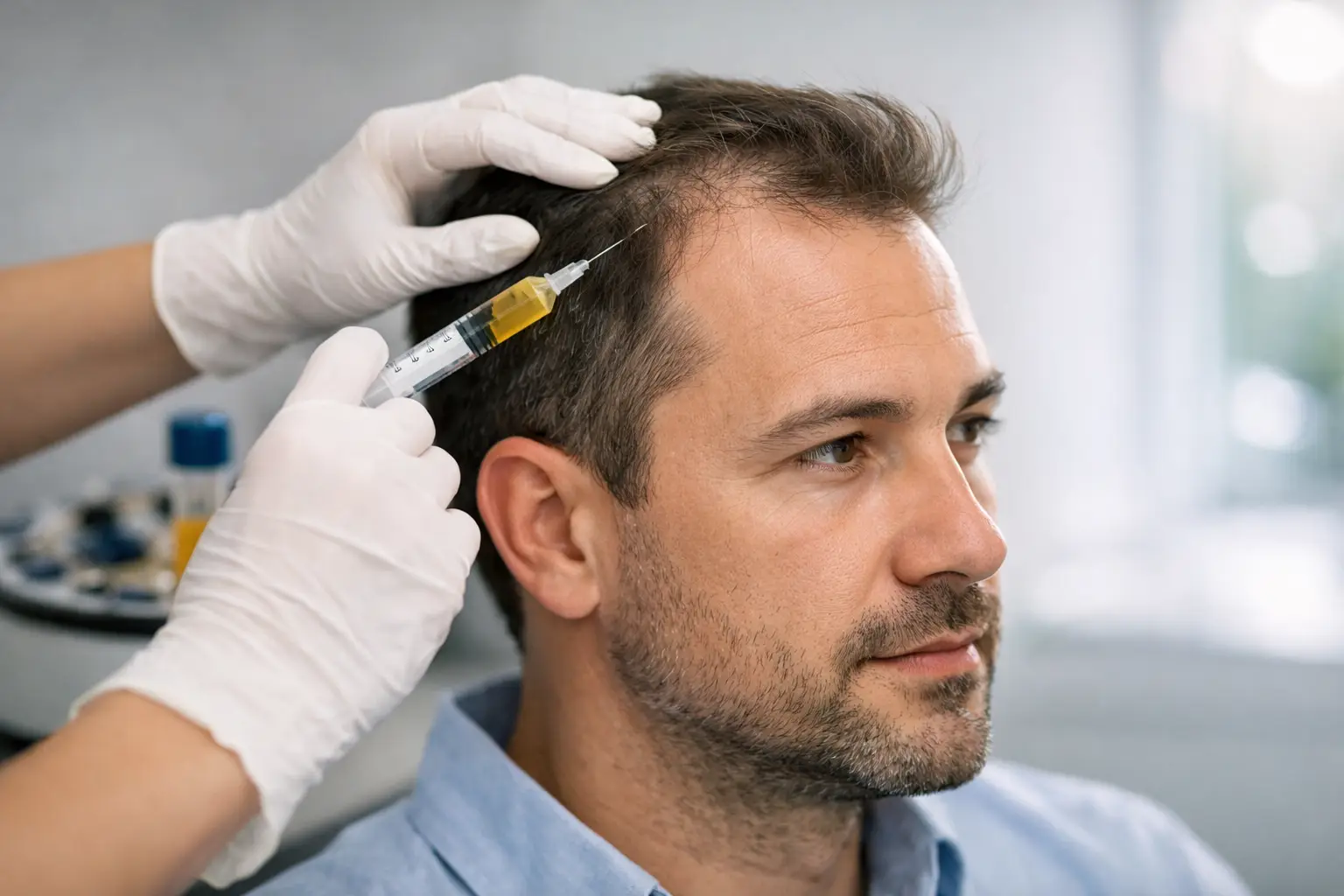
Hair shedding in the shower is one thing. Watching your part widen, your ponytail thin out, or your hairline slowly shift is different. If you have been asking, does PRP help hair loss, the short answer is yes – for the right patient, with the right diagnosis, and with realistic expectations.
PRP is not a magic fix, and it is not the best answer for every type of hair loss. But for many people with early to moderate thinning, it can be a meaningful part of a treatment plan that supports thicker, healthier-looking hair without surgery.
Does PRP help hair loss, medically speaking?
PRP stands for platelet-rich plasma. The treatment uses a small sample of your own blood, which is processed to concentrate the platelets and growth factors. That plasma is then injected into areas of the scalp affected by thinning.
The goal is not to create brand-new hair follicles where none exist. The goal is to stimulate follicles that are still alive but underperforming. In the right setting, PRP may help extend the hair growth phase, reduce shedding, and improve hair caliber over time.
That distinction matters. PRP tends to work best when the follicles are weakened, not gone. If an area has been completely bald and smooth for years, the potential for regrowth is much lower.
Who is most likely to benefit from PRP for hair loss?
The strongest candidates are usually patients with androgenetic alopecia, also called pattern hair loss. This can affect both men and women. In men, it often shows up as a receding hairline or thinning at the crown. In women, it more often appears as diffuse thinning through the part or top of the scalp.
PRP may also be helpful in some cases of increased shedding, especially when thinning is caught early. However, not every type of hair loss responds the same way. Conditions such as scarring alopecia, advanced follicle miniaturization, or certain inflammatory scalp disorders may require a very different approach.
This is why diagnosis comes first. Hair loss is a symptom, not a single disease. Hormonal shifts, genetics, stress, iron deficiency, thyroid imbalance, recent illness, medications, and scalp inflammation can all play a role. A treatment can only be effective if it is matched to the cause.
How PRP treatment works
The process itself is straightforward and done in clinic. A small blood sample is drawn, then spun in a centrifuge to separate and concentrate the platelet-rich portion. After the scalp is assessed and the treatment areas are mapped, the PRP is injected into the thinning regions.
Most patients describe the procedure as tolerable. You may feel pressure, pinching, or a stinging sensation depending on the area treated and your personal sensitivity. Because this is a minimally invasive treatment using your own plasma, downtime is usually limited. Mild soreness, pinpoint bleeding, or scalp tenderness can happen, but these effects are typically short-lived.
Results are gradual. Hair grows slowly, so PRP is not the kind of treatment where you leave the appointment and see immediate density. Changes tend to develop over months, not days.
What kind of results should you realistically expect?
This is where expectations need to stay grounded. PRP can improve hair quality and support fuller-looking density, but it usually does not restore the hair you had at 18.
Patients who respond well often notice less shedding first. After that, hair may start to feel stronger or look a bit thicker. Some see improvement in overall density, especially in areas with miniaturized hairs that still have growth potential. The best outcomes are often in patients who start treatment before thinning becomes severe.
A typical plan involves an initial series of sessions followed by maintenance treatments. Hair loss is usually ongoing, especially when driven by genetics, so one round is rarely a permanent fix. PRP is better understood as a management strategy than a cure.
That may sound less dramatic than marketing claims you have seen online, but it is also more honest. The most satisfying results usually come from consistency and a personalized plan, not from expecting one treatment to do everything.
Does PRP help hair loss better than other treatments?
It depends on what you are comparing it to.
For patients who want a non-surgical option with minimal downtime, PRP is appealing. Because it uses your own plasma, there is no synthetic filler or medication being injected into the scalp. For many people, that feels like a comfortable middle ground between doing nothing and moving toward surgery.
That said, PRP is not necessarily a replacement for other proven hair loss treatments. In many cases, the best outcomes come from combination care. A physician may recommend PRP alongside topical or oral therapies, depending on your pattern of loss, medical history, and goals.
Compared with hair transplant surgery, PRP is far less invasive but also less dramatic in what it can achieve. Surgery can redistribute hair into areas with significant loss. PRP cannot do that. What PRP can do is support existing follicles and potentially improve the quality of native hair.
Compared with over-the-counter products, PRP tends to be more targeted and medically guided. The trade-off is that it requires in-office treatment and a higher upfront investment.
When PRP may not be the right choice
Not every patient is an ideal candidate. If your hair loss is caused by an untreated medical issue, that underlying problem needs attention first. If you have severe or longstanding bald areas with little remaining follicular activity, PRP may offer limited improvement.
There are also practical considerations. PRP requires a series of visits and maintenance. If you are looking for a one-and-done solution, this treatment may not align with your expectations. It is also important to understand that outcomes vary. Even in well-selected patients, response can differ from person to person.
Technique matters as well. The way PRP is prepared, the concentration achieved, the injection pattern, and the overall treatment plan can affect the experience and result. This is one reason physician-led assessment is so valuable. A hair restoration plan should not be based on a trend. It should be based on diagnosis, scalp evaluation, and a realistic discussion of what is achievable.
What to ask before starting PRP
If you are considering treatment, ask what type of hair loss you likely have and whether PRP is expected to help in your specific case. Ask how many sessions are typically recommended, when results are usually seen, and what maintenance may look like. It is also reasonable to ask whether PRP should be combined with other therapies to improve your outcome.
A good consultation should feel educational, not pressured. You should leave understanding both the upside and the limits. Premium aesthetic care is not just about offering treatment. It is about offering the right treatment for the right reason.
Does PRP help hair loss in women and men equally?
PRP can be beneficial for both, but the pattern and cause of thinning often differ.
Women frequently present with diffuse thinning rather than distinct bald patches, and many seek treatment earlier because changes in density become noticeable in styling. Men may present with temple recession or crown thinning and may combine PRP with other medical therapies more often.
Response is less about gender and more about diagnosis, timing, and follicle health. A patient with early pattern thinning usually has more to gain than someone with advanced loss, regardless of whether they are male or female.
Why timing matters more than most people think
One of the biggest mistakes in hair restoration is waiting until the loss feels severe enough to justify treatment. By that point, some follicles may no longer be salvageable.
Early intervention gives non-surgical options like PRP a better chance to work. If you are noticing increased shedding, a widening part, reduced volume, or scalp visibility that was not there before, that is the right time to get assessed. You do not need to wait for dramatic baldness to start a conversation.
For patients who want natural-looking improvement and physician-supervised care, PRP can be a smart option when used thoughtfully. At Balwin Aesthetics, that means evaluating the why behind the thinning first, then building a treatment plan around your scalp health, hair goals, and comfort level.
If you are asking whether PRP is worth it, the better question is whether your hair follicles still have enough life left to respond. That is where a careful consultation can make all the difference.
