
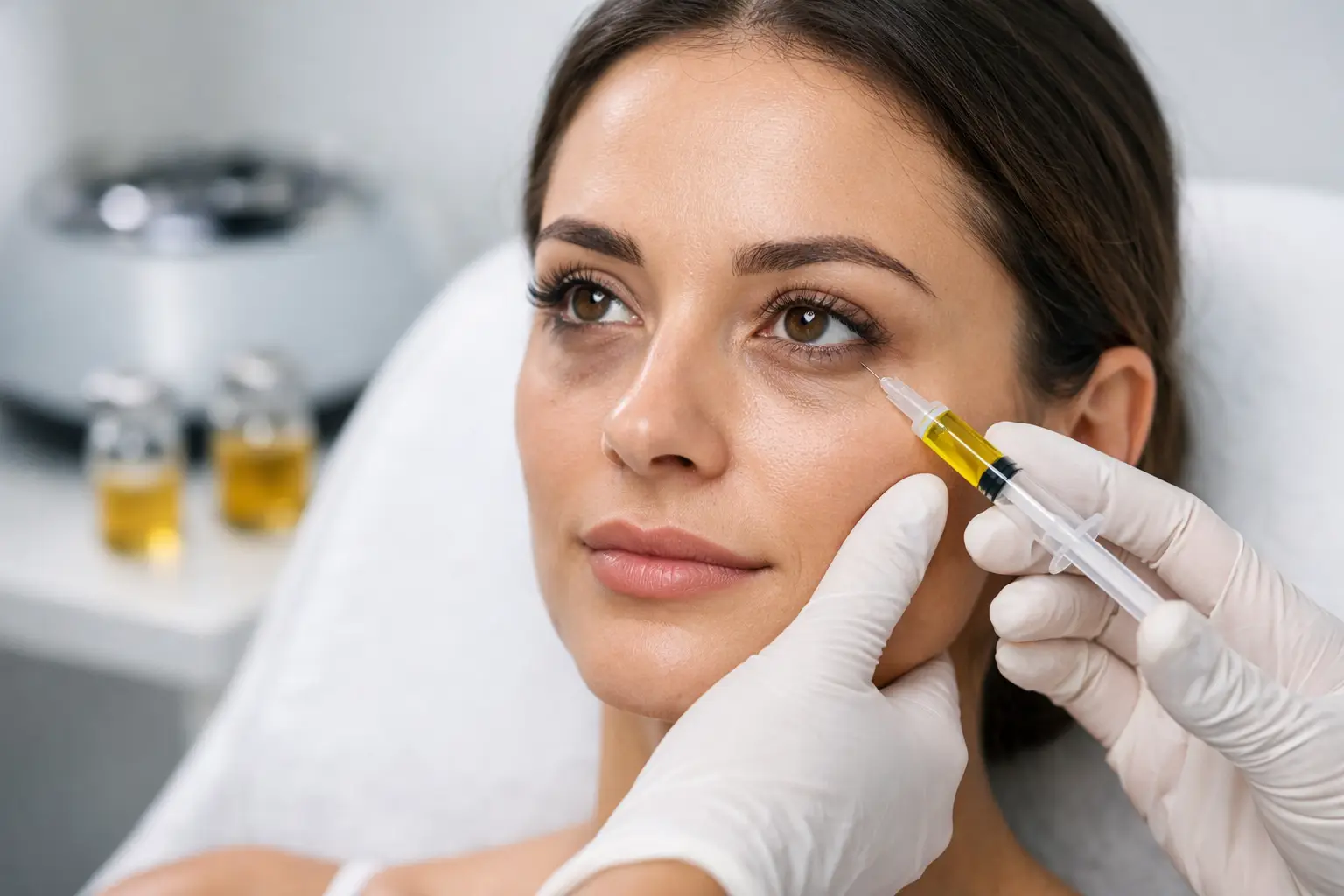
Dark under-eye circles rarely have one simple cause. For some people, they are caused by thin, crepey skin that makes blood vessels more visible. For others, they come from pigment, natural facial anatomy, volume loss, or the shadow created by a tear trough. PRP for under eye circles can be a thoughtful option when skin quality and early volume loss are part of the concern, but the most natural result begins with identifying what is actually creating the tired appearance.
At Balwin Aesthetics, this assessment is central to treatment planning. The under-eye area is delicate and highly expressive, so a treatment should refresh the face without creating puffiness, overcorrection, or an unnatural change in expression.
What PRP Can Do for Under-Eye Concerns
Platelet-rich plasma, commonly called PRP, is prepared from a small sample of your own blood. The blood is processed to concentrate platelets and plasma, which contain naturally occurring growth factors involved in the body’s repair processes. When carefully placed in appropriate areas, PRP is used to support collagen stimulation and improve the overall quality of the skin.
Under the eyes, PRP is not designed to act like a traditional filler. Rather than creating immediate structural volume, it works gradually to support smoother, more resilient-looking skin. Patients may notice that the area appears brighter, less crepey, and better hydrated over time. Fine lines can soften, and the blue or purple cast that comes from thin skin may become less noticeable.
That distinction matters. PRP may improve the quality of the tissue, but it cannot fully erase every type of dark circle. If a deep hollow is creating a strong shadow, carefully selected filler or another regenerative approach may be more effective. If the darkness is primarily brown pigmentation, a skin-renewal plan that includes topical care, chemical peels, or laser-based treatment may be considered instead.
Who Is a Good Candidate for PRP for Under Eye Circles?
The best candidates usually have early signs of skin thinning, fine lines, mild crepiness, or a tired-looking under-eye area that is not caused by severe puffiness or a prominent tear trough. PRP can also appeal to patients who prefer a treatment that uses their own blood components and want a gradual, subtle improvement rather than an immediate change in volume.
A consultation should also address lifestyle and health factors. Genetics, allergies, sun exposure, sleep quality, smoking, anemia, and chronic rubbing of the eyes can all influence the appearance of dark circles. A treatment plan that ignores these factors may deliver a less satisfying result.
PRP may not be the right first choice for someone with significant under-eye bags, advanced hollowness, marked skin laxity, or pronounced pigment. It may also need to be postponed for patients with an active skin infection, certain blood or platelet disorders, or medical circumstances that affect healing. A physician-led consultation helps determine whether PRP is appropriate and whether another treatment, or a combination approach, would better serve your goals.
Why the Under-Eye Assessment Matters
The phrase “dark circles” can describe several different concerns. A bluish or purplish tone may reflect visible vessels beneath thin skin. Brown discoloration is more often pigment-related. A hollow beneath the lower lid can cast a shadow that appears dark even when the skin itself is healthy.
These concerns can overlap, which is why before-and-after expectations should be personal rather than based on someone else’s result. An experienced injector evaluates skin thickness, facial proportions, volume distribution, pigment, and the movement of the lower eyelid before recommending treatment.
What Happens During Treatment?
A PRP appointment begins with a small blood draw, similar to routine laboratory testing. The sample is placed in a centrifuge to separate and concentrate the platelet-rich portion of the plasma. The skin is cleansed, and topical numbing may be used to make the experience more comfortable.
Depending on the treatment plan, PRP may be introduced through a series of precise injections or paired with microneedling in the surrounding skin. For the under-eye area, technique is especially important. The provider must respect the area’s thin tissue, vascular anatomy, and natural contours. Treatment is typically completed in one appointment, although preparation and numbing time mean patients should allow additional time at the clinic.
Many patients benefit from a series of treatments rather than a single session. A common plan may involve multiple appointments spaced several weeks apart, followed by maintenance based on skin response and individual goals. The right schedule depends on the degree of concern, the condition of the skin, and whether PRP is being combined with other services.
When Will You See Results?
PRP results develop gradually. Some patients notice a healthier appearance within the first few weeks, but collagen remodeling takes time. Improvement is often more apparent after a treatment series, with results continuing to refine over the following months.
This gradual timeline is one reason PRP can look very natural. There is no sudden change in facial shape. Instead, the goal is for the under-eye area to look more rested and for the skin to reflect light more evenly.
Results vary. Age, genetics, skin quality, sun exposure, and lifestyle all play a role. PRP can be an excellent option for subtle skin rejuvenation, but it should not be presented as a permanent or complete correction for every under-eye concern. Maintaining results may involve periodic treatment and a consistent skincare routine that supports the investment you have made in your skin.
Recovery and Aftercare
Most patients return to normal activities quickly, although mild swelling, tenderness, redness, or bruising can occur. Because the under-eye area is prone to swelling, a small amount of puffiness may be more noticeable in the first few days. Bruising can last longer for some patients, particularly those who bruise easily.
Your provider will give instructions tailored to your treatment, but patients are commonly advised to avoid strenuous exercise, alcohol, excessive heat, and unnecessary pressure on the treated area for a short period. Cold compresses may be recommended if swelling occurs. Avoid applying makeup until the skin has settled according to your provider’s guidance, and protect the area from sun exposure with appropriate sunscreen.
Before treatment, disclose all medications, supplements, and medical conditions. Products that affect bruising or bleeding should only be adjusted with approval from the clinician who prescribed them. Never stop prescribed medication solely for an aesthetic appointment without medical guidance.
Safety Depends on More Than the Product
Because PRP uses material from your own blood, the risk of an allergic reaction to the PRP itself is low. However, every injectable treatment still carries potential risks, including bruising, swelling, discomfort, infection, and uneven results. The under-eye region requires particular care because of its anatomy and because even minor irregularities can be visible.
Choosing a qualified, medically supervised clinic is not simply about comfort. It supports appropriate candidate selection, careful technique, sterile handling, and a clear plan should a concern arise. The safest treatment is not necessarily the most aggressive one. In many cases, a conservative approach with gradual improvement is the better path to a refined, natural-looking result.
PRP Compared With Other Under-Eye Treatments
PRP is often considered when the priority is skin quality. Dermal filler may be considered when structural volume loss and shadowing are the primary issues, though filler is not suitable for every under-eye patient. Microneedling can help address texture and fine lines across a wider area, while chemical peels and certain laser treatments may be more relevant for pigment-related darkness.
Combination treatment can be valuable when more than one issue is present. For example, a patient with mild hollowness and thin, crepey skin may benefit from a plan that addresses both volume and tissue quality over time. The order, timing, and choice of treatments should be based on a detailed facial assessment, not a one-size-fits-all package.
The most helpful next step is a focused consultation that looks beyond the label of dark circles. When treatment matches the true cause of the concern, PRP can become part of a well-designed plan for eyes that look rested, healthy, and naturally refreshed.
