
Hair thinning is not a one-size-fits-all concern
A widening part, a receding hairline, or more visible scalp under bright lighting can feel personal long before it becomes dramatic. When considering PRP versus hair transplant, the right choice depends less on which treatment sounds more advanced and more on why hair loss is occurring, how much active hair remains, and what degree of change you hope to see.
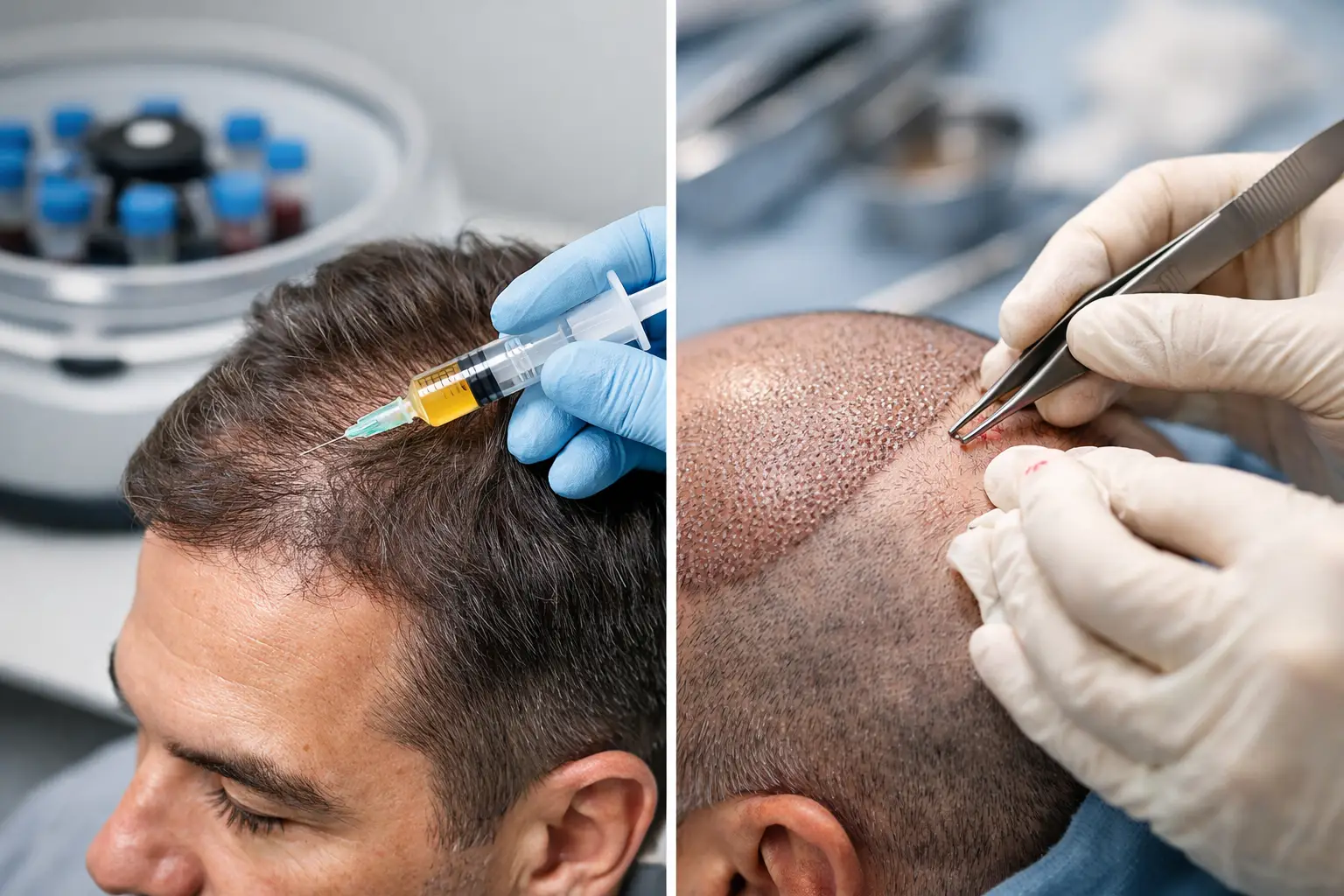
PRP and hair transplantation are very different approaches. One supports existing follicles through a series of non-surgical treatments; the other redistributes healthy follicles to areas where growth has been permanently lost. Both can have a place in a thoughtful hair restoration plan, but they are not interchangeable.
PRP versus hair transplant: the essential difference
Platelet-rich plasma, commonly called PRP, uses a concentrated portion of your own blood that contains platelets and growth factors. After a small blood draw, the PRP is prepared and injected into areas of thinning scalp. The goal is to support follicle health, reduce shedding in appropriate candidates, and encourage thicker-looking growth from follicles that are still present but underperforming.
A hair transplant is a surgical procedure. Follicles are harvested from a donor area, usually the back or sides of the scalp, and placed into thinning or balding areas. Once the transplanted follicles establish a blood supply and begin growing, they generally retain the characteristics of the donor hair. This makes transplantation a more definitive option for restoring coverage where follicles are no longer producing hair.
Put simply, PRP works with the follicles you have. A transplant moves viable follicles to a new location.
Who may benefit from PRP?
PRP is often considered by people in earlier stages of thinning, particularly when they still have a reasonable amount of hair in the treatment area. It may be appropriate for men and women experiencing pattern-related thinning, increased shedding, or a gradual decrease in hair density. It can also be appealing to those who want a physician-supervised option without incisions, graft harvesting, or significant downtime.
The treatment is not designed to create a brand-new hairline on bare scalp. If an area has been smooth and bald for years, there may not be enough functioning follicles for PRP to stimulate. Results also depend on the underlying cause of shedding. Nutritional deficiencies, thyroid changes, certain medications, recent illness, stress-related shedding, and inflammatory scalp conditions may need separate assessment and management.
A typical PRP plan involves an initial series of treatments followed by maintenance sessions. Hair growth happens slowly, so meaningful changes are usually assessed over several months rather than weeks. Some patients notice less shedding first, while improved density and hair caliber may develop gradually.
The advantages of a non-surgical approach
For the right candidate, PRP offers minimal interruption to daily life. Appointments are relatively brief, and most patients return to regular activities soon afterward. Mild tenderness, pinpoint bleeding, temporary swelling, or a headache can occur, but recovery is generally straightforward.
PRP is also a useful option for patients who are not ready for surgery or who want to preserve their current hair before loss progresses. It may be used alongside a broader medical hair-loss strategy when clinically appropriate.
Who may benefit from a hair transplant?
Hair transplantation is usually better suited to people with established pattern hair loss and stable donor hair. Candidates need enough healthy follicles in the donor area to create coverage while preserving a natural appearance in the back and sides of the scalp. A transplant can be especially valuable for restoring a receded hairline, filling a bald crown, or adding density to areas where follicle activity is no longer sufficient.
The quality of the donor area matters as much as the area being treated. A skilled surgical assessment considers hair caliber, density, curl pattern, scalp characteristics, family history, and the likely progression of future loss. This planning is essential. A hairline that looks full at age 35 may look unnatural later if ongoing hair loss is not anticipated.
A transplant requires more recovery than PRP. There may be scabbing, redness, swelling, and temporary restrictions on exercise or scalp care. Transplanted hairs commonly shed in the weeks after surgery before new growth begins. Visible growth often starts several months later, with final maturation taking up to a year or longer.
Permanent does not mean maintenance-free
Transplanted follicles are typically long-lasting, but they do not prevent the surrounding native hair from continuing to thin. That is why many transplant candidates benefit from a long-term plan to protect existing hair. Depending on the individual, that plan may include PRP, topical or oral therapies prescribed by a qualified clinician, or periodic monitoring.
A transplant is also not automatically the best answer for diffuse thinning. When hair loss is widespread throughout the scalp, removing donor follicles may not achieve the density a patient expects. In these cases, a non-surgical approach may be recommended first.
Results: what is realistic?
PRP aims to improve the quality and performance of existing hair. The most realistic result is often thicker-looking hair, less visible scalp, and a healthier overall density. It is a gradual improvement, not an overnight transformation. Response varies, and some patients see more benefit than others.
A hair transplant can produce a more noticeable structural change because it physically adds follicles to an area of loss. However, the appearance of density depends on the number of available grafts, the size of the treatment area, hair texture, contrast between hair and scalp color, and how the grafts are designed and placed. Even an excellent transplant cannot always recreate the density of untouched adolescent hair.
Natural results should be the priority with either option. In hair restoration, subtle, age-appropriate improvement is often more convincing than an overly low hairline or an aggressive density goal that cannot be supported by the donor area.
Safety, comfort, and the value of medical assessment
PRP uses your own plasma, which reduces the concern for allergic reaction to a foreign substance. Still, it should be performed in an appropriate medical setting with careful attention to sterile technique, medical history, medications, and scalp health. Patients with certain bleeding disorders, active scalp infections, or conditions affecting platelet function may not be suitable candidates.
Hair transplantation is surgery and carries surgical considerations, including infection, bleeding, scarring, temporary shock loss, and uneven growth. The safety and quality of the outcome depend heavily on proper candidate selection, surgical planning, and experienced clinical oversight.
Before choosing either treatment, a consultation should examine the pattern and timeline of hair loss, scalp condition, family history, medical factors, and personal goals. This is also the time to discuss whether a dermatologist or primary care evaluation is needed, particularly if shedding is sudden, patchy, accompanied by itching or pain, or associated with other health changes.
Cost and commitment: comparing the investment
PRP usually involves a lower cost per appointment than surgery, but it requires a series of sessions and periodic maintenance to sustain benefits. It is best viewed as an ongoing investment in existing hair rather than a one-time correction.
A hair transplant requires a larger upfront financial commitment because it involves surgery, graft harvesting, and detailed procedural work. The long-term value can be substantial for a well-selected candidate, but some patients may require more than one procedure depending on the extent of loss and future progression.
Cost should never be the only deciding factor. A less expensive treatment that cannot address a fully bald area may lead to disappointment, while surgery performed too early or without adequate donor planning can limit options later.
Making a personalized choice
There is no universal winner in PRP versus hair transplant. PRP may be the more appropriate first step when hair is thinning but follicles remain active. A transplant may be a better fit when there is stable, established loss and enough donor hair to create a natural result. In some cases, the strongest strategy is not either-or: PRP can support native hair before or after a transplant, while surgery restores areas that no longer respond to non-surgical care.
At Balwin Aesthetics, physician-led consultation begins with an honest assessment of what your hair can realistically achieve. The most worthwhile next step is a plan that respects your current hair, your future hair loss pattern, and your preference for results that look naturally your own.
