
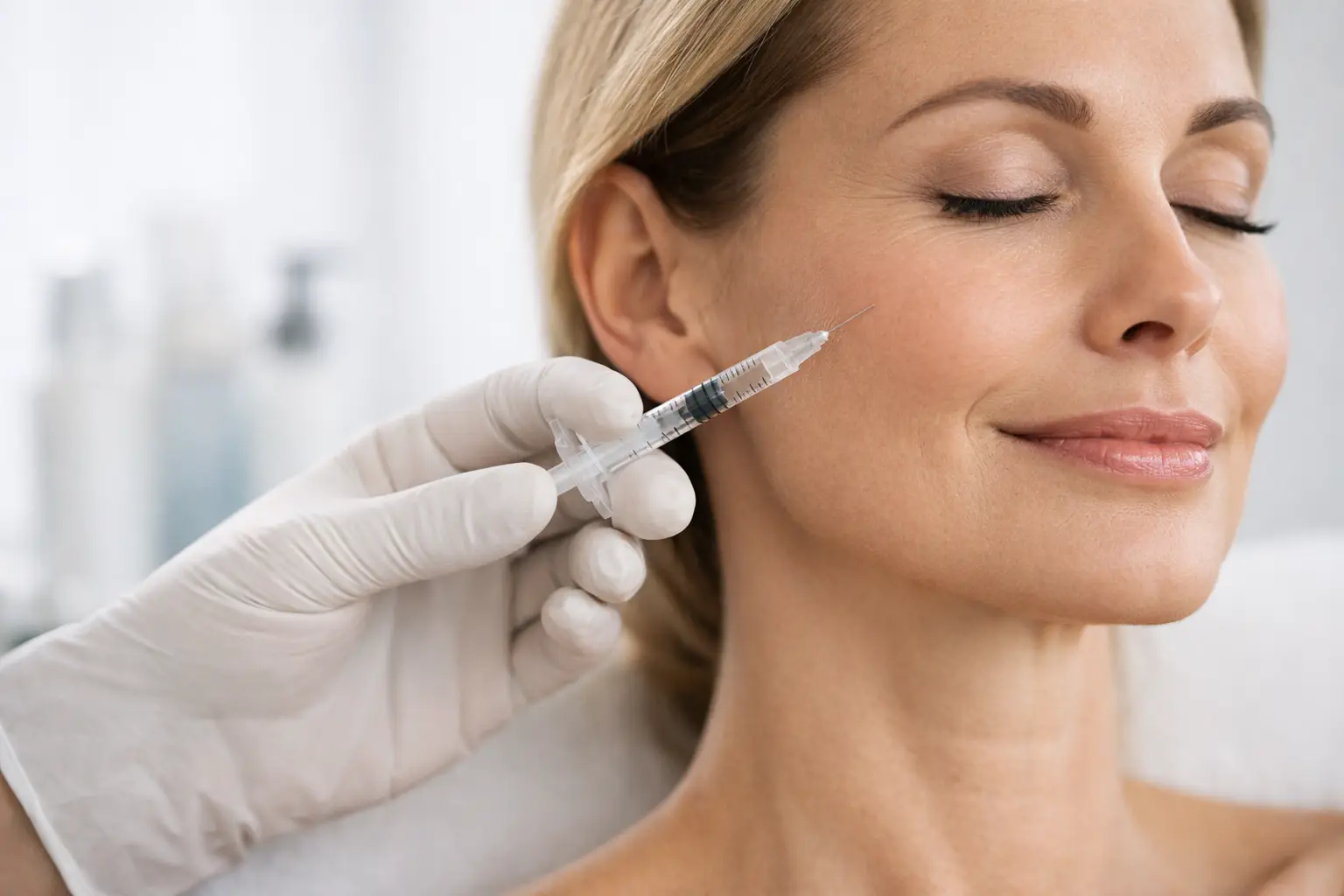
Cheek volume rarely disappears all at once. It gradually shifts and softens, often making the under-eye area look more hollow, the smile lines more noticeable, and the lower face less defined. Understanding how dermal fillers restore cheeks can help you decide whether this non-surgical treatment aligns with your goals for a refreshed, natural-looking appearance.
Why Cheeks Change Over Time
Full, gently elevated cheeks are often associated with a rested and youthful facial appearance. Over time, several changes can affect this area. The natural fat pads in the midface can shrink or descend, collagen and elastin production declines, and bone structure may subtly change. Together, these shifts reduce support in the central face.
The result is not always simply “flat” cheeks. Some people notice shadows beneath the eyes, deeper nasolabial folds between the nose and mouth, or a heavier appearance along the jawline. Others have naturally modest cheek projection and want more facial definition without looking overfilled.
Cheek filler is designed to address these concerns by restoring strategically placed volume and structural support. The goal is not to recreate a different face. It is to work with your existing anatomy and improve the balance that time, weight changes, or genetics may have altered.
How Dermal Fillers Restore Cheeks
Most cheek fillers are made with hyaluronic acid, a substance that naturally occurs in the body and attracts water. When placed at the appropriate depth, a filler can add projection, soften hollows, and provide support to surrounding facial tissues.
Cheek treatment is not simply a matter of placing product directly into the most hollow-looking area. A skilled injector assesses the cheekbone, midface, temples, under-eye transition, lower face, and overall facial proportions. Often, restoring support higher on the cheek can create a subtle lifting effect that improves the appearance of folds and shadows below it.
For example, a patient who is concerned about prominent smile lines may benefit from midface support before receiving filler directly into those lines. This approach can prevent an overfilled appearance and may produce a more balanced result. Similarly, under-eye hollowness may be partly related to volume loss in the upper cheek, rather than a concern that should be treated only beneath the eyes.
The precise placement, depth, and amount of filler matter. Deeper placement along the cheekbone can create structure and contour, while carefully placed midface volume may soften a tired or sunken look. The best plan depends on facial anatomy, skin quality, the degree of volume loss, and the result you want to see in the mirror.
What Natural-Looking Cheek Filler Should Achieve
Natural-looking results are about proportion, not a particular cheek shape. Some patients want subtle restoration that makes them look less tired. Others want more noticeable definition through the cheekbone. Both can be appropriate when the treatment plan respects the individual’s natural features.
A thoughtful cheek filler treatment typically aims to improve one or more of the following:
- Midface volume that has diminished with age or weight loss
- Gentle cheekbone contour and facial definition
- Support for shadows, folds, and hollows below the cheeks
- Symmetry when one side of the face has less projection than the other
The treatment should not make the cheeks look puffy, overly round, or disconnected from the rest of the face. More filler is not always better. In many cases, a conservative first treatment with reassessment after the filler settles is the most refined approach.
Facial movement also matters. Your cheeks should continue to look like your cheeks when you smile, speak, and turn your head. This is why a personalized assessment is more valuable than choosing a fixed number of syringes or trying to copy a result seen online.
What Happens During a Cheek Filler Appointment
A physician-led consultation begins with a discussion of your concerns, medical history, previous injectable treatments, and desired outcome. Your provider will evaluate your facial structure at rest and in motion, then recommend whether filler is suitable and where it may be most beneficial.
Before treatment, the skin is cleansed and marked to guide precise placement. Many dermal fillers contain lidocaine, a local anesthetic that helps improve comfort. Depending on the plan and the area being treated, the injector may use a fine needle, a blunt-tip cannula, or both.
Treatment itself is usually completed in one appointment. You may see an immediate improvement in cheek contour or volume, though the result can look slightly different once minor swelling settles. Your provider may gently assess the area during the appointment to ensure the filler is placed evenly and supports the intended facial shape.
At Balwin Aesthetics, treatment planning centers on physician-supervised care, careful facial assessment, and results that complement rather than overpower your natural beauty.
Recovery, Results, and How Long Cheek Filler Lasts
Most patients return to regular activities shortly after their appointment. Mild swelling, tenderness, redness, or bruising can occur, particularly during the first few days. These effects are generally temporary, but it is wise to schedule treatment at least two weeks before an important event if you want extra time for any swelling or bruising to resolve.
Your provider may advise you to avoid strenuous exercise, excessive heat, alcohol, and pressure on the treated area for a short period. Sleeping on your back the first night can be helpful if your cheeks feel tender. Follow the specific aftercare instructions you receive, as recommendations may vary with the product used and your individual treatment.
Hyaluronic acid cheek fillers commonly last from about 12 to 24 months, although longevity varies. Product selection, metabolism, treatment area, amount injected, and lifestyle can all influence how long results remain visible. Some patients prefer periodic maintenance appointments, while others wait until they notice volume gradually diminishing.
Results are not permanent, which can be a benefit for patients who want a non-surgical option with flexibility. Hyaluronic acid fillers can also be dissolved when medically appropriate, though this does not make treatment risk-free or eliminate the need for expert technique.
Safety Considerations and Who May Not Be a Candidate
Dermal filler is a medical treatment, not a routine beauty service. The cheek area contains important blood vessels, and injections must be performed by a qualified medical professional who understands facial anatomy, product selection, and complication management.
Common side effects include temporary swelling, bruising, tenderness, and mild asymmetry during the early healing period. Less common but serious complications can occur, including vascular occlusion, in which filler affects blood flow. Severe pain, skin blanching or discoloration, unusual changes in vision, or worsening symptoms after treatment require immediate medical attention.
Filler may not be recommended if you are pregnant or breastfeeding, have an active skin infection or inflammation near the treatment area, have certain medical conditions, or have a history that requires additional caution. A consultation is the right setting to discuss allergies, medications, previous filler treatments, autoimmune conditions, and any questions about safety.
It also helps to be candid about your expectations. Cheek filler can improve facial volume and contour, but it cannot tighten significantly loose skin or replace the effects of a surgical facelift. When skin laxity, deep tissue descent, or major structural changes are the primary concern, your provider may discuss other treatments or a combination approach.
Choosing the Right Approach for Your Face
The most successful cheek enhancement is rarely obvious to other people. Friends may say you look rested, healthier, or as though you have been sleeping well, without being able to identify why. That subtlety comes from treating the face as a whole rather than chasing volume in one area.
If you are considering cheek filler, bring reference photos only as a conversation starter, not as a template. Your bone structure, facial proportions, skin thickness, and aging pattern are unique. A qualified provider can explain what is realistically achievable and build a plan that prioritizes safety and balance.
A well-planned consultation gives you space to ask questions, understand the trade-offs, and choose treatment at a pace that feels right. The goal is not to look altered. It is to see a more supported, refreshed version of yourself when you catch your reflection.
