
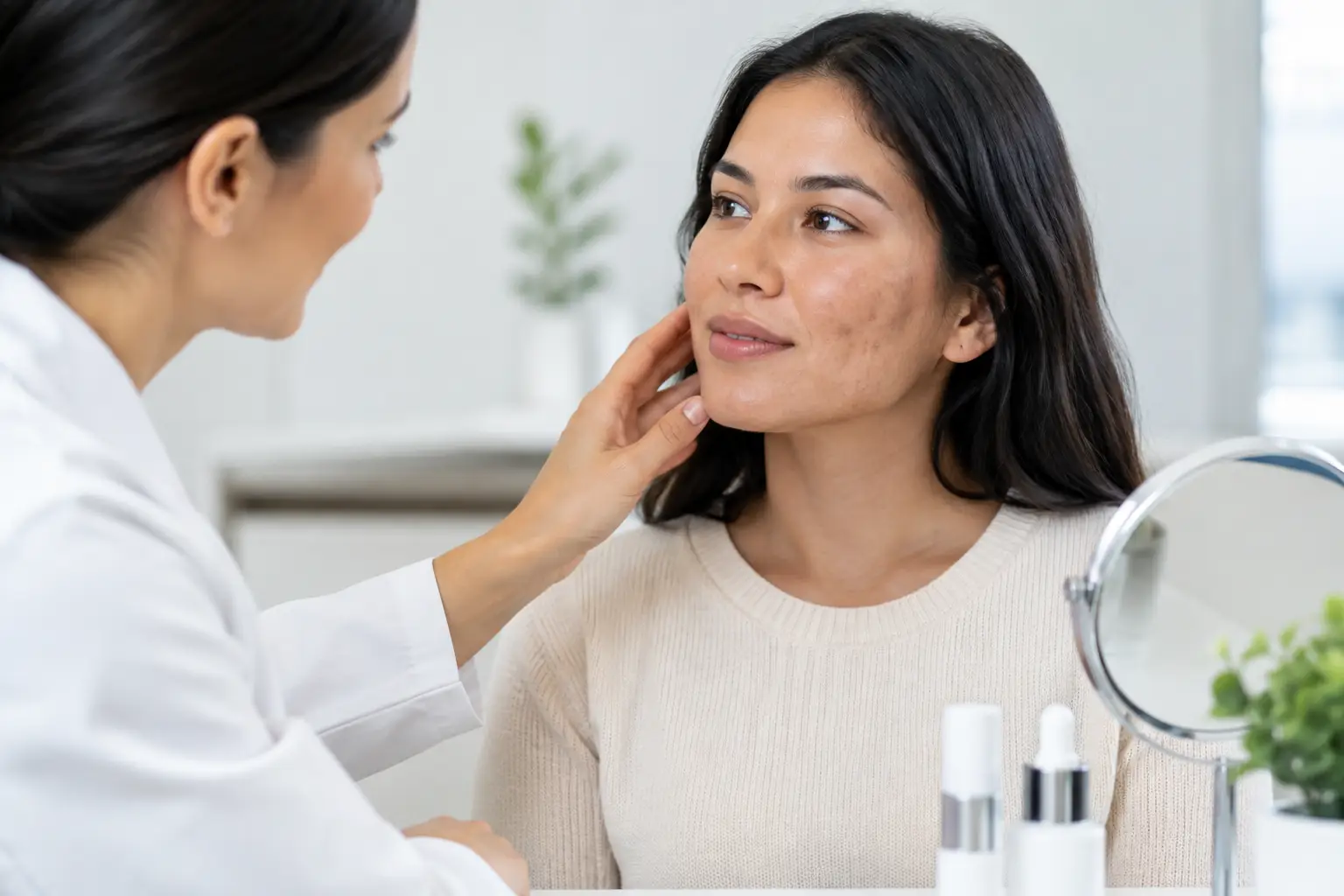
The breakout may be gone, but the reminder can remain every time light catches uneven texture or makeup settles into a depression. Learning how to treat acne scars starts with identifying what is actually left behind. Dark marks, redness, and true textural scars can look similar at first glance, yet they respond to very different treatment approaches.
At Balwin Aesthetics, acne scar care is approached as a personalized skin-renewal plan, not a one-size-fits-all procedure. The goal is to improve texture, tone, and overall skin quality while keeping results natural-looking and treatment decisions medically appropriate.
First, Know What Type of Mark You Have
Many people call every post-acne mark a scar. In reality, some marks are changes in pigment or redness that gradually fade, while others reflect a physical change in the skin’s structure.
Post-inflammatory hyperpigmentation appears as brown, gray, or darker spots after a blemish heals. Post-inflammatory erythema leaves pink or red marks, particularly in lighter skin tones. Neither is necessarily a permanent scar, although both can persist for months without appropriate sun protection and skin care.
True acne scars alter the skin’s texture. Depressed scars, often called atrophic scars, include rolling scars with soft, wave-like indentations; boxcar scars with more defined edges; and narrow, deeper ice-pick scars. Raised scars are less common on the face but may develop on the jawline, chest, shoulders, or back. The scar type, your skin tone, current acne activity, and tolerance for downtime all influence the right treatment recommendation.
How to Treat Acne Scars Starts With Active Acne Control
Treating scars while new inflammatory breakouts continue can be frustrating. Each new blemish carries the potential to create another mark, which can undermine the progress of a treatment plan. If acne is active, the first priority may be a skin-care strategy or medical acne management that helps reduce new lesions before focusing heavily on resurfacing procedures.
Avoid picking, squeezing, or using aggressive scrubs to speed the process along. These habits can prolong inflammation and increase the chance of pigmentation changes or scarring. A gentle cleanser, well-chosen acne products, and a moisturizer that supports the skin barrier often provide a better foundation than an overly complicated routine.
Daily broad-spectrum sunscreen is equally essential. UV exposure can darken lingering spots, make contrast more noticeable, and interfere with an even recovery after professional treatments. Consistent sun protection does not erase scars by itself, but it protects the improvements you are working toward.
Professional Options for Acne Scar Treatment
No single treatment corrects every acne scar. For many patients, the most effective plan uses a series of treatments selected for the specific scar pattern and skin goals. Improvement is usually gradual, which allows changes to look refined and gives the skin time to rebuild collagen between sessions.
Microneedling for Texture and Collagen Support
Microneedling creates controlled microchannels in the skin to stimulate the natural repair process and support collagen production. It is commonly considered for mild to moderate textural irregularities, including broad depressed scars and uneven skin texture.
A series of sessions is typically recommended because collagen remodeling takes time. Results can continue to develop in the weeks following each treatment. Microneedling may also be paired with platelet-rich plasma, or PRP, when clinically appropriate. PRP uses a concentration of the patient’s own platelets and may support the skin’s recovery response.
The trade-off is patience. Microneedling can be an excellent choice for patients who prefer manageable downtime, but it is not designed to erase deep scars in one appointment. Temporary redness and sensitivity are expected, and careful aftercare is part of protecting the result.
Chemical Peels for Pigment and Surface Renewal
Chemical peels use carefully selected solutions to exfoliate the skin at varying depths. They can be particularly helpful for dullness, post-acne discoloration, superficial unevenness, and mild textural concerns. The best peel depends on your skin type, sensitivity, pigmentation history, and the concern being treated.
Lighter peels often involve minimal downtime and may be incorporated into an ongoing skin-renewal plan. Stronger options can provide more noticeable resurfacing but require more preparation and recovery. A professional assessment matters because an overly aggressive peel can trigger irritation or unwanted pigment changes, especially in skin prone to hyperpigmentation.
Laser Treatments for Tone, Texture, and Redness
Laser technology can address certain forms of discoloration, redness, and textural change. Depending on the device and treatment settings, laser treatments may target excess pigment, visible vascular redness, or support skin resurfacing and collagen remodeling.
Laser treatment is not interchangeable from one patient to another. Skin tone, scar depth, medical history, current skincare products, and recent sun exposure all affect candidacy. The right settings and preparation are critical for safety, particularly for patients with deeper skin tones or a history of pigment changes.
Downtime ranges from mild redness to several days of visible recovery, depending on the laser approach. Your provider should explain what to expect, how to care for your skin afterward, and when it is safe to resume active ingredients, exercise, and makeup.
Why Combination Treatment Often Produces Better Results
Acne scarring rarely presents in only one form. Someone may have red marks on the cheeks, shallow rolling scars along the jawline, and a few deeper scars near the temples. Treating all of these concerns with the same procedure may lead to a modest result when a more thoughtful combination plan could address each issue more directly.
For example, chemical peels may help improve surface brightness and discoloration, while microneedling may be chosen for collagen support and texture. Laser treatment may be considered when persistent redness or pigment is a significant concern. Treatments are spaced appropriately to support healing rather than overwhelm the skin.
A consultation also provides an opportunity to discuss realistic goals. Most acne scar treatments aim for visible improvement, not flawless skin. The best outcomes often look like smoother texture, softer scar edges, more even tone, and skin that reflects light more evenly. These changes can make a meaningful difference in bare skin and in how makeup applies.
What to Expect From Recovery and Results
Recovery is not the same for every treatment, and it should be part of the decision, not an afterthought. A lighter peel may leave the skin slightly dry or flaky for a short period, while a more intensive laser treatment can require more social downtime. Microneedling generally causes temporary redness and a tight or warm sensation before the skin settles.
Following aftercare instructions is essential. Patients are commonly advised to avoid heat exposure, strenuous workouts, harsh exfoliants, and unapproved active products during the early healing period. Gentle hydration and reliable sun protection help support recovery.
It is also wise to be cautious about dramatic promises. Scar remodeling is biological, so results develop over time and vary by scar type, skin characteristics, and treatment consistency. Before-and-after images can be useful for understanding the potential of a procedure, but your own outcome should be assessed against your starting point and treatment goals.
When to Schedule a Professional Consultation
A physician-led consultation is particularly valuable if scars are deep, acne is still active, you have a history of keloid or raised scars, or you are concerned about pigmentation after procedures. It is also the right setting to review medications, skin sensitivity, and whether you have an upcoming event that affects your timeline.
Come prepared to discuss what bothers you most: the color left by old blemishes, makeup settling into scars, rough texture, or redness that does not fade. This helps your provider prioritize treatment options that align with your lifestyle, budget, and comfort with downtime.
Acne scars do not need to dictate how you feel about your skin. With a thoughtful assessment, consistent protection from sun exposure, and a treatment plan tailored to your scar type, skin renewal can be both gradual and genuinely rewarding.
