
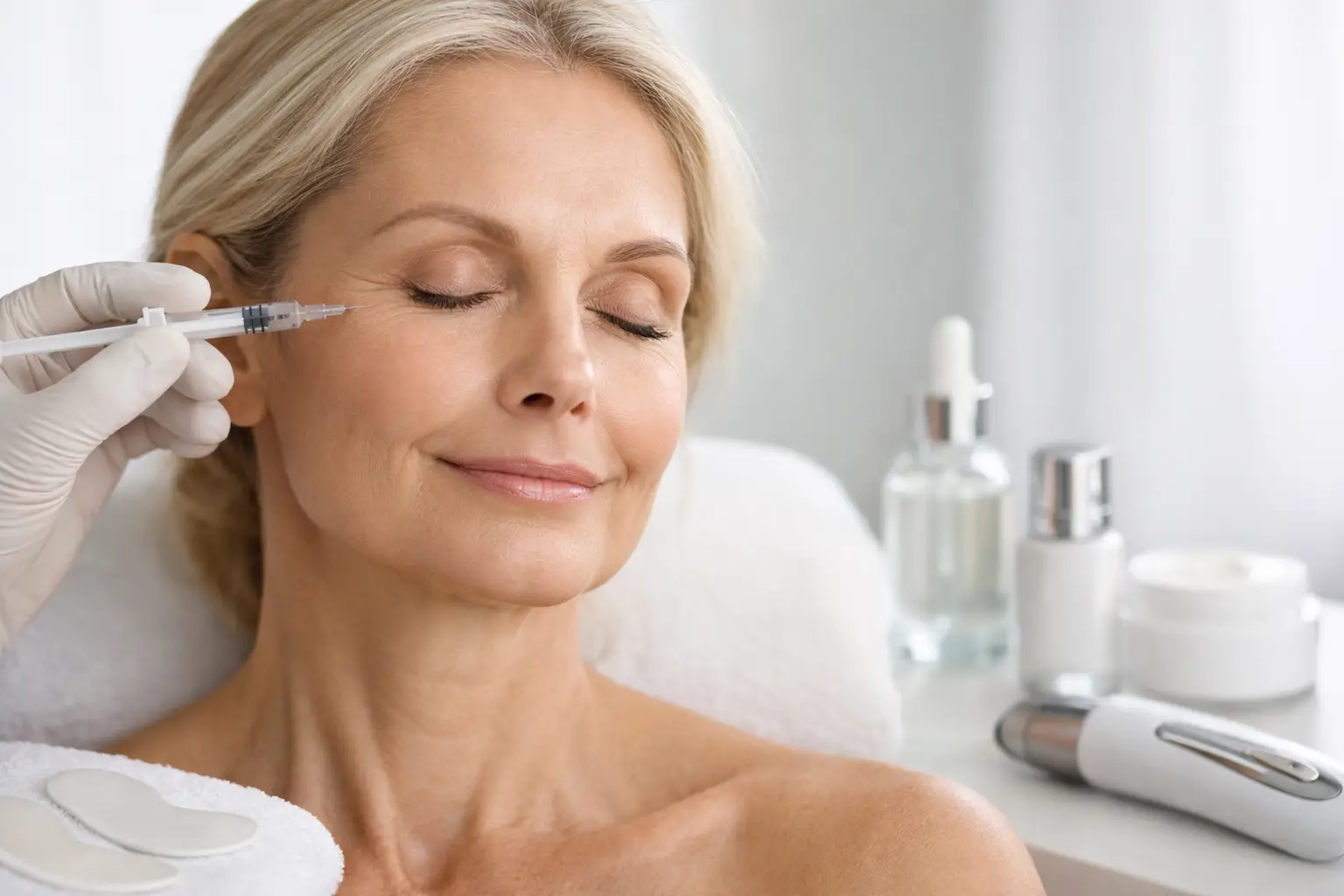
A forehead line that stays put after your expression relaxes usually means one thing – your skin is changing in more than one way. Muscle movement may be part of it, but so are collagen loss, sun damage, thinning skin, and reduced elasticity. That is why the best non surgical wrinkle treatment is rarely one treatment for everyone. It depends on the type of wrinkle, how advanced it is, your skin quality, and how natural you want the result to look.
For most patients, the better question is not which treatment is the single best overall. It is which treatment is best for your specific wrinkle pattern. A physician-led consultation matters here because dynamic lines, etched-in lines, volume loss, and texture changes do not respond the same way.
What makes the best non surgical wrinkle treatment?
The most effective option is the one that matches the cause of the wrinkle. Dynamic wrinkles are created by repeated facial movement. Think crow’s feet, frown lines, and forehead lines that deepen when you raise your brows or squint. Static wrinkles are visible even when your face is at rest. These are often tied to collagen loss, sun exposure, and age-related thinning of the skin.
There is also a third category that patients often notice without knowing how to describe it. Sometimes the issue is not a wrinkle alone, but a loss of support under the skin. Cheeks flatten, the lower face softens, and folds appear heavier. In that case, treating the line without addressing the surrounding volume may lead to a result that looks incomplete.
The best treatment should also fit your comfort level with downtime, your budget, and how quickly you want to see change. Some options give a faster smoothing effect. Others work gradually by improving the skin itself.
Botox for expression lines
When wrinkles are caused mainly by muscle movement, Botox is often the leading choice. It works by relaxing targeted facial muscles so the skin is not repeatedly folded in the same way. This makes it especially effective for forehead lines, frown lines between the brows, and crow’s feet.
For many patients, Botox is the closest thing to the best non surgical wrinkle treatment for the upper face. Results are predictable when dosing and placement are done carefully, and there is little downtime. The treatment is quick, and the goal in a medical aesthetics setting is not a frozen look. It is a softer, more refreshed appearance that still allows natural expression.
There are trade-offs. Botox does not replace lost volume, and it does not fully correct deeper lines that are already etched into the skin. It also requires maintenance because results are temporary. If someone has severe skin laxity or very deep static wrinkles, Botox may need to be combined with another treatment for a more complete improvement.
Dermal fillers for lines caused by volume loss
Dermal fillers are useful when wrinkles are being made worse by facial deflation. Nasolabial folds, marionette lines, and some under-eye or midface concerns often improve when structure is restored around the area rather than simply chasing the line itself.
A well-planned filler treatment can soften folds and support the face in a way that looks rested rather than overdone. This is where injector skill matters. Too much filler, or filler placed in the wrong layer, can create puffiness instead of refinement. For patients who want natural-looking results, conservative treatment is usually the right approach.
Fillers are not the first answer for every wrinkle. They do not treat movement-related forehead lines the way Botox does, and they are not a direct substitute for collagen-stimulating treatments when skin texture is the main issue. Still, in the right patient, they are one of the most impactful non-surgical options available.
Microneedling and PRP for skin quality
If your main concern is crepey texture, fine lines around the mouth, or early changes that make skin look less smooth, microneedling can be a strong option. It works by creating controlled micro-injuries that trigger collagen production and skin renewal.
PRP can be added to microneedling to enhance healing and support rejuvenation. This combination appeals to patients who want gradual, natural improvement in skin quality rather than immediate reshaping. Over time, the skin can appear firmer, smoother, and more even.
This approach does require patience. Results develop over a series of treatments, and it is not ideal if you want one appointment with a dramatic effect by next week. It is better suited to patients who understand that healthier skin often means building collagen over time.
Chemical peels for surface-level lines
Chemical peels can improve fine lines, dullness, uneven tone, and rough texture by accelerating exfoliation and skin turnover. Superficial peels usually involve minimal downtime, while deeper peels can produce stronger results but need more recovery.
For wrinkles caused largely by sun damage and surface irregularity, peels can be a valuable part of a treatment plan. They are also useful for patients dealing with both early aging and pigmentation concerns. That said, peels are generally not enough on their own for deeper facial folds or lines caused by muscle activity.
The right peel depends on your skin type, goals, and tolerance for downtime. This is another area where professional guidance is important, especially for patients with sensitive skin or a history of post-inflammatory pigmentation.
Laser treatments for advanced rejuvenation
Laser treatments can target fine lines, uneven texture, discoloration, and overall skin quality. Some lasers focus more on pigment or redness, while resurfacing lasers work more directly on signs of aging by stimulating collagen and renewing the skin.
For patients with visible sun damage and more advanced texture changes, laser treatment may be one of the most effective choices. The trade-off is that recovery can be longer than with injectables or lighter skin-renewal procedures. Not every laser is suitable for every skin tone or concern, so customization is essential.
When used strategically, laser treatments can complement injectables rather than replace them. A patient may use Botox to reduce movement-related lines and laser resurfacing to improve the quality of the skin over those areas.
So which wrinkle treatment is actually best?
The honest answer is that there is no single winner for every face. Botox is often best for dynamic wrinkles in the upper face. Fillers are often best when volume loss is making folds look deeper. Microneedling, PRP, chemical peels, and certain laser treatments are often best for fine lines tied to skin texture and collagen decline.
In many cases, the most effective plan is combination treatment. A patient with forehead lines, early cheek volume loss, and crepey lower-face skin may need more than one modality to get a balanced result. That does not mean doing everything at once. It means choosing treatments in the right order, with the right level of intensity, and with a clear plan for maintenance.
This is also where expectations matter. Non-surgical treatments can create impressive improvement, but they do not produce the same outcome as surgery in patients with significant skin laxity. A good consultation should make that clear rather than overpromise.
How to choose the best non surgical wrinkle treatment for you
Start by looking at when the wrinkle appears. If it deepens mostly when you move, neuromodulators such as Botox may be the strongest fit. If it is visible all the time and the surrounding area looks hollow or less supported, filler may be more appropriate. If the skin looks rough, thin, sun-damaged, or crepey, collagen-stimulating and resurfacing treatments deserve serious consideration.
Your timeline matters too. Some patients want a quick refresh before an event. Others want gradual, low-maintenance skin improvement. Neither approach is wrong, but the right treatment plan will look different.
At a physician-led clinic such as Balwin Aesthetics, the goal is not simply to name the most popular treatment. It is to assess facial anatomy, skin condition, and aging patterns so the recommendation is precise, safe, and natural-looking.
The best results usually come from restraint, not excess. Wrinkle treatment should leave you looking rested, polished, and like yourself on a very good day. If you are deciding where to start, focus less on trends and more on a personalized plan built around how your face is aging now – and where you want it to go next.
