
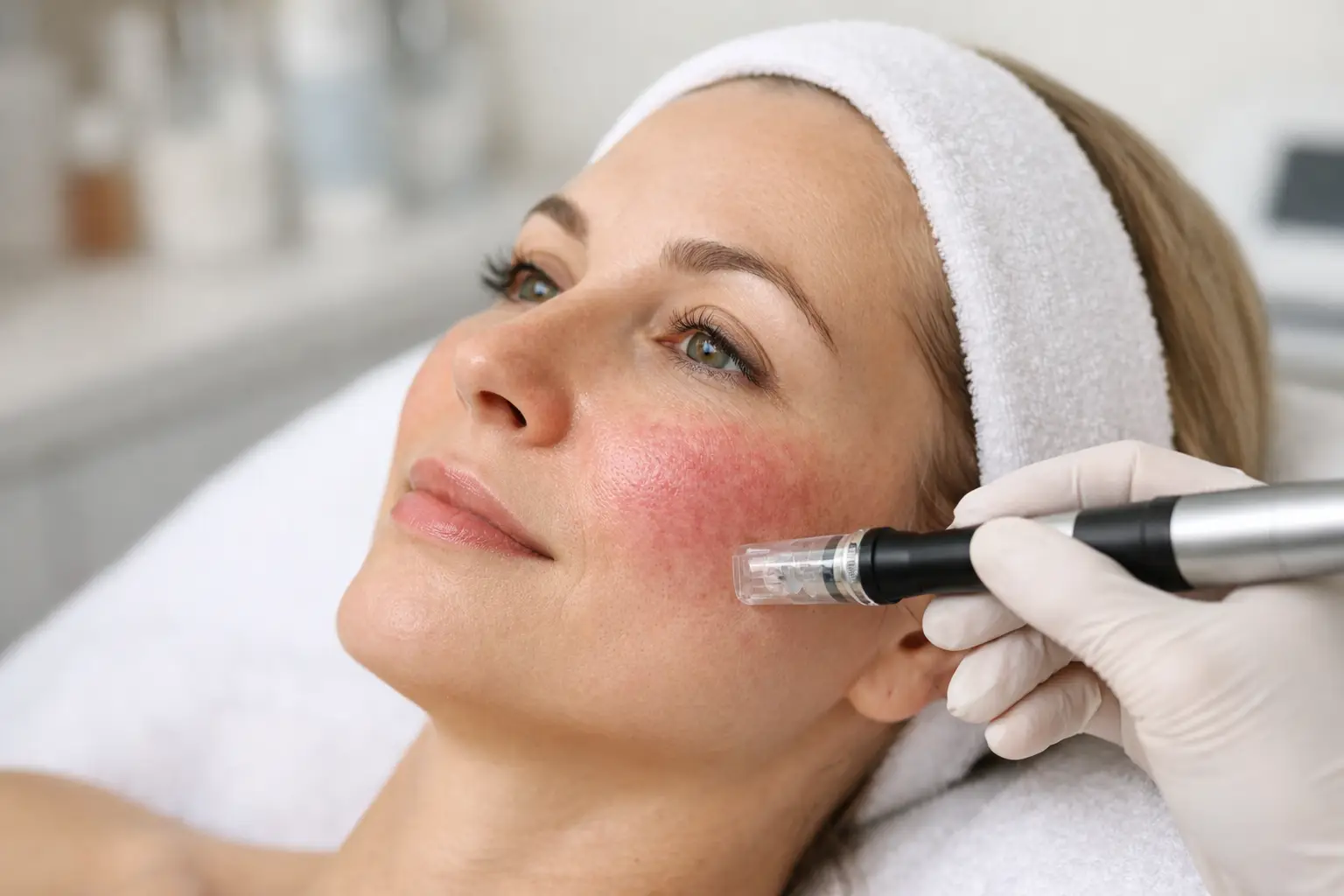
If your skin flushes easily, reacts to products that never used to bother you, and stays red longer than it should, you already know rosacea is not a simple skincare issue. A common question in clinic is: can microneedling help rosacea? The honest answer is that it depends on the type of rosacea, how active it is, and whether the treatment plan is being guided by a medical professional who understands both skin renewal and skin sensitivity.
Rosacea is a chronic inflammatory skin condition, not just occasional redness. For some people, it shows up as persistent flushing and visible blood vessels. For others, it includes bumps, irritation, swelling, or a rough, reactive skin surface. That difference matters, because a treatment that helps one concern related to rosacea may aggravate another.
Can microneedling help rosacea in some cases?
Sometimes, yes – but not in the way many people expect.
Microneedling works by creating controlled micro-injuries in the skin to stimulate repair processes, including collagen production. It is often used to improve texture, fine lines, mild scarring, and overall skin quality. In patients with rosacea, that can occasionally make it useful for concerns such as rough texture, early thickening, or skin that has become less resilient over time.
What microneedling does not do well is directly treat the vascular component of rosacea. If your main issue is persistent facial redness, visible capillaries, or frequent flushing, microneedling is usually not the first treatment that offers the most meaningful improvement. Those concerns often respond better to vascular laser or light-based options designed specifically to target blood vessels.
This is where expectations need to stay realistic. Microneedling may support skin quality in carefully selected patients, but it is not a universal rosacea treatment.
When microneedling may not be the right choice
The biggest mistake with rosacea is treating all redness the same way. Skin that is actively inflamed tends to be less tolerant, more reactive, and quicker to flare. If you have burning, stinging, pustules, papules, or recent episodes of significant flushing, microneedling can push the skin in the wrong direction.
In active rosacea, the barrier is often already compromised. Adding mechanical injury, even controlled injury, may lead to more redness, prolonged irritation, and a longer recovery than expected. Patients sometimes assume a treatment that stimulates collagen must be beneficial across the board. In rosacea, more stimulation is not always better.
This is especially true when microneedling is performed too aggressively, too frequently, or without proper screening. Needle depth, treatment intensity, topical products used during the procedure, and post-care all influence how rosacea-prone skin responds.
Which rosacea patients may be better candidates?
The best candidates are usually those whose rosacea is relatively stable and whose goals go beyond redness alone. For example, someone with mild background rosacea and secondary concerns like rough texture, enlarged pores, or early skin thickening may be considered for a conservative microneedling plan.
A medically supervised assessment is important here. The provider should look at whether your redness is mostly vascular, whether inflammatory lesions are present, how reactive your barrier is, and whether there are better first-line options. In many cases, calming the rosacea first is the smarter move. Once the skin is more stable, microneedling may become safer and more useful.
Patients with phymatous changes, including thickened or uneven skin texture, may also be evaluated differently. These are more specialized cases and should not be approached casually. The question is not simply whether microneedling can be done, but whether it fits into a broader treatment strategy.
Why treatment timing matters
With rosacea, timing can matter as much as technique.
If the skin is flaring because of weather, heat exposure, harsh products, over-exfoliation, or untreated inflammation, microneedling should generally wait. Treating during a reactive period tends to increase the chance of prolonged redness and discomfort. On the other hand, if rosacea has been medically managed and the skin is calm, the conversation changes.
This is one reason physician-led clinics tend to approach the treatment more cautiously. A short consultation at a spa may focus on texture and collagen. A medical assessment is more likely to ask what is causing the redness, what subtype may be involved, and whether the skin can heal predictably.
What results are realistic?
If microneedling is appropriate, the benefits are usually indirect. You may see smoother texture, modest improvement in skin quality, and better overall refinement. Some patients also notice that their skin looks healthier because the surface becomes more even over time.
What you should not expect is a dramatic reduction in facial redness or complete control of rosacea symptoms. Microneedling does not address the underlying vascular instability that drives flushing and visible vessels. It also does not replace daily rosacea management.
That distinction matters because disappointment often comes from choosing the right treatment for the wrong goal. If your main concern is red cheeks or broken capillaries, a vascular device may be more effective. If your rosacea is stable and your concern is texture, microneedling may have a role.
How a safer microneedling plan looks for rosacea-prone skin
When rosacea patients are treated, the approach should be conservative. That usually means lower treatment intensity, careful needle selection, minimal irritation from topicals, and spacing sessions appropriately. Aggressive packages and one-size-fits-all protocols are rarely ideal for reactive skin.
Pre-treatment preparation also matters. Skin that is already irritated from retinoids, scrubs, acids, or recent sun exposure is more likely to overreact. Post-treatment care matters just as much. The focus should be on barrier support, sun protection, gentle cleansing, and avoiding triggers during healing.
Some patients are also better served by combining treatments over time rather than forcing one procedure to solve every concern. For example, vascular redness may be addressed with laser-based treatment first, while texture is considered later once the skin is calmer.
Can microneedling make rosacea worse?
Yes, it can.
That does not mean microneedling is unsafe for every patient with rosacea. It means rosacea increases the need for careful case selection. If the skin is highly reactive or the treatment is too aggressive, flare-ups can happen. Redness may last longer than expected, skin may sting more during recovery, and inflammation can become harder to control.
This risk is one reason at-home microneedling devices are a poor option for rosacea-prone skin. They encourage self-treatment without proper diagnosis, without sterile technique, and without a clear plan for what should happen if the skin reacts badly. For a condition defined by sensitivity and inflammation, experimentation is rarely the best path.
Alternatives that may be better for redness
If your primary goal is to reduce visible redness, flushing, or broken capillaries, the most effective answer is often not microneedling. Vascular laser and other energy-based treatments are typically better suited to target the blood vessels involved in rosacea-related redness.
Medical skincare can also play an important role. Barrier-supportive products, trigger avoidance, sun protection, and prescription therapies may do more for day-to-day rosacea control than a collagen-induction treatment. For many patients, the best aesthetic outcome comes from using the right treatment for the dominant symptom rather than trying to make one procedure do everything.
At a physician-led clinic such as Balwin Aesthetics, that usually means starting with a proper diagnosis and building a plan around what your skin is actually doing, not just what the mirror is showing on one particular day.
Questions to ask before booking treatment
If you are considering microneedling and have rosacea, ask whether your provider believes your redness is primarily vascular, inflammatory, or texture-related. Ask whether your rosacea should be stabilized first. Ask how the treatment would be adjusted for sensitive skin, and what recovery should realistically look like.
You should also ask what other treatments may be more effective for your specific concerns. A trustworthy provider will not force microneedling into the conversation if another option is better suited to your skin.
That is often the clearest sign you are getting medical guidance rather than a generic treatment recommendation.
Rosacea does not rule out aesthetic treatments, but it does require more precision. If microneedling is part of your plan, it should be because your skin is calm enough, your goals are appropriate, and the treatment is being performed with restraint. When redness is the main issue, a different approach may give you safer and more satisfying results. The best next step is not chasing the most popular treatment – it is choosing the one your skin can actually tolerate and benefit from.
