
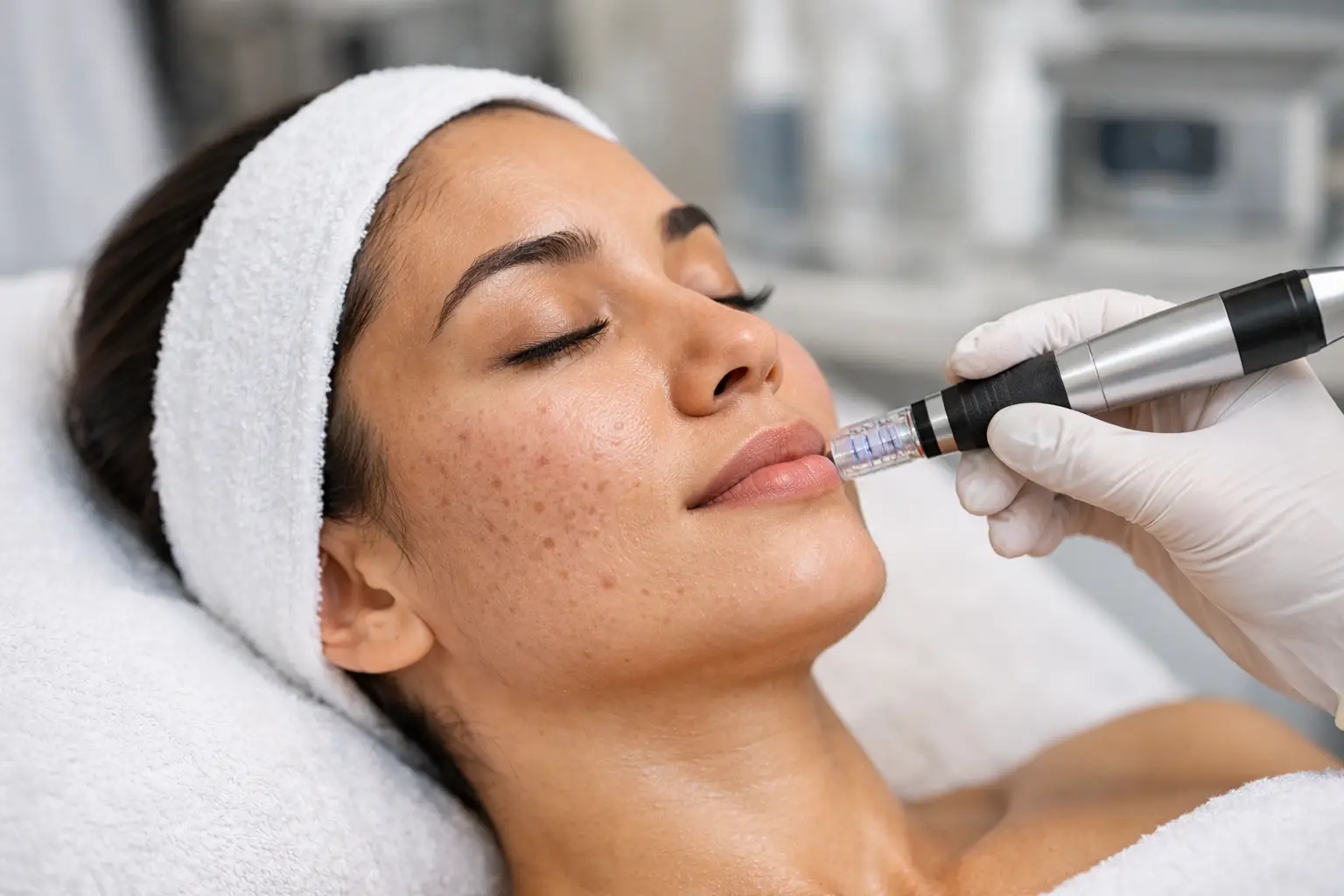
Acne scars tend to linger long after breakouts are under control. For many patients, the frustration is not active acne – it is the uneven texture, shallow depressions, and visible reminders that makeup and skincare alone do not fully address. That is where microneedling for acne scars often becomes a meaningful option, especially for patients looking for improvement without surgery or extended downtime.
Microneedling is one of the most commonly recommended treatments for textural acne scarring because it works with the skin’s natural repair process. It is not a quick cover-up, and it does not erase every scar in one session. What it can do, when used appropriately and performed in a medical setting, is stimulate collagen remodeling in a way that gradually smooths and refine the skin.
How microneedling for acne scars works
Microneedling uses a device with very fine needles to create controlled micro-injuries in the skin. These tiny channels trigger a wound-healing response, which encourages new collagen and elastin production. Over time, that rebuilding process can improve the look of certain acne scars by making the skin appear firmer, more even, and less indented.
This matters because many acne scars are caused by collagen loss. When the skin heals unevenly after inflammation, it can leave behind atrophic scars, which are the shallow or deeper depressions often described as rolling, boxcar, or ice pick scars. Microneedling tends to be most helpful for rolling scars and some boxcar scars. Ice pick scars are often more resistant and may require a different treatment approach or a combination plan.
The treatment is attractive to many patients because it is minimally invasive and generally suitable for a range of skin tones. That said, suitability still depends on scar type, active skin conditions, medical history, and the quality of the treatment being performed.
What kind of acne scars respond best?
Not all scars behave the same way, and this is one of the most important points to understand before treatment. Microneedling can improve texture and shallow to moderate depressed scars, but it is not equally effective for every scar pattern.
Patients with rolling scars often see some of the most noticeable benefits because these scars are linked to tethering and uneven collagen structure beneath the surface. Mild boxcar scars may also improve well, particularly across larger areas of textural irregularity. Deeper boxcar scars and ice pick scars usually need a more tailored plan. In some cases, microneedling is combined with treatments such as PRP, chemical peels, laser resurfacing, or subcision to get a stronger result.
Raised scars are a separate category and should be assessed carefully before moving forward. If you still have active acne, frequent cystic breakouts, rosacea flare-ups, or skin infection, treatment may need to be postponed until the skin is stable.
What to expect during treatment
A proper consultation should come first. In a physician-led clinic, the skin is assessed not just for the presence of scars, but for scar depth, skin tone, healing behavior, and whether another treatment or combination approach would be more appropriate. This step matters because the best results usually come from matching the treatment to the biology of the scar, not simply choosing the most popular procedure.
Before the session, a topical numbing cream is typically applied to improve comfort. Once the skin is prepared, the microneedling device is passed over the treatment area at controlled depths. Patients usually describe the sensation as tolerable, with more sensitivity in certain areas such as the forehead or around the mouth.
The appointment itself is relatively straightforward. Afterward, the skin often looks pink to red, similar to a moderate sunburn. There may also be mild swelling, warmth, and temporary tightness. Most patients can return to normal routines quickly, although the skin should be treated gently for the first few days.
Downtime and recovery
One reason microneedling remains popular is that recovery is usually manageable. The first 24 to 72 hours are when redness and sensitivity are most noticeable. Some patients also experience light flaking or a rougher texture as the skin begins to renew itself.
During this window, sun protection is essential. Harsh exfoliants, retinoids, active acids, and intense workouts are often paused briefly, depending on your provider’s instructions. Gentle cleansing, hydration, and barrier support become the priority.
Results do not appear overnight. The skin needs time to remodel collagen, so improvement develops gradually over several weeks. That slower progression is normal and often preferable for patients who want natural-looking change rather than a dramatic, obvious shift all at once.
How many sessions are usually needed?
This is where expectations need to be realistic. Microneedling for acne scars is usually not a one-and-done treatment. Most patients need a series of sessions spaced several weeks apart to build meaningful improvement.
The exact number depends on the type and severity of scarring, skin quality, and whether microneedling is being used on its own or as part of a broader treatment plan. Someone with mild superficial textural changes may be happy after a few sessions. A patient with longstanding, deeper acne scarring may need more treatment and may benefit from combining modalities.
It is also worth remembering that improvement does not always mean complete removal. In aesthetic medicine, success often looks like scars appearing softer, shallower, less shadowed, and easier to manage without heavy makeup. For many patients, that level of change is significant.
Benefits of microneedling for acne scars
The main benefit is collagen stimulation without the more intensive recovery associated with aggressive resurfacing treatments. For the right patient, microneedling can improve overall skin texture, reduce the visibility of depressed scars, and support smoother, healthier-looking skin.
Another advantage is versatility. Microneedling may also help with enlarged pores, fine lines, and general skin quality, so the improvement is not always limited to scarring alone. Patients often appreciate that the skin can look more refined overall, not just less scarred.
For darker skin tones, microneedling may be a useful option because it can carry less risk of pigment disruption than some energy-based resurfacing procedures when performed appropriately. That does not make it risk-free, but it does make expert assessment especially valuable.
Risks, limits, and when it may not be the best option
Microneedling is widely used, but it is still a medical aesthetic procedure and should be treated that way. Risks can include irritation, prolonged redness, post-inflammatory pigmentation, infection, and unsatisfactory results if the treatment is performed incorrectly or on the wrong candidate.
It also has limits. Very deep scars, heavily tethered scars, and narrow ice pick scars often need more than collagen stimulation alone. In those cases, relying on microneedling as the only treatment may lead to disappointment. A personalized plan is usually the better path.
This is one reason physician oversight matters. A medically informed provider can identify when microneedling is appropriate, when to combine it with another procedure, and when to advise against treatment until the skin is healthier and more stable.
Microneedling alone or combined with PRP?
Patients often ask whether adding PRP makes a difference. In some cases, PRP can complement microneedling by supporting the healing environment and enhancing overall skin rejuvenation. It may be a good option for patients who want a more comprehensive collagen-focused treatment.
Still, PRP is not mandatory for everyone. Whether it adds value depends on your goals, your budget, and the condition of your skin. Some patients do very well with microneedling alone, while others benefit from a combination plan. The better question is not which treatment is trendier, but which one is medically appropriate for your skin.
Choosing the right provider
Technique, device quality, and treatment planning all influence outcome. Acne scars are not a one-size-fits-all concern, and they should not be treated with a one-size-fits-all protocol. A careful consultation, clear discussion of expected improvement, and an honest review of alternatives are signs that you are in the right setting.
At a physician-led clinic such as Balwin Aesthetics, that process is centered on personalization and safety. Patients benefit from informed guidance, medically grounded assessment, and a treatment plan built around natural-looking skin improvement rather than overpromising.
If acne scarring has been affecting your confidence, the most useful next step is not guessing which trend will work best. It is getting a professional assessment of your scar type, your skin, and the level of improvement that is realistically possible with the right plan.
