
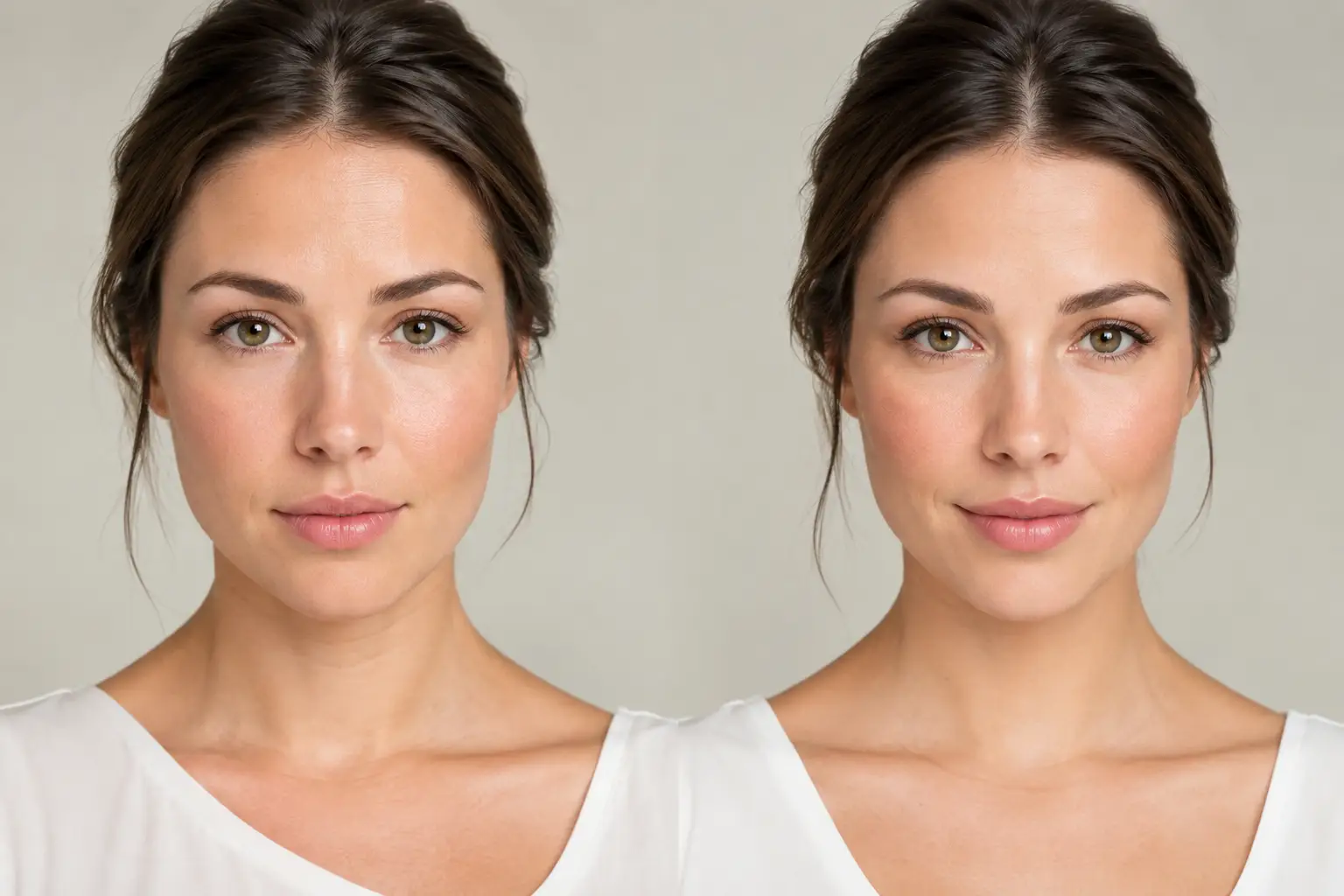
A face can look tired, undefined, or less harmonious even when there is no single feature that needs dramatic change. That is why facial balancing examples are often more helpful than isolated treatment photos. They show how small, considered adjustments to several areas can improve proportion while preserving the features that make a person look like themselves.
Facial balancing is not about creating one standard face shape or making every feature symmetrical. It is a personalized approach to non-surgical aesthetics that considers the relationship between the forehead, cheeks, eyes, nose, lips, chin, jawline, and skin quality. For some patients, restoring cheek support makes the lower face look more refined. For others, subtle chin projection or jawline definition creates the balance they have been seeking.
What Facial Balancing Actually Means
A physician-led facial balancing plan begins with a full-face assessment, not a request for filler in one area. Your provider evaluates facial structure, volume distribution, skin quality, muscle movement, and the way your features appear both at rest and in expression. Age, genetics, previous treatments, and personal aesthetic goals all matter.
The goal is typically to create better proportion, support, and continuity across the face. A treatment plan may use dermal filler to restore or enhance volume and Botox to soften muscle activity that contributes to lines, downward pull, or a heavier appearance. Skin treatments such as microneedling, chemical peels, or laser treatments may also play a role when texture, pigmentation, redness, or sun damage affects the overall result.
Not every patient needs treatment in every area. In fact, a natural result often comes from treating less, but treating the right areas in the right order.
Facial Balancing Examples by Concern
Example 1: Midface volume loss and a tired appearance
A common concern is looking tired despite getting adequate rest. This can happen when age-related volume loss develops through the cheeks and under-eye region. As the midface loses support, shadows can become more noticeable around the eyes and nasolabial folds may appear deeper.
Rather than immediately filling lines around the mouth, a provider may begin with conservative cheek or midface filler. Supporting this area can improve the transition between the lower eyelid and cheek, soften facial shadows, and reduce the appearance of heaviness lower in the face. The result should look rested, not overfilled.
This approach is especially useful when the issue is structural volume loss rather than a wrinkle that can be corrected at the surface. Depending on the patient, skin renewal treatments may complement filler by improving brightness and texture around the eyes and cheeks.
Example 2: A soft jawline with a recessed chin
Some patients feel that their side profile lacks definition, while others notice that the lower face appears less balanced in photos. In many cases, the chin is slightly under-projected relative to the lips, nose, or jawline. Treating only the jawline may not resolve the concern if the chin is not providing adequate forward support.
Subtle chin filler can improve projection and length, which may make the jawline appear more defined without creating a sharp or artificial result. A small amount of filler along selected points of the jawline can further improve the transition from chin to jaw.
For patients with a wider or more squared lower face caused by strong masseter muscles, Botox may be considered instead of, or alongside, filler. Relaxing these muscles can create a softer lower-face contour over time. The best approach depends on whether the concern is bone structure, volume, muscle activity, or a combination of all three.
Example 3: Lip enhancement that fits the rest of the face
Natural-looking lip filler is one of the clearest examples of why facial balancing matters. A patient may request more lip volume, but the most flattering treatment may focus on hydration, border definition, or subtle support rather than significant size.
If the chin is recessed or the lower third of the face lacks projection, increasing lip volume alone can make the lips appear disproportionately prominent. In this situation, modest chin balancing may create a more harmonious outcome than adding more filler to the lips.
Conversely, a patient with naturally strong cheekbones and a defined jawline may benefit from a gentle enhancement to the lips that brings softness and balance to the center of the face. The right amount is individual. Good treatment does not announce itself from across the room.
Example 4: A gummy smile or downturned mouth corners
Facial balance is not limited to volume. Muscle movement strongly affects expression. Some people show more gum tissue than they would like when smiling, while others feel they appear sad or stern because the corners of the mouth pull downward at rest.
Strategic Botox can relax specific muscles involved in these movements. For a gummy smile, small, precisely placed doses may reduce excessive upper-lip elevation. For downturned corners of the mouth, treatment may soften the downward pull that contributes to a tense or unhappy expression.
These treatments require careful assessment and advanced anatomical knowledge. Too much product or placement that is not individualized can affect normal movement. This is one reason patients should seek a qualified medical provider who prioritizes measured dosing and natural expression.
Example 5: Forehead lines, heavy brows, and upper-face balance
The upper face can influence how open, rested, or approachable the entire face appears. Botox is often used to soften forehead lines and frown lines, but placement should account for brow position, eyelid anatomy, and natural facial movement.
For one patient, reducing frown lines may create a calmer appearance. For another, a carefully designed treatment pattern can create a subtle brow lift effect by relaxing the muscles that pull the brow downward. The objective is not a frozen forehead. It is smoother, refreshed movement that still looks like you.
If skin crepiness, discoloration, or uneven texture contributes to an aged upper-face appearance, injectables alone may not be enough. A customized skin treatment plan can improve the quality of the skin so the result looks more complete.
Why Before-and-After Photos Need Context
Before-and-after images can be useful, but they should be viewed with a critical eye. Lighting, camera angle, facial expression, makeup, and timing after treatment can influence how a result appears. The most meaningful facial balancing examples show consistent angles and lighting, realistic improvements, and results that still preserve the patient’s identity.
It is also helpful to ask what was treated and why. A refined profile may be the result of chin support, jawline contouring, or cheek restoration rather than treatment to the feature that first caught your attention. A provider should be able to explain the reasoning behind recommendations in clear, straightforward terms.
What to Expect From a Personalized Plan
A thoughtful consultation should include discussion of your goals, medical history, prior aesthetic treatments, and concerns about looking overdone. Your provider should assess your face from multiple angles and explain which areas may benefit from treatment now, which can wait, and which may not need treatment at all.
Many facial balancing plans are staged. Starting conservatively allows you to see how one adjustment changes the overall face before adding another. This can be especially valuable for first-time filler patients or anyone concerned about an unnatural outcome. Results may be visible immediately with filler, although swelling can temporarily affect the final appearance. Botox typically develops gradually over several days, with full results often appearing within about two weeks.
At Balwin Aesthetics, facial balancing is approached as a medical aesthetic plan rather than a menu of isolated injections. The focus is on appropriate product selection, precise technique, and results that support your natural features.
The best facial balancing result is rarely the most noticeable one. It is the change that makes you look rested, proportionate, and confident while leaving others unable to pinpoint exactly what changed.
