
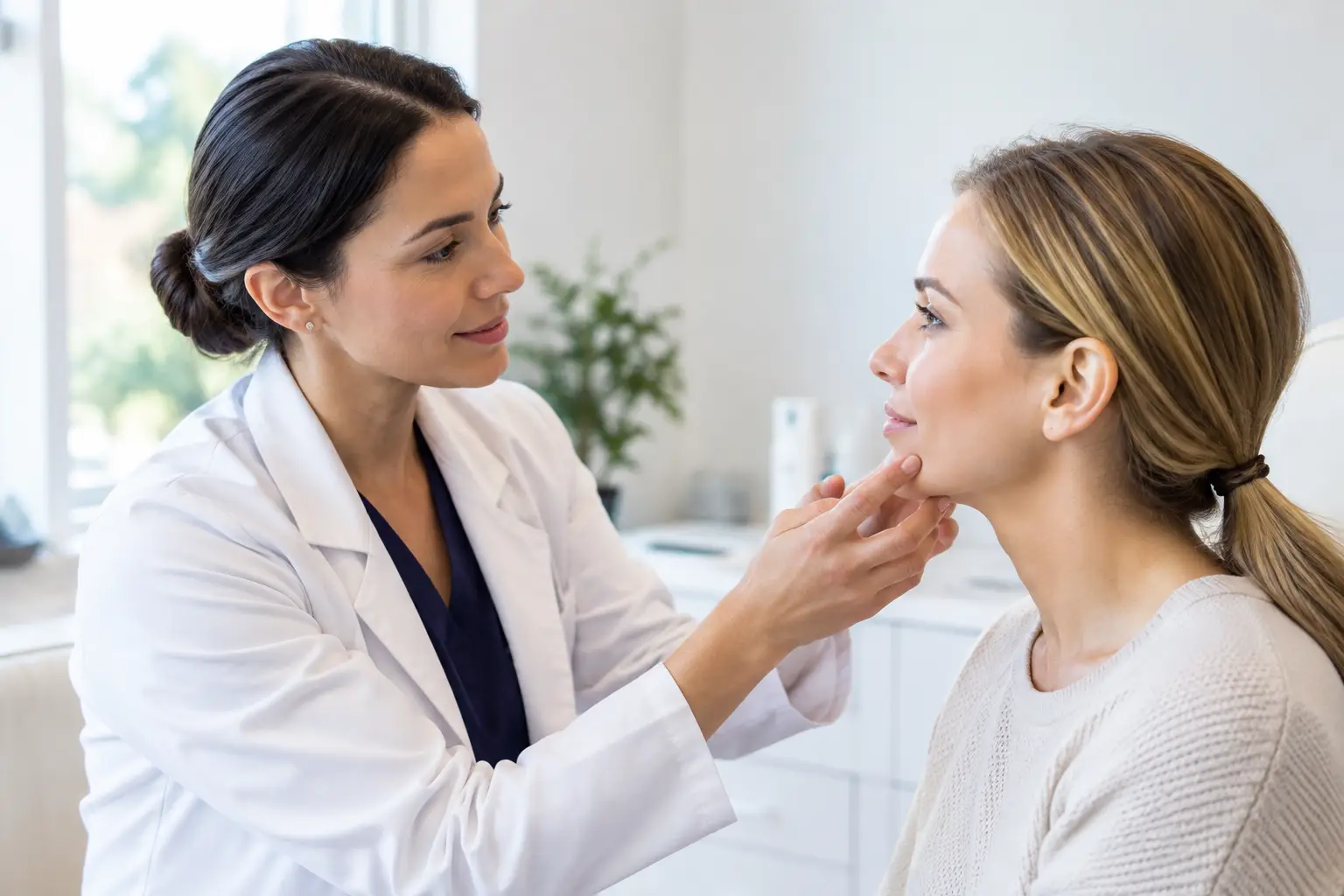
A thoughtful aesthetic treatment should never begin with a menu of procedures. It should begin with your face, your skin, your health history, and the changes you would genuinely like to see. A physician led aesthetics consultation gives you the time and clinical guidance to make those decisions with confidence, whether you are considering Botox, dermal fillers, skin renewal, laser treatments, or PRP for hair restoration.
For many patients, the goal is not to look different. It is to look rested, refreshed, and more like themselves. That requires more than choosing a popular treatment. It requires an individualized plan that respects facial anatomy, skin health, lifestyle, and the pace at which you feel comfortable making changes.
What Makes a Physician-Led Consultation Different?
A medical aesthetics consultation is not simply an appointment to select a service. Under physician leadership, it is a clinical assessment focused on whether a treatment is appropriate, what it can realistically achieve, and how it fits into your long-term aesthetic goals.
Your physician or qualified medical provider begins by listening. You may be concerned about lines around the eyes, loss of cheek volume, uneven pigment, acne scarring, redness, unwanted hair, or thinning hair. Those concerns are valid, but the visible issue is only one part of the picture. For example, a patient who requests filler for under-eye hollows may actually benefit first from addressing midface volume, skin quality, or both. Treating the area that bothers you without evaluating surrounding structure can lead to results that feel less balanced.
Physician oversight also matters when medical factors affect treatment choices. Current medications, allergies, pregnancy or breastfeeding status, a history of cold sores, prior cosmetic procedures, skin sensitivity, autoimmune conditions, and healing history can all influence the right approach. These details help your provider reduce avoidable risk and prepare you properly when a treatment is suitable.
Your Goals Come First, but Expectations Matter
The best consultations are honest conversations. You should be able to explain what you see in the mirror, what has changed over time, and how subtle or noticeable you want your results to be. Bringing reference photos can be helpful, especially if they show your own appearance from a time when you felt particularly confident. Photos of someone else can start a discussion, but they are not a blueprint. Every face has different bone structure, tissue quality, skin tone, and muscle movement.
A qualified provider will also discuss what a treatment cannot do. Botox can soften expression lines, but it does not restore volume loss. Filler can support selected areas of the face, but it does not replace surgery when significant skin laxity is the primary concern. Microneedling, chemical peels, and laser treatments can improve texture, tone, and pigment over a series of sessions, but they require patience and appropriate aftercare.
This clarity protects patients from over-treatment. Natural-looking outcomes often come from a measured plan, not from trying to correct every concern in one visit.
Aesthetic Assessment Is More Than Looking at One Area
Your consultation may include an assessment of facial proportions, symmetry, skin texture, pigmentation, redness, pore appearance, and the way your face moves while speaking or smiling. Dynamic lines are evaluated differently from lines that remain visible at rest. Volume loss is assessed differently from puffiness or skin laxity.
Skin evaluation is equally important. Melasma, sun damage, post-inflammatory hyperpigmentation, rosacea, and acne-related concerns may look similar from a distance but need different treatment strategies. The wrong intensity of peel or laser, or treatment performed at the wrong time, can worsen irritation or pigment changes in susceptible skin.
For hair restoration concerns, your provider may discuss the pattern and timing of shedding, family history, scalp health, hormonal factors, and whether PRP is a reasonable option. PRP can support certain patients experiencing hair thinning, but it is not a universal answer for every cause of hair loss. A candid assessment is part of responsible care.
What a Personalized Treatment Plan May Include
A personalized plan does not need to involve multiple treatments. Sometimes the right first step is one carefully selected service. In other cases, combining treatments over time provides a more complete and refined result.
For facial rejuvenation, a plan may begin with neuromodulators such as Botox to soften lines caused by repeated muscle movement. Dermal fillers may be considered to restore support in areas affected by volume loss, such as the cheeks, temples, jawline, or lips. The appropriate product, placement, and amount depend on your anatomy and desired level of correction.
For skin renewal, your provider may recommend a series of microneedling sessions, a chemical peel, or laser treatment for concerns such as discoloration, rough texture, visible vessels, acne scarring, or sun-related pigment. These treatments work differently and carry different recovery expectations. A treatment that offers more dramatic resurfacing may involve more downtime, while a gentler option may require a series of appointments.
The plan should also account for your calendar. If you have an upcoming wedding, professional event, vacation, or family photos, timing matters. Bruising, swelling, peeling, or temporary redness can occur depending on the treatment. A physician-led consultation helps you schedule care with enough room for healing and follow-up rather than rushing into a procedure too close to an important date.
Safety Questions You Should Feel Comfortable Asking
You should never feel pressured to proceed with a treatment before you understand it. A quality consultation makes room for questions about benefits, risks, alternatives, recovery, cost, and maintenance.
Ask who will perform your procedure and what training they have. Ask what product or technology is being used and why it is appropriate for your concern. If injectables are recommended, ask how your provider approaches natural results and manages complications should they occur. If a laser or peel is recommended, ask about your skin type, expected downtime, sun precautions, and the possibility of pigment changes.
It is also reasonable to ask whether treatment needs to happen that day. In many cases, there is no need to decide immediately. Taking time to consider a plan is especially valuable if you are new to aesthetics, are considering several services, or feel uncertain about the recommendation.
At Balwin Aesthetics, education is part of the consultation process because informed patients tend to make choices that better match their goals, comfort level, and lifestyle.
Why Conservative Planning Often Produces Better Results
More treatment is not automatically better treatment. When it comes to injectable treatments, gradual refinement can preserve facial movement, proportion, and individuality. A conservative first treatment also gives your provider useful information about how you respond and what adjustments, if any, may be appropriate at a future visit.
The same principle applies to skin treatments. Aggressive treatment is not always the most effective route, particularly for reactive skin or patients prone to hyperpigmentation. Consistent, well-selected treatments combined with proper skincare and sun protection can create meaningful improvement without unnecessary irritation or downtime.
A provider may recommend treating one priority first and reassessing after healing. This staged approach can feel slower than addressing every concern at once, but it often produces more controlled, natural-looking outcomes.
Preparing for Your Consultation
Come prepared to discuss previous procedures, current skincare products, prescription medications, supplements, and any history of reactions to cosmetic treatments. If you have had Botox, filler, lasers, peels, or surgery elsewhere, sharing those details helps your provider make safer recommendations.
Avoid arriving with the expectation that a single procedure must solve every concern. Instead, think about your top priorities: perhaps you want to soften frown lines, improve uneven tone, or address hair thinning before it progresses. Clear priorities help shape a plan that is realistic financially and clinically.
You may leave your consultation with a treatment recommendation, a phased plan, or advice to wait. Each can be the right outcome. The purpose is not to sell a procedure. It is to help you understand your options and choose care that supports your features, your health, and the result you want to see over time.
The right consultation should leave you feeling informed rather than rushed. When you understand the reasoning behind a recommendation, natural-looking aesthetic care becomes a considered decision, not a guess.
