
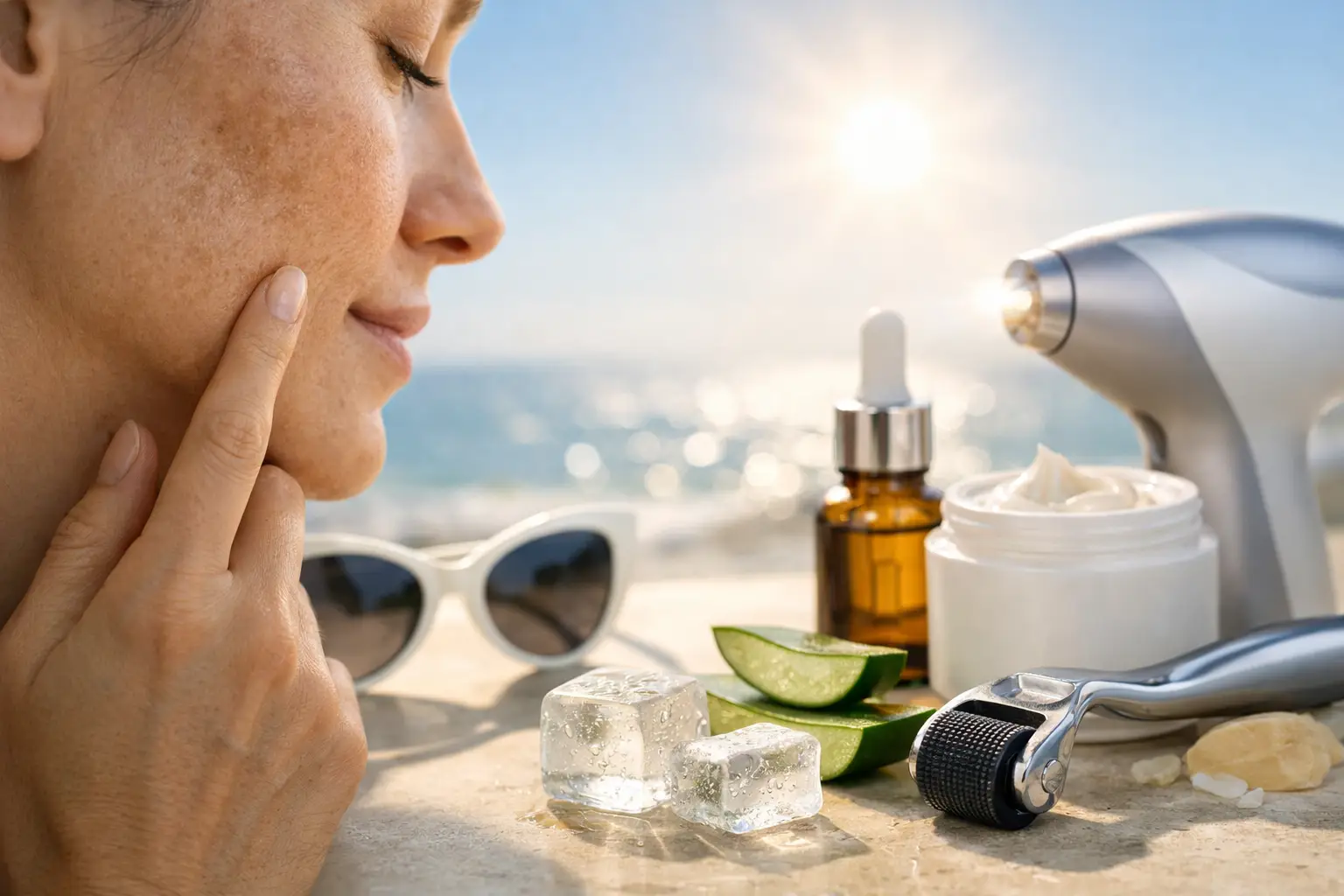
Sun damage rarely appears as one isolated concern. It can show up as uneven brown spots, redness, enlarged-looking pores, rough texture, fine lines, or a complexion that no longer reflects how well you care for your skin. The best options for sun damage depend on which of these changes are present, how deeply they sit in the skin, and how much downtime fits your life.
A personalized assessment is the safest place to begin. Pigmentation that looks like a simple sunspot may behave differently from melasma, post-inflammatory discoloration, or a lesion that needs medical evaluation. At a physician-led aesthetic clinic, treatment planning should begin with a close look at your skin tone, sun exposure history, current skincare routine, and goals for natural-looking improvement.
The Best Options for Sun Damage Start With the Diagnosis
Sun exposure affects several layers and structures within the skin. UV radiation stimulates excess melanin production, which can create freckles, sunspots, and uneven tone. It also breaks down collagen and elastin over time, contributing to fine lines, laxity, and a crepey texture. In some people, it makes tiny blood vessels more visible, creating persistent redness.
Because these concerns have different causes, there is no single treatment that is best for every face. A laser treatment may be an excellent choice for defined pigment or redness, while a chemical peel may better suit diffuse dullness and surface texture. Microneedling can support collagen renewal when texture and fine lines are the primary issue. Many patients achieve their most balanced result through a carefully staged combination rather than one aggressive appointment.
Build the Foundation With Daily Sun Protection and Skincare
Professional treatments can improve existing damage, but ongoing unprotected exposure can quickly undermine progress. Broad-spectrum sunscreen with SPF 30 or higher should be a non-negotiable daily step, including on overcast days and during errands, driving, or time near windows. Reapply when spending extended time outdoors, and add a hat or shade when practical.
A medical-grade skincare plan may also help improve the appearance of uneven pigment and support skin health between treatments. Depending on your skin and sensitivity, a provider may recommend ingredients such as retinoids, vitamin C, antioxidants, pigment-regulating agents, or exfoliating acids. These products are not interchangeable, and more active ingredients do not always mean better results. Over-exfoliating or using the wrong combination can irritate the skin and make discoloration more noticeable.
Skincare is particularly valuable for maintaining professional results. It works gradually, so expectations should be realistic: meaningful improvement in sun-related tone and texture often develops over weeks to months, not overnight.
Chemical Peels for Dullness, Uneven Tone, and Fine Surface Texture
Chemical peels use a controlled solution to encourage the shedding of damaged surface cells and stimulate fresh skin renewal. They can be a strong option for dullness, mild discoloration, rough texture, and fine lines, especially when the concern is widespread rather than limited to a few isolated spots.
Peels range from light, low-downtime treatments to deeper formulations with more visible peeling and recovery. The right strength depends on your skin type, pigment concerns, previous treatments, and tolerance for downtime. A peel that is too aggressive can cause prolonged inflammation or post-inflammatory hyperpigmentation, particularly in deeper skin tones. This is why provider selection and proper skin preparation matter.
Most patients need a series of treatments for a more noticeable change. A thoughtful plan may pair lighter peels with home skincare and sun protection, allowing the skin to improve steadily without unnecessary disruption to work or social commitments.
Laser Treatments for Pigment and Redness
Laser technology can target specific elements of sun damage with a level of precision that topical products cannot always provide. Certain laser treatments are designed to address brown pigment, while others target visible blood vessels and diffuse redness. The result may be a more even, clearer-looking complexion when the treatment is selected appropriately.
Laser treatment is not a generic category. Different devices, wavelengths, and settings are suited to different concerns and skin types. A consultation should cover whether your discoloration is sun-related pigment, melasma, or another condition, because heat-based treatments can worsen some forms of pigmentation if used without the right approach.
After a pigment-focused laser treatment, dark spots may temporarily look darker before they flake away or fade. Redness, warmth, and mild swelling can also occur for a short period. Your provider should explain what recovery looks like for the specific treatment, as well as how to protect the healing skin from sun exposure. For many patients, laser treatments offer a high-impact option with manageable downtime, but a series may be needed for extensive damage.
Microneedling for Texture and Collagen Support
When sun damage has left skin feeling less smooth or resilient, microneedling may be worth considering. This treatment creates controlled microchannels in the skin to stimulate the body’s natural collagen response. Over time, it can improve the appearance of fine lines, mild acne scarring, enlarged pores, and uneven texture.
Microneedling does not remove a dark sunspot in the same way a pigment-focused laser can. Its strength is skin quality: smoother texture, improved firmness, and a more refined overall appearance. Results develop gradually as collagen remodels, often over several months and through a series of sessions.
PRP may be incorporated into a microneedling plan for select patients. Because PRP uses a concentration derived from your own blood, it is often chosen to support the skin’s recovery response. Whether it is appropriate depends on your goals, medical history, and the clinical recommendation for your skin.
When a Combination Plan Makes More Sense
Sun damage often involves color, texture, and collagen loss at once. Treating only pigment may leave texture unchanged. Addressing texture alone may not resolve visible sunspots or facial redness. A combination plan can address these layers in a measured sequence.
For example, a provider may first focus on stabilizing the skin barrier and daily skincare. Laser treatment may then address prominent brown spots or redness, followed by microneedling for texture and collagen support. Light chemical peels can be used at appropriate intervals to maintain brightness and surface smoothness. The sequence matters because treatment too close together can increase irritation and prolong recovery.
Injectables may have a role when sun damage is accompanied by age-related volume loss or expression lines, but they do not treat pigmentation or UV-related texture changes directly. Botox can soften dynamic wrinkles, while dermal fillers can restore facial balance in carefully selected areas. These treatments are best viewed as complementary to skin renewal, not replacements for it.
What to Avoid When Treating Sun-Damaged Skin
The desire for quick improvement can lead people toward harsh scrubs, unregulated peels, or at-home devices that are not appropriate for their skin. These approaches can compromise the skin barrier, cause burns, and trigger more discoloration. Be cautious with any treatment that promises to erase sun damage instantly or claims to work identically for every skin tone.
Avoid picking at flaking pigment after a laser or peel. Follow post-treatment instructions closely, especially around gentle cleansing, moisturizing, exercise, makeup, and sun avoidance. If you have a history of cold sores, melasma, keloid scarring, or skin sensitivity, mention it before treatment. These details can change the treatment choice and preparation plan.
A refined result is usually built over time, not forced in one visit. With skilled guidance, consistent sun protection, and a plan designed for your individual skin, sun damage can become far less visible while your complexion still looks like your own – simply healthier, clearer, and more refreshed.
