
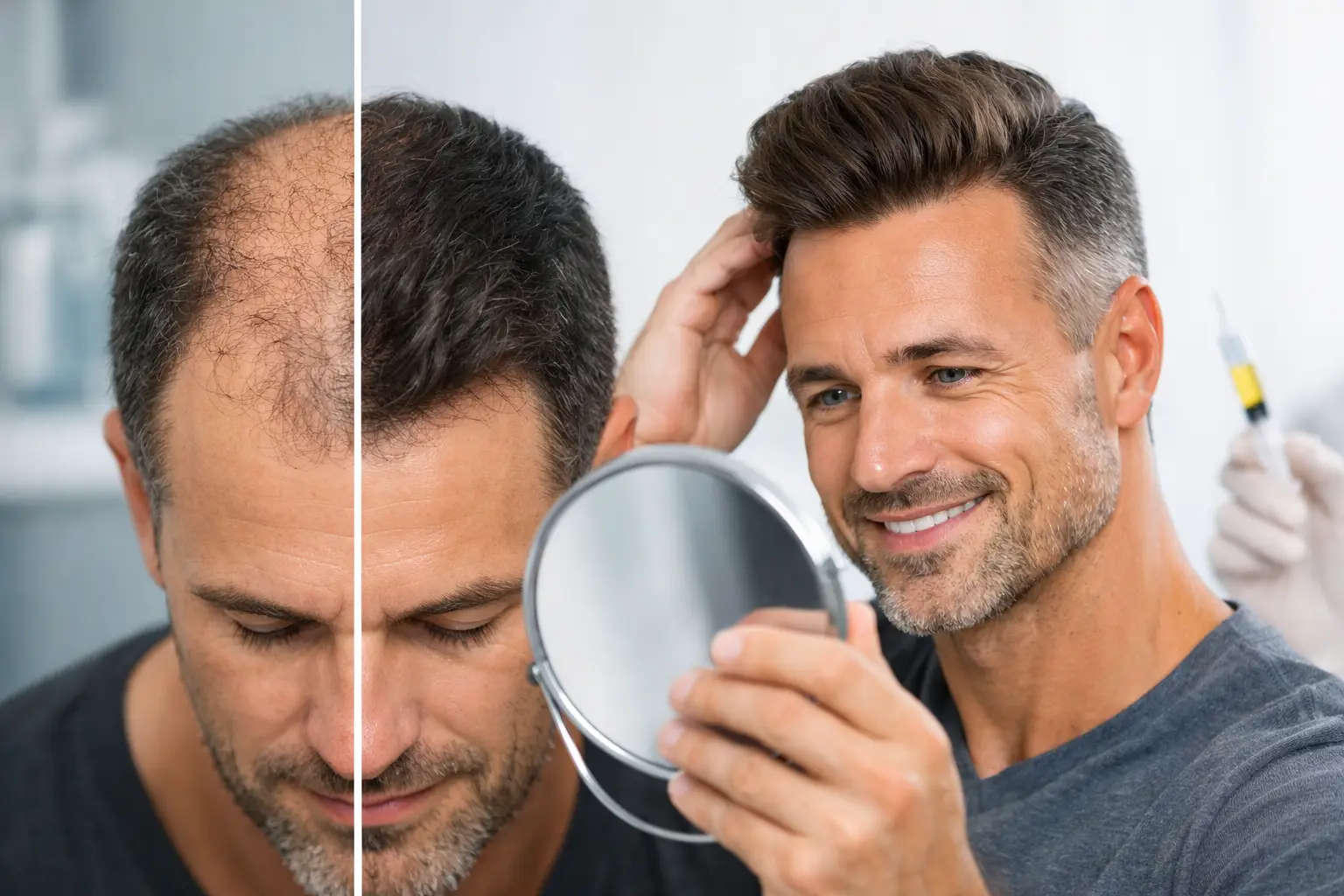
Hair shedding can feel especially personal because it changes the way you see yourself before anyone else notices. For patients looking for a non-surgical option, PRP hair restoration results can be encouraging, particularly when treatment begins while follicles are still active. The key is having realistic expectations: PRP can support healthier, fuller-looking hair in appropriate candidates, but it is not an instant fix or a universal answer for every type of hair loss.
At a physician-led clinic, the process begins with understanding why thinning is happening. That assessment helps determine whether platelet-rich plasma is likely to be a worthwhile investment and how it may fit into a personalized hair restoration plan.
How PRP Supports Hair Growth
PRP, or platelet-rich plasma, is created from a small sample of your own blood. After the sample is processed, the platelet-rich portion is carefully injected into targeted areas of the scalp. Platelets contain growth factors that may help support the environment around hair follicles, encourage circulation, and prolong the active growth phase of the hair cycle.
Hair does not grow in a straight line. Each follicle moves through growth, transition, and resting phases, and shedding may become more noticeable when a higher percentage of follicles remain in the resting phase. PRP is intended to support follicles that are weakened or producing finer strands, rather than create entirely new follicles where none remain.
This distinction matters. Patients with early or moderate thinning often have more potential for visible improvement than someone with a smooth area of longstanding baldness. A careful scalp and hair history can help set expectations before treatment begins.
What PRP Hair Restoration Results Can Include
The most satisfying PRP outcomes tend to look natural rather than dramatic overnight. Patients may notice less shedding first, followed by gradual changes in hair quality. Existing strands can appear stronger, thicker, and less sparse over time. Areas around the hairline, part line, crown, or temples may gain better coverage when viable follicles are present.
Results vary by the cause and pattern of hair loss. PRP may be considered for androgenetic thinning, which is the common gradual thinning influenced by genetics and hormones. It can also be useful as part of a broader strategy for some patients experiencing increased shedding after stress, illness, hormonal shifts, or nutritional changes, once the underlying cause has been properly assessed.
For many people, the goal is not to return to the hair density of adolescence. It is to preserve the hair they have, improve the appearance of thinning, and make styling feel easier and more confident. Refined improvement can be meaningful, especially when it helps the scalp become less visible in photos, bright lighting, or a natural part.
What PRP cannot reliably do
PRP does not replace a hair transplant for patients with extensive, established hair loss. It also cannot correct every medical reason for shedding. Thyroid concerns, iron deficiency, certain medications, scalp inflammation, autoimmune conditions, and sudden patchy hair loss may require medical evaluation or a different course of care.
A responsible treatment plan does not promise the same outcome for every patient. It considers how long the thinning has been present, the degree of miniaturization, family history, lifestyle factors, and whether there is an active health issue contributing to hair loss.
When You May See Results
Patience is essential with any hair restoration treatment. Because PRP works with the natural hair cycle, meaningful change takes time. Some patients report reduced shedding within the first several weeks, but visible improvements in density or strand caliber typically develop more gradually.
Most patients begin to assess early changes around three to four months after starting treatment. More noticeable PRP hair restoration results may appear around six months, with continued improvement possible over nine to 12 months. Progress is usually subtle from month to month, which is why consistent clinical photography can be more revealing than a daily mirror check.
An initial series is commonly recommended, often spaced about four to six weeks apart. The number of sessions depends on the patient’s pattern of thinning and treatment response. Once a patient has achieved improvement, maintenance treatments may be advised to help preserve results. Hair loss can be ongoing, particularly when genetics play a role, so maintenance is often part of protecting the progress made.
Who Is a Strong Candidate for PRP?
PRP may be a good option for adults who have noticed early thinning, a widening part, increased scalp visibility, or gradual loss of volume. It appeals to patients who want a minimally invasive treatment using their own biologic material and who prefer little to no downtime.
The best candidates generally have active but weakened follicles. They are also prepared to follow a recommended treatment schedule and understand that results are gradual. PRP can be especially appealing when a patient wants to address thinning before it becomes more advanced.
Candidates should share their full health history during consultation. Certain blood disorders, platelet conditions, active infections, pregnancy considerations, medications, or scalp conditions may affect suitability. A physician-guided evaluation provides the safest path forward and ensures the treatment recommendation is based on your needs rather than a one-size-fits-all protocol.
Why Treatment Technique Matters
The quality of PRP treatment involves more than the blood draw itself. Proper preparation, thoughtful injection placement, and an understanding of hair loss patterns all influence the patient experience and treatment plan. A personalized approach targets the areas of greatest concern while accounting for the natural direction of hair growth and the extent of thinning.
Physician supervision also matters when hair loss may have a medical component. A trained provider can recognize when PRP is appropriate, when another treatment should be considered, and when further medical assessment is needed. That level of judgment is particularly valuable for patients who are unsure whether their shedding is temporary, genetic, hormonal, or related to another concern.
At Balwin Aesthetics, PRP consultations are centered on informed decisions, natural-looking results, and treatment recommendations that respect each patient’s starting point.
Combining PRP With a Broader Hair Plan
PRP can work well as one component of a broader approach to hair health. Depending on the cause of thinning and your goals, a provider may discuss topical or oral medical options, nutritional assessment, management of scalp concerns, or lifestyle factors that can affect shedding.
This does not mean every patient needs multiple treatments. Some prefer PRP as a standalone option, while others may benefit from combination care to support stronger results. The appropriate plan depends on the diagnosis, the pace of hair loss, tolerance for maintenance, and the level of improvement you hope to achieve.
Consistency often matters more than chasing quick fixes. Skipping planned sessions, changing products frequently, or expecting an immediate transformation can make the process feel more frustrating. A clear plan, progress photos, and scheduled reassessments create a more accurate picture of response.
What to Expect During and After Treatment
A PRP appointment generally begins with a simple blood draw. The scalp is prepared, and the processed PRP is injected into the treatment areas. Patients may feel brief pressure or pinching during injections, but discomfort is typically manageable. A topical numbing option may be discussed when appropriate.
Mild tenderness, redness, swelling, or a temporary headache can occur afterward. These effects usually resolve quickly, and most patients return to normal activities the same day. Your provider will give individualized aftercare instructions, including guidance on washing your hair, exercise, and medications that may affect bruising or platelet function.
Before and after photos are useful, but they should be interpreted carefully. Lighting, hair length, styling, color, and part placement can all make density look different. The most reliable comparison uses consistent angles, lighting, and timing.
A thoughtful PRP plan is an investment in gradual improvement, not a promise of instant regrowth. If thinning is affecting your confidence, the most helpful next step is a professional assessment that identifies what your hair needs now and what realistic progress can look like over time.
