
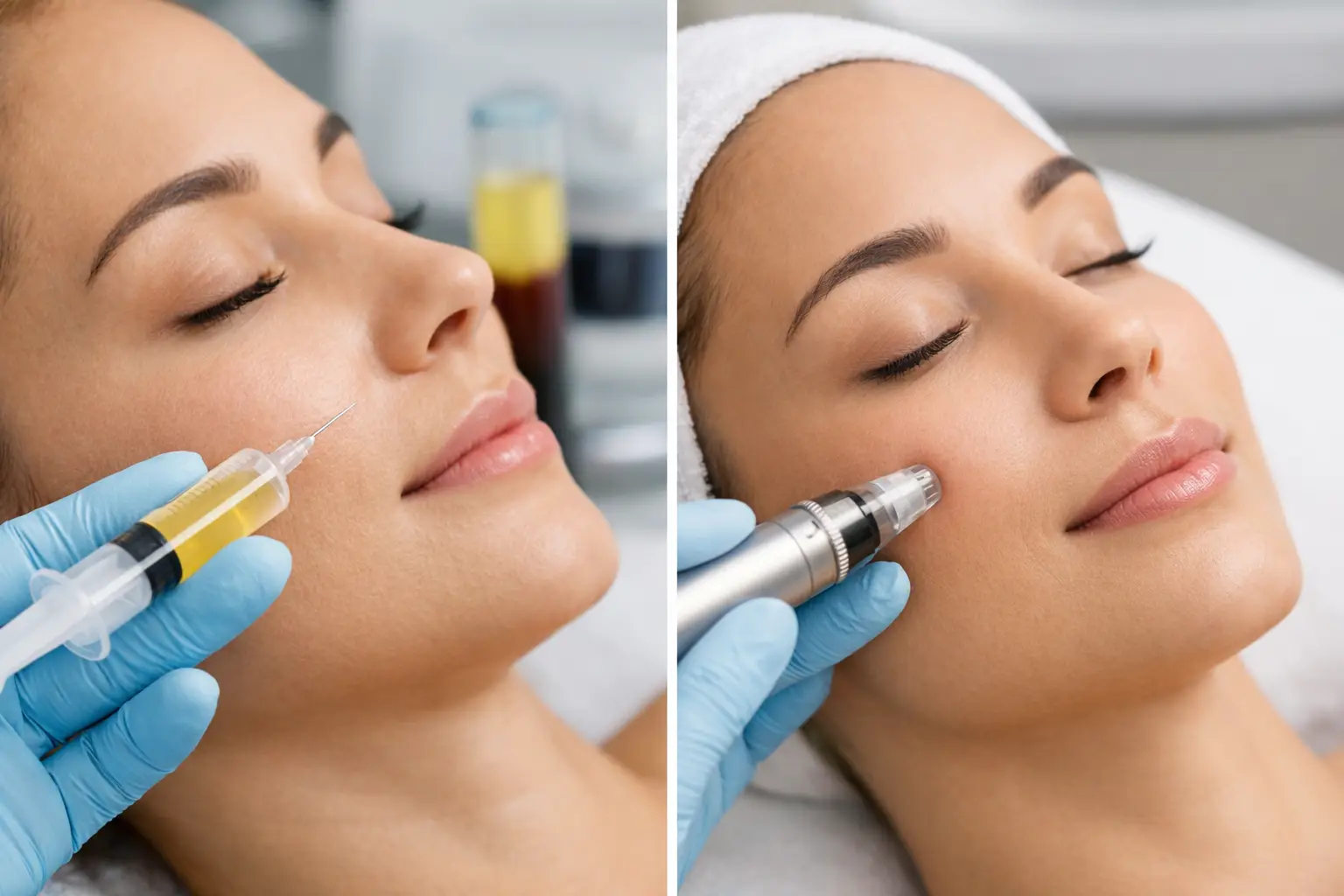
PRP vs microneedling is not always an either-or decision. Both treatments support healthier-looking skin with little downtime, but they work in distinctly different ways. The right choice depends on whether your primary concern is texture, acne scarring, fine lines, dullness, under-eye quality, or hair thinning – and whether you want to enhance a treatment plan with your body’s own growth factors.
For patients who want visible improvement without changing the character of their face, both options can be valuable. A physician-led consultation helps identify the treatment that fits your skin condition, goals, timeline, and comfort with recovery.
What Is Microneedling?
Microneedling is a collagen-induction treatment that uses a medical-grade device with very fine needles to create controlled microchannels in the skin. These microscopic openings trigger the body’s natural repair response, encouraging the production of collagen and elastin over time.
The treatment is commonly used to improve uneven skin texture, enlarged-looking pores, fine lines, mild laxity, stretch marks, and certain types of acne scarring. Because it does not rely on heat or remove the outermost layers of skin, microneedling can be an appealing option for patients seeking meaningful skin renewal with a relatively short recovery period.
A numbing cream is typically applied before treatment for comfort. Following the appointment, skin may look pink or red, similar to a mild sunburn, and may feel warm or tight for one to three days. Collagen remodeling continues gradually, so results develop over the following weeks rather than appearing all at once.
Understanding Platelet-Rich Plasma (PRP) Therapy
PRP stands for platelet-rich plasma. It is created from a small sample of your own blood, which is processed to concentrate platelets and plasma. Platelets contain growth factors that play a role in tissue repair and healing.
In aesthetic medicine, PRP may be injected into targeted areas or applied during microneedling, depending on the concern being treated. PRP injections are often considered for areas where skin quality is delicate, such as the under-eye region, as well as for certain hair-restoration plans. When used in the scalp, PRP is intended to support the health of hair follicles and may help patients experiencing early or mild thinning.
Because PRP comes from your own blood, the risk of an allergic reaction is low. That does not mean PRP is appropriate for every patient. A medical review remains essential, particularly for individuals with blood disorders, active infection, certain autoimmune conditions, or medications that affect blood clotting or platelet function.
PRP vs Microneedling: The Core Difference
The main difference is the mechanism. Microneedling creates controlled micro-injuries that prompt collagen renewal. PRP introduces a concentrated portion of your own plasma, with the goal of supporting the healing and regenerative response in a specific area.
Microneedling is usually the more direct choice when texture is the central concern. It can be especially helpful for patients bothered by roughness, fine lines, visible pores, or depressed acne scars. A series of treatments is often recommended because collagen builds gradually, and deeper scars may need a more comprehensive plan that includes other modalities.
PRP is more often selected when the treatment goal involves tissue quality or hair support. For example, a patient with early hair thinning may be a stronger candidate for PRP scalp injections than for facial microneedling. Someone concerned about crepey-looking under-eye skin may also benefit from a personalized discussion about PRP, although outcomes vary and not every under-eye concern can be corrected with this treatment.
Neither treatment replaces volume lost through aging. If hollowing in the cheeks, temples, or under-eye area is the main issue, dermal filler or another physician-selected treatment may be more appropriate. Good aesthetic care begins by treating the cause of the concern, not simply choosing the most popular procedure.
When Combining PRP and Microneedling Makes Sense
PRP and microneedling are frequently combined for facial skin renewal. After microneedling creates microchannels, PRP may be applied to the skin to complement the healing process. Some patients choose this approach when they want to address texture and overall skin radiance while adding a biologically derived component to their treatment.
The combination can be a good fit for concerns such as early signs of aging, dullness, fine lines, and mild textural irregularities. However, adding PRP does not automatically make every microneedling treatment better for every person. It increases the cost and adds a blood draw, so the decision should be based on your skin goals and the recommendation of a qualified provider.
For more pronounced pigmentation, active acne, deep scarring, significant skin laxity, or visible facial volume loss, a different treatment or a combination plan may deliver a better result. Chemical peels, laser treatments, injectables, and medical skincare can all have a place in a tailored rejuvenation strategy.
Results, Treatment Series, and Downtime
Microneedling results are progressive. Many patients notice a healthier glow after the skin settles, but improvements in texture and firmness typically become more noticeable over several weeks. A series of three or more treatments, often spaced about four to six weeks apart, may be advised depending on the concern and skin response.
PRP treatment schedules vary by area. Hair-restoration plans often involve multiple initial sessions followed by maintenance as recommended by the treating physician. Facial PRP may also be performed in a series, particularly when the goal is gradual improvement in skin quality rather than correction of a single isolated concern.
Downtime is generally manageable for both treatments. With microneedling, expect redness, mild swelling, and temporary sensitivity. With PRP injections, small areas of swelling, bruising, tenderness, or pinpoint bleeding can occur. Patients should avoid strenuous exercise, excessive heat, direct sun exposure, and potentially irritating skincare products for the period advised by their provider.
Aftercare matters. Keep the skin clean, use gentle products, wear broad-spectrum sunscreen, and do not pick or exfoliate healing skin. Your provider may also advise you to pause certain active ingredients, such as retinoids or exfoliating acids, before and after treatment.
Safety Should Guide the Decision
Aesthetic treatments are safest and most effective when the provider understands skin biology, facial anatomy, and the factors that may affect healing. Treatment depth, injection technique, product handling, and patient selection all matter. A superficial treatment performed without appropriate assessment may offer limited results, while an overly aggressive approach can increase the risk of prolonged inflammation or unwanted pigmentation changes.
Before PRP or microneedling, disclose your full medical history, current medications, history of cold sores, active skin conditions, and any tendency toward abnormal scarring or pigment changes. Treatment may need to be postponed if you have an active breakout, rash, infection, or recent excessive sun exposure.
At Balwin Aesthetics, treatment recommendations are guided by physician-led assessment and a commitment to natural-looking improvement. That means being clear when PRP, microneedling, a combined approach, or another option is most likely to serve your goals.
The best treatment is the one that respects both your skin and your expectations. A thoughtful consultation can turn a broad question about PRP or microneedling into a clear, personalized plan for healthier, more refined-looking skin.
