
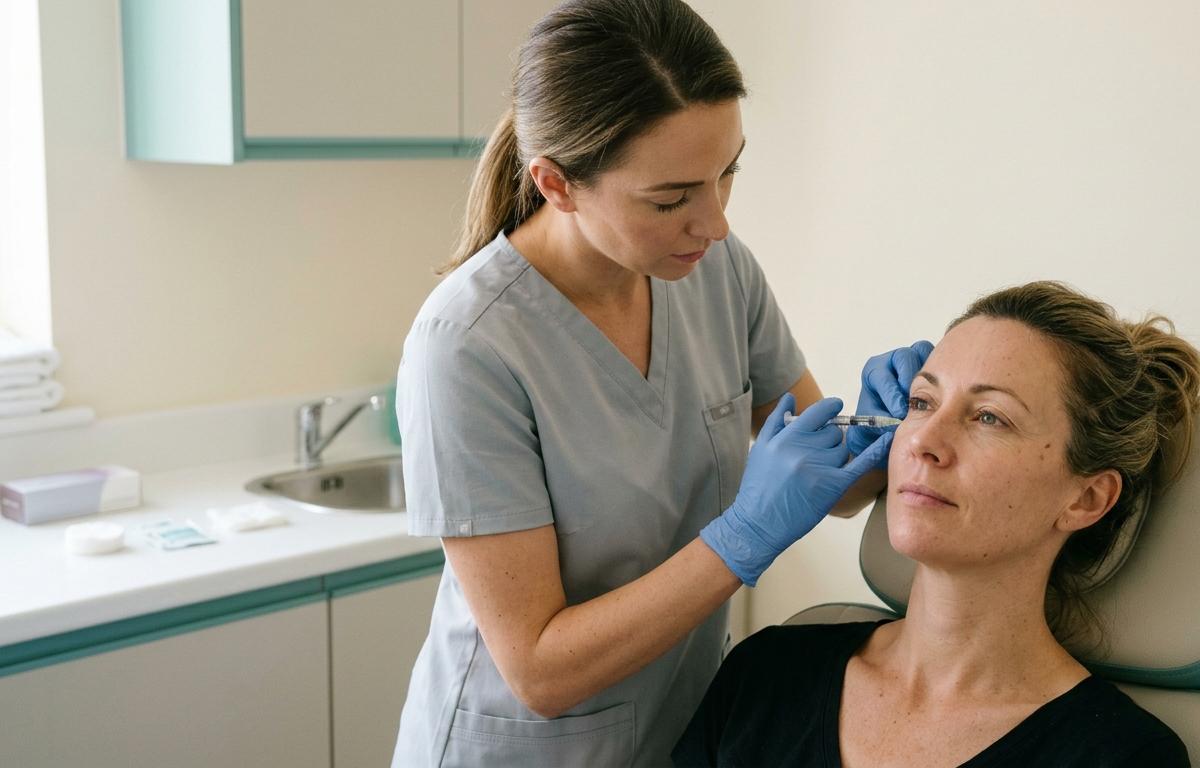
What Under-Eye Filler Can and Cannot Fix
Many people searching for dermal fillers around the eyes are describing the same thing: a hollow, shadowed groove that makes them look tired even after a full night’s sleep. That groove is the tear trough, and it’s where filler works best. A small amount of hyaluronic acid, placed carefully, can soften the transition between the lower eyelid and the cheek and ease the shadow that reads as a dark circle.
Here’s the catch. Filler corrects volume loss and contour, not every cause of dark circles. If the darkness comes from thin skin showing blood vessels, pigment deposits, or shadow cast by puffiness, filler may help only partly, or not at all. Pigment responds better to approaches such as laser treatment for pigment and vascular lesions, while thin or crepey skin often does better with collagen-stimulating options.
Some people should skip under-eye filler altogether. It’s a poor fit for puffy bags or festoons, because adding product to an area that already holds fluid or protruding fat can make the swelling look worse (medspot.ai). A hollow can also be a symptom rather than the real problem. A deflated mid-cheek frequently explains a deep tear trough, so restoring support higher up can lift the whole area without putting product directly under the eye. Our guide to under eye fillers goes deeper on candidacy, and the guide to facial balancing treatments explains why one area is rarely treated in isolation.
Why the Under-Eye Area Carries Higher Risk
Of all the places filler can go, the tear trough is widely described as the highest-risk and most technically demanding (Haute Living). The skin there is among the thinnest on the body, and the tissue sits close to a dense network of blood vessels and the delicate structures of the eye socket. Small differences in depth or volume that would be forgiving on the cheek or chin show up immediately here.
The risks specific to this area include:
- The Tyndall effect, a bluish tint that appears when filler sits too superficially under thin skin.
- Persistent malar edema, a lingering swelling along the cheek that can be slow to resolve. A 2026 expert-panel review calls it "a relatively common complication" (Haute Living guide).
- Migration, where product drifts from where it was placed.
- Vascular events, the rarest but most serious category.
Vascular complications deserve plain language. Visual impairment and blindness are thought to result from filler entering an artery, and branches such as the supraorbital and dorsal nasal arteries can carry material toward the ophthalmic artery (FDA executive summary). These events are uncommon. They are also the reason an injector’s anatomy knowledge, technique and preparedness matter so much.
Hyaluronic acid does have one real safety advantage: it can be dissolved. An ASDS task force strongly recommends prompt high-dose hyaluronidase when a skin vascular occlusion follows HA filler (ASDS task force recommendations). That’s one reason a physician-led setting, where the person treating you can recognize a problem and respond to it, is a sensible standard. Hyaluronic acid fillers are also the most widely used type in Europe and the USA (PMC), so both the products and the rescue protocols are well studied.
How Long Results Last and What to Expect
Published duration figures for dermal fillers around the eyes vary a lot, with sources reporting anywhere from about 6 to 18 months. The spread is genuine. It reflects the specific product, how much was used, your metabolism and how much the area moves. A 2022 systematic review of 23 studies reported an effect of around 8 to 12 months (Haute Living guide). Think of it as a range, not a promise.
Two nuances are worth knowing. Filler can linger in the tissue longer than its visible effect, so the area may look flat again while some product remains. And a hollow that was there before treatment may return once the filler dissolves, because the underlying anatomy hasn’t changed (AE Skin). This is maintenance, not a permanent correction.
In the days after injection, expect some swelling and possible bruising, since the skin here is thin and vascular. Many people book well ahead of important events. The final result is usually judged once the initial swelling settles, so early photos can look slightly different from the finished outcome. Don’t judge it in the first day or two, and keep your follow-up appointment so any asymmetry or lumpiness can be assessed rather than guessed at.
Honest expectations also mean accepting that the goal is softening, not erasing. A natural result looks like a well-rested version of you, not a visibly filled groove.
Approved Products: The US FDA List and What It Means in Canada
It helps to know which products regulators have specifically reviewed for the under-eye hollow. The US FDA has approved four hyaluronic acid products for this indication in adults 22 and older: Juvéderm Volbella XC (2021), Restylane Eyelight (2023), Belotero Balance (+) (2023) and RHA Redensity Eye (2026) (Haute Living guide). Older web pages list fewer approvals, so check the date of whatever you’re reading.
One caveat matters here. These are US FDA approvals, not Health Canada decisions. Approval in one country doesn’t automatically mean the same product or indication is authorized in another, and this article can’t confirm the Canadian status of these specific under-eye indications. If you’re in Alberta, ask your provider which product they plan to use, what its Canadian regulatory status is, and why they chose it for your anatomy.
That question is a good test of a clinic. A thoughtful provider will answer it plainly, explain whether the use is on-label or based on clinical judgment, and talk through alternatives. The FDA list is a useful signal that certain low-swelling, softer gels have been studied for this area. It doesn’t guarantee suitability for any individual, and it doesn’t replace a proper assessment of your skin, cheek support and eyelid anatomy.
Safer First Steps and When Filler Is the Wrong Choice in Edmonton
If you’re considering dermal fillers around the eyes in Edmonton, start with an assessment, not a syringe. A good consultation looks at the whole midface. Because a deflated mid-cheek so often drives a deep tear trough, supporting the cheek can be a lower-risk first step, and sometimes it eases the under-eye shadow enough that little or no direct treatment is needed. You can read about our approach to dermal fillers in Edmonton and the cost of related injectables to see how treatment planning and pricing typically work.
Filler is likely the wrong choice when:
- The main concern is puffiness, bags or festoons rather than a hollow.
- The darkness is mostly pigment or visible vessels.
- The skin is very thin or crepey and would benefit from texture work first.
- You’re expecting a permanent fix or a dramatic transformation.
In those cases, other options may serve you better. Collagen-stimulating approaches such as microneedling can improve skin quality, and PRP facial rejuvenation is another way clinicians work on thin, tired-looking skin without adding volume.
A few practical points deserve checking before you book. Who is permitted to inject, and whether a physician must be on-site, depends on Alberta regulation and professional college rules, so confirm this directly rather than assuming. Pricing varies by provider and product, and we have no reliable Alberta under-eye figures to quote, so ask for a written estimate at your consultation. When you’re ready, contact our clinic to discuss whether filler, cheek support or a different treatment suits your goals.
