
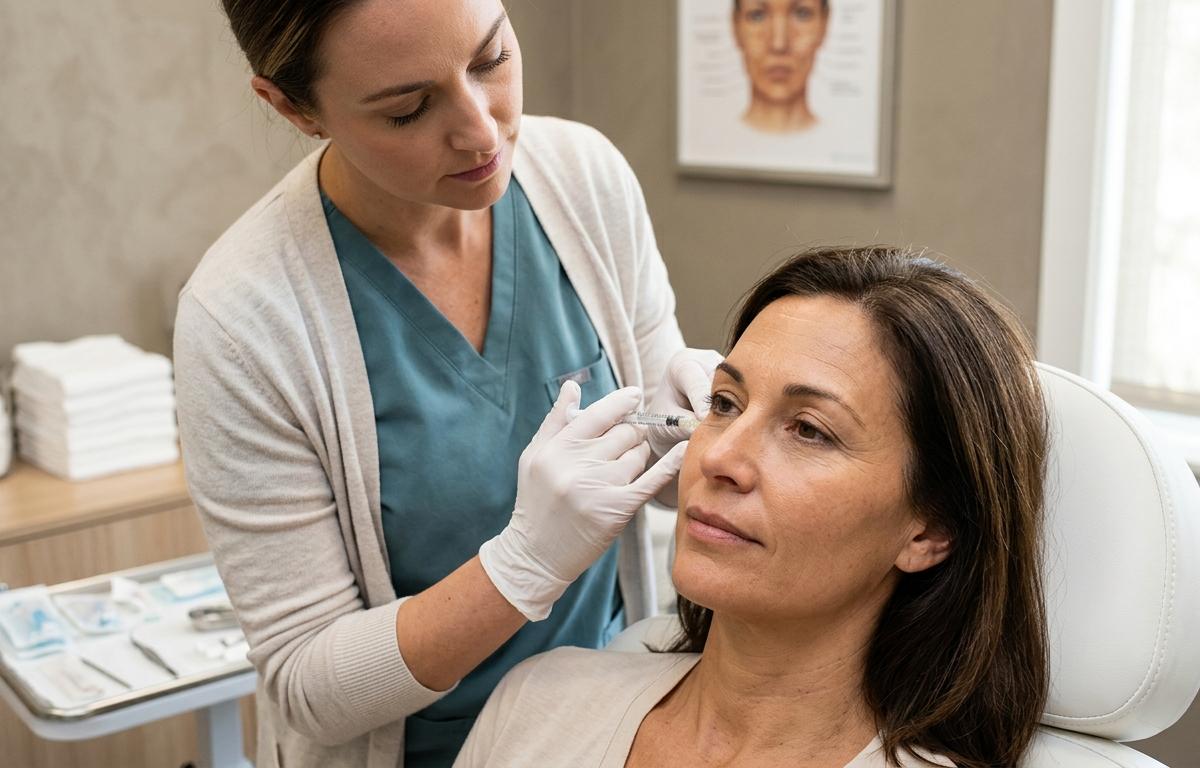
How Botox Works and Why It Softens Lines
Botox is a brand of botulinum toxin, a purified protein that blocks the nerve signals telling a muscle to contract. A small amount injected into a targeted facial muscle keeps that muscle from tightening as strongly, so the skin above it stops creasing as deeply. Cleveland Clinic describes these effects as temporary. They last several months, and then the muscle gradually regains movement.
That is why Botox on wrinkles has a more specific answer than most people expect. Botox doesn’t fill, lift or resurface skin. It works on the muscle underneath, and the smoother look comes from that muscle relaxing. A frown line softens because the muscle pulling the brows together has gone quiet, not because the skin has been rebuilt.
In Canada, Botox is available by prescription only, and the Health Canada regulatory decision summary lists its approved medical uses. That requirement is one reason treatment belongs in a licensed, physician-led clinic rather than a casual setting.
Dynamic Versus Static Wrinkles: What Botox Can and Cannot Treat
Before booking, it helps to know the difference between two types of lines.
Dynamic wrinkles form when you move your face: frowning, smiling, squinting or raising your brows. WebMD explains that Botox on wrinkles is mainly used for these movement-related lines. It won’t help wrinkles caused by sun damage or gravity.
Static wrinkles are visible even when your face is completely relaxed. According to Mayo Clinic Health System, they come from a loss of elasticity and collagen, or from damage caused by the sun or smoking. Some providers may suggest Botox for static lines, but fillers are generally more effective for them.
The two types are also linked over time. The American Academy of Ophthalmology notes that botulinum toxin doesn’t erase fine lines and wrinkles, and that dynamic wrinkles can become permanent, or static, as the years pass. That’s the argument some people make for treating early lines before they etch in. It isn’t a promise that treatment prevents wrinkles, and an honest consultation should say so.
If your concern is deep creasing at rest, volume loss, or sun-related texture, Botox alone is unlikely to be the whole answer. Other options work on different layers of the skin, such as microneedling for texture and collagen support or a chemical peel for surface tone.
Common Treatment Areas and How Long Results Last
The forehead, the brow region and the muscles around the eyes are the most commonly treated areas. WebMD also lists crow’s feet, marionette lines, bunny lines and chin dimpling among common uses, while Cleveland Clinic names the eyebrows and forehead.
Each area behaves a little differently, because the muscles underneath vary in size and strength. The glabella, the space between the brows, is often treated alongside the forehead so the brows stay balanced. A physician will usually look at how your brows sit at rest before deciding where to inject. For a closer look at one of the most requested areas, our guide to Botox and forehead wrinkles walks through what natural-looking results involve.
When results appear and how long they last
Results don’t show up instantly. Cleveland Clinic’s aftercare guidance notes that effects can take a few days to a week to appear. After that, the softening is temporary. Side-effect information from Drugs.com describes the medicine wearing off over roughly three months, which fits the "several months" window Cleveland Clinic gives.
Because the effect fades, maintenance means repeat appointments. I haven’t found a neutral source with a reliable number of visits or an exact interval for each area, and individual response varies, so your physician is the right person to set a realistic schedule. If you’re weighing costs, our guide to Botox pricing in Edmonton explains how treatment is typically priced.
Botox Versus Dermal Fillers: Choosing the Right Option
People often ask whether they need Botox or a filler. The two do different jobs. Cleveland Clinic puts the distinction well: Botox on wrinkles works by temporarily relaxing muscles, while dermal fillers add volume and help the skin retain moisture.
A simple way to think about it:
- Lines caused by movement (a furrowed brow, crow’s feet when you smile) are the natural territory for Botox.
- Lines and folds that remain at rest, or areas that look hollow or thinner with age, are where fillers generally perform better, as Mayo Clinic Health System notes for static wrinkles.
Many people benefit from both, used in different areas for different reasons. A smile line that is partly volume loss and partly muscle movement may call for a combination, and that’s where a physician’s assessment counts for more than any general rule. You can read more about our approach in our guide to facial balancing treatments, and learn about dermal fillers in Edmonton if volume is your main concern.
Safety, Side Effects and Recovery in Canada
Most people tolerate Botox well, and the effects are short-lived. Drugs.com reports that most side effects begin within the first week after injection and resolve as the medicine wears off. Common reactions include pain, bruising or swelling where the injection was given, headache, and, less often, a drooping eyelid or eyebrow. Which effects are most likely depends on where the injection goes and why.
Cleveland Clinic advises contacting a provider promptly if you notice vision problems, shortness of breath, trouble swallowing, slurred speech, or numbness or weakness in an area that wasn’t treated. These are uncommon, but they’re the signs that call for a phone call rather than waiting it out.
What recovery looks like
The American Society of Plastic Surgeons states there is no downtime after botulinum toxin injections, so most people get back to their usual routine the same day. The same source advises against rubbing or massaging the treated areas, since that may cause the toxin to migrate. Cleveland Clinic adds that no data shows facial movement speeds absorption, so you don’t need to exaggerate your expressions afterward.
I’d rather be upfront than overpromise on bruising. I didn’t find neutral guidance with specific prevention steps, so your provider’s own aftercare instructions are the best guide there.
Preparing for a Consultation in Edmonton
A good consultation is a conversation, not a sales pitch. Before you come in, it helps to think through a few things:
- Identify what bothers you. Note whether the lines show up only with expression or also when your face is still. That one detail tells your physician a great deal about whether Botox on wrinkles, a filler, or another approach suits you.
- Bring your medical history. Mention medications, supplements, prior injectable treatments, and whether you’re pregnant or breastfeeding. Be candid about any neuromuscular condition.
- Ask who performs the injection. In a physician-led clinic, a qualified medical professional assesses your facial anatomy and plans placement to keep expressions natural.
- Ask about expectations and follow-up. You should leave knowing what to expect, how long results typically last, and when to reach the clinic if something concerns you.
Cosmetic Botox is generally not covered by public health plans, so it’s reasonable to ask about costs up front. Our overview of Botox clinics in Edmonton and the page on physician-led Botox treatments outline how we approach assessment and care.
If you’re ready to talk through your goals, you can contact our team to book a consultation. We’ll tell you plainly whether Botox is the right tool for your lines, and if something else would serve you better, we’ll say that too.
