
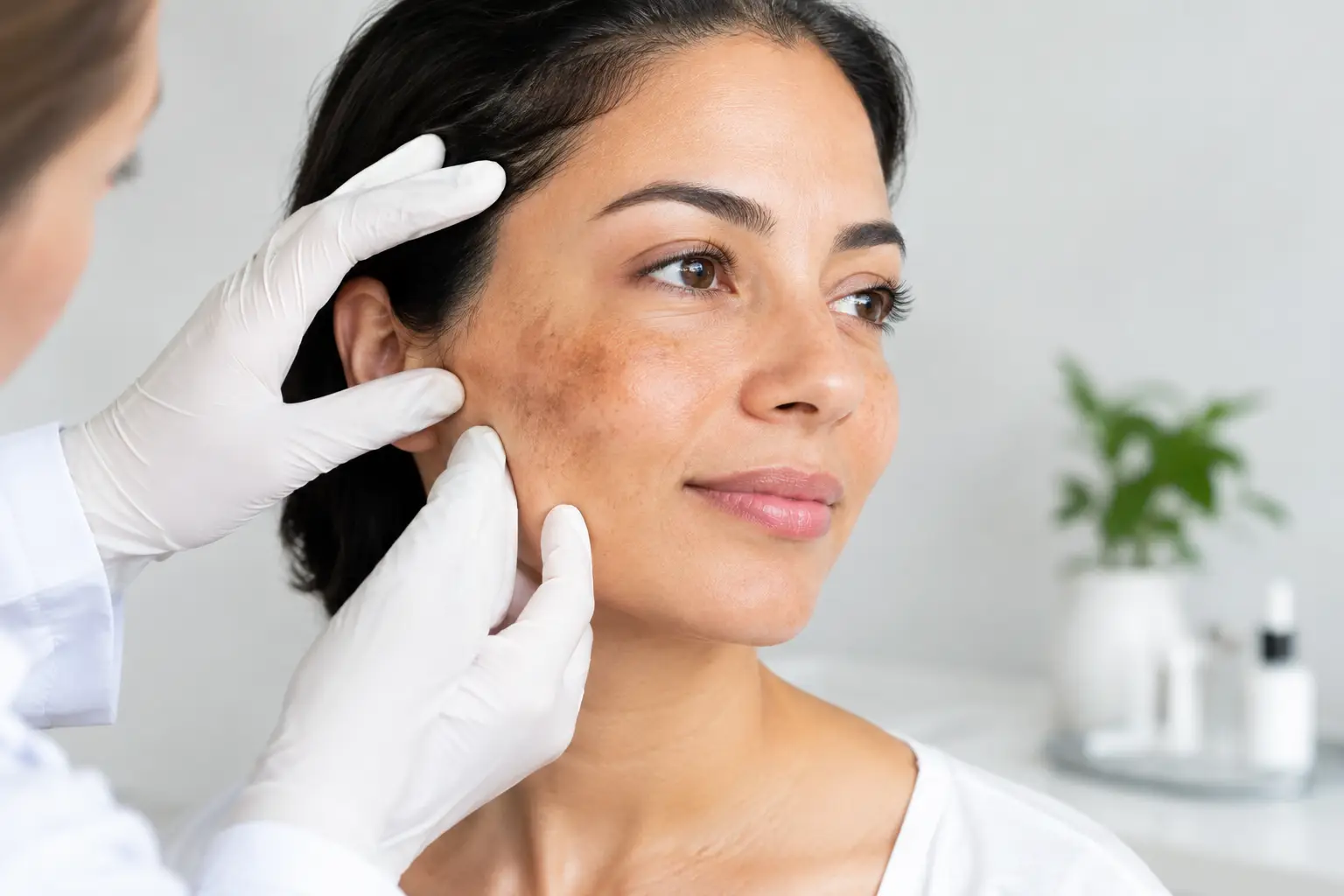
Melasma rarely responds to a single product, one peel, or a quick fix. A useful melasma treatment example shows why a personalized plan matters: successful care typically combines pigment control, strict sun protection, and carefully selected professional treatments over time. The objective is not to irritate the skin into changing faster. It is to gradually reduce visible discoloration while protecting the skin barrier and lowering the risk of recurrence.
Why melasma needs a personalized approach
Melasma appears as symmetrical patches of brown, gray-brown, or tan pigmentation, most often across the cheeks, forehead, upper lip, chin, and nose. It is common, but it can be frustratingly persistent because several factors may contribute to it at once. Ultraviolet light, visible light, heat, hormonal changes, genetics, inflammation, and certain skincare habits can all influence pigment activity.
This is why two people with similar-looking spots may need very different treatment plans. One person may have mild, superficial pigmentation that responds well to medical-grade skincare and diligent sunscreen use. Another may have deeper pigment, a history of post-inflammatory hyperpigmentation, or sensitive skin that requires a slower, more conservative approach.
A physician-led consultation helps determine what is most likely driving the discoloration, how reactive the skin may be, and which treatment options are appropriate. It also helps distinguish melasma from sunspots, freckles, post-acne marks, or other pigment concerns that may need a different strategy.
Melasma treatment example: building a realistic plan
Consider a patient with patchy brown discoloration across the cheeks and upper lip that became more noticeable after a summer of outdoor activities. She has combination skin, uses several active skincare products, and has tried brightening serums with limited improvement. Her goal is a clearer, more even complexion without visible peeling, prolonged downtime, or an unnatural result.
Her treatment plan would begin with skin stabilization rather than an aggressive procedure. If the skin is irritated, dry, or over-exfoliated, pigment can become more difficult to manage. The first phase focuses on consistent home care and identifying triggers.
Step 1: Daily pigment protection
Daily broad-spectrum sunscreen is foundational. For melasma-prone skin, a tinted mineral sunscreen containing iron oxides can be particularly helpful because it offers added protection from visible light, which may worsen pigmentation in some patients. Sunscreen should be applied generously in the morning and reapplied when spending time outdoors, driving, exercising, or sitting near windows for extended periods.
Sun protection is not limited to sunscreen. A wide-brimmed hat, sunglasses, shade, and sensible heat exposure can support the plan. This does not mean avoiding normal life. It means recognizing that even excellent in-clinic care can be undermined by repeated unprotected exposure.
Step 2: Targeted medical-grade skincare
The next step may include a personalized topical regimen. Depending on the patient’s skin type and medical history, this could involve ingredients such as vitamin C, azelaic acid, retinoids, tranexamic acid, kojic acid, or other pigment-regulating formulations. Prescription options may also be considered under medical supervision.
Not every active ingredient should be started at once. Using too many exfoliating or brightening products can lead to redness, flaking, and inflammation, which may make melasma appear darker. A clinician may recommend introducing one product at a time, adjusting frequency, and pairing active skincare with a barrier-supportive moisturizer.
For this patient, the initial plan might include a gentle cleanser, antioxidant serum in the morning, tinted sunscreen, a pigment-focused evening product, and a moisturizer selected for her skin type. She would be advised to pause harsh scrubs, frequent at-home peels, and products that cause persistent stinging or irritation.
Step 3: Carefully selected in-clinic treatment
After several weeks of stable home care, an in-clinic chemical peel may be considered. Professional peels can improve surface dullness, encourage more even skin renewal, and support topical treatment when selected appropriately. The strength, type, and frequency should be based on the patient’s skin tone, sensitivity, pigment depth, and prior response to treatments.
For melasma, stronger is not always better. An overly aggressive peel can cause inflammation and post-inflammatory hyperpigmentation, particularly in patients with deeper skin tones or a known tendency toward discoloration. A series of conservative treatments is often safer and more effective than one intensive session.
Microneedling may also be discussed in selected cases, particularly when melasma exists alongside textural concerns or acne scarring. However, it must be approached thoughtfully. Any treatment that creates controlled inflammation should be tailored carefully, with appropriate aftercare and a realistic understanding of potential pigment risk.
Laser and light-based treatments can be useful for some pigmentation concerns, but they are not automatically the first choice for every case of melasma. Certain devices may provide improvement when used conservatively by an experienced medical provider, while others can trigger rebound pigmentation if the skin is not properly selected, prepared, and protected. The best option depends on the individual, not on what is trending.
What progress may look like
In this example, the patient may notice that her skin looks calmer and more even within the first several weeks, even before the brown patches substantially fade. Over the next two to three months, consistent sunscreen use and targeted skincare may gradually soften the contrast between affected and unaffected areas.
Professional treatments can build on that progress. Results tend to be gradual rather than dramatic after one appointment, which is often a positive sign that the skin is being treated carefully. Photos taken in consistent lighting can be more useful than daily mirror checks, since melasma can appear different depending on lighting, hydration, and temporary skin irritation.
Melasma is generally managed, not permanently cured. Even after visible improvement, maintenance is usually necessary. A patient may continue sunscreen and a modified skincare routine year-round, with periodic in-clinic treatments when appropriate. Hormonal shifts, vacations, sun exposure, and heat can all contribute to recurrence.
When to adjust the treatment plan
A good plan is responsive. If the patient develops burning, prolonged redness, new dark marks, or worsening patches, the clinician may reduce treatment frequency, simplify the routine, or pause certain active ingredients. Skin that is inflamed is not skin that is ready for more intensity.
The plan may also need adjustment during pregnancy, breastfeeding, major hormonal changes, or when starting new medications. Some ingredients and procedures are not appropriate in every circumstance. Open communication during follow-up appointments allows treatment recommendations to remain safe and relevant.
Patients should also be cautious with unverified at-home bleaching products or imported creams that do not clearly list their ingredients. Some may contain unsafe levels of potent steroids, hydroquinone, or mercury. Professional guidance protects more than cosmetic results – it helps protect long-term skin health.
Choosing care with a long-term perspective
The most effective melasma care balances visible improvement with skin safety. It respects the fact that pigmentation is biologically active, affected by lifestyle and hormones, and often prone to returning when treatment becomes too aggressive or sun protection slips.
At Balwin Aesthetics, a consultation can help clarify whether your discoloration is consistent with melasma and whether medical-grade skincare, chemical peels, microneedling, or other options may fit your needs. The right plan should feel considered, manageable, and aligned with your skin’s tolerance.
Clearer-looking skin is often built through patient, consistent decisions rather than a single dramatic treatment. With the right guidance, each step can support a more even complexion while keeping your results natural and your skin health at the center of care.
