
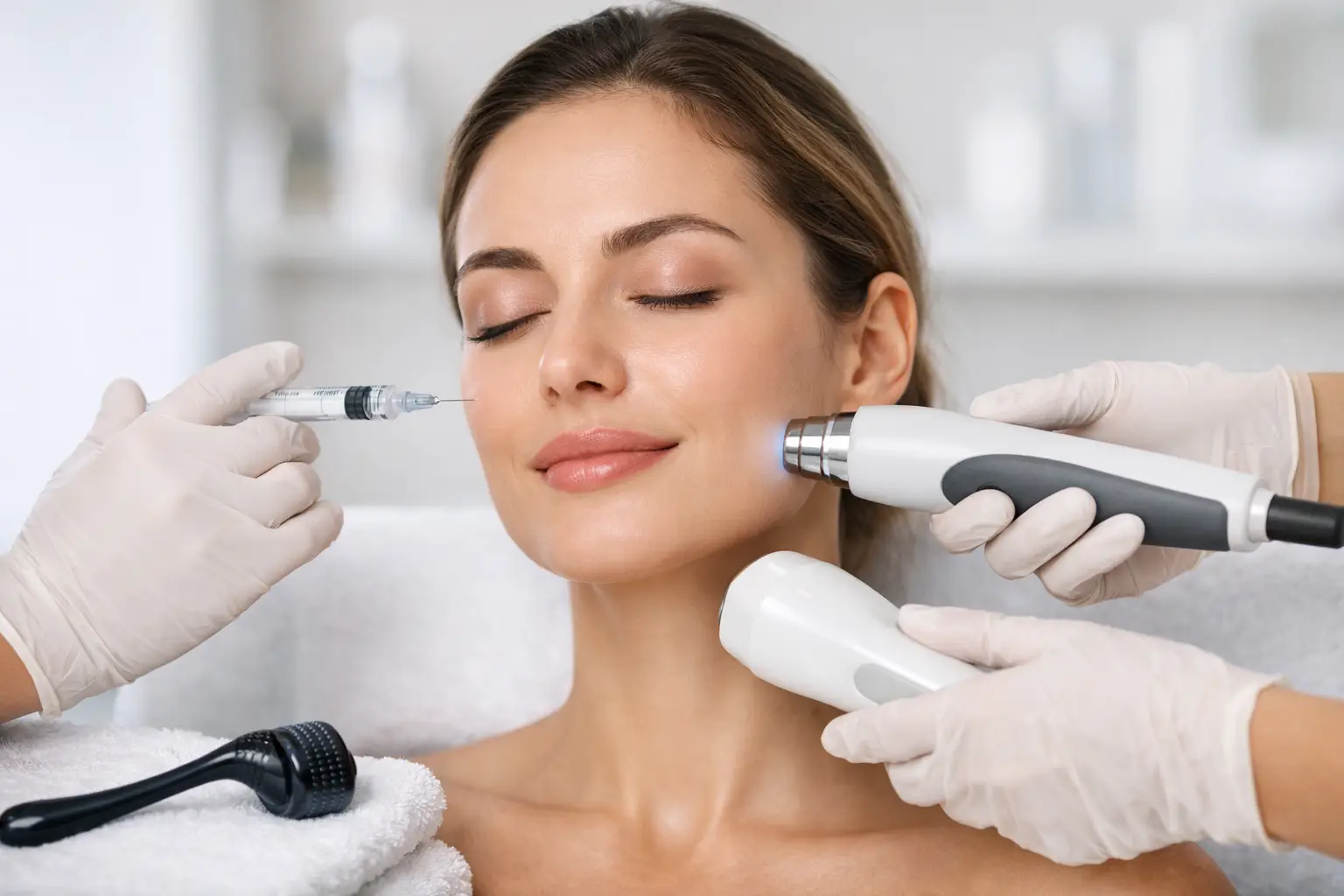
A mirror usually shows the first signs before anyone else notices them – makeup settling into fine lines, cheeks looking flatter, skin losing some of its brightness, or redness that seems harder to cover. For many patients, the search for the best non surgical facial rejuvenation is not really about looking different. It is about looking rested, fresher, and more like themselves again.
That is where treatment selection matters. Non-surgical facial rejuvenation is not one procedure. It is a category that includes injectables, collagen-stimulating treatments, resurfacing options, and laser-based care. The best choice depends on what is actually causing the change in your appearance. Fine lines, volume loss, sun damage, enlarged pores, facial redness, and skin laxity do not respond to the same treatment in the same way.
What makes the best non surgical facial rejuvenation?
The best approach is the one that matches the concern, your anatomy, and your comfort with downtime and maintenance. A treatment that works beautifully for forehead lines may do very little for brown spots. A laser that improves pigmentation may not restore cheek support. This is why medically guided treatment planning matters.
In a physician-led aesthetic setting, facial rejuvenation is usually approached in layers. Muscle movement, skin quality, facial volume, and texture are evaluated separately, then treated in a coordinated way. That tends to produce more natural results than relying on a single treatment to solve every concern.
Age is only one factor. Sun exposure, genetics, stress, weight changes, and skincare habits all influence how the face changes over time. Two patients of the same age may need completely different treatment plans.
Best non surgical facial rejuvenation by concern
For dynamic wrinkles and expression lines
If your main concerns are forehead lines, frown lines, or crow’s feet, Botox is often one of the most effective starting points. These lines are caused by repetitive muscle movement, so softening that movement can prevent the skin from continually folding in the same areas.
Results are temporary, which many patients actually prefer because it allows adjustments over time. The trade-off is maintenance. Most people need repeat treatment every few months to keep lines softened. Botox can create a refreshed look when used well, but precision matters. Over-treatment can flatten expression, while the right dosing preserves natural movement.
For volume loss and facial contour changes
When the face looks tired because of flattening in the cheeks, hollowness, or deeper folds around the mouth, dermal fillers may be the more appropriate option. Fillers restore support where volume has diminished, and in the right hands they can subtly improve proportions without making the face look overdone.
This is one of the most misunderstood areas of facial rejuvenation. The best filler results are often the least obvious. Good treatment respects facial structure, balances features, and avoids adding unnecessary fullness. Not every patient needs filler, and not every area should be filled. In some cases, skin tightening or resurfacing may be a better investment than adding volume.
For dull skin, rough texture, and early signs of aging
Microneedling is often a strong option for patients who want overall skin improvement rather than shape change. It works by creating controlled micro-injuries that stimulate collagen production. Over time, that can improve texture, refine pores, soften mild acne scarring, and support a healthier-looking surface.
Microneedling tends to appeal to patients who want gradual, natural-looking improvement with limited downtime. It is rarely a one-and-done treatment. A series is usually recommended, and results build over time. For patients with deeper scarring or more advanced textural concerns, other resurfacing methods may be more effective.
For skin tone, pigmentation, and sun damage
If the issue is uneven tone, brown spots, or visible sun damage, lasers and chemical peels often outperform injectables. Pigment lives in the skin, not the muscle or the deeper structural layers, so it makes sense to treat it at the surface level.
Laser treatments can target specific concerns such as pigmentation and vascular redness with more precision than many over-the-counter products. Chemical peels can help brighten the complexion, improve mild discoloration, and refine texture. The right option depends on your skin type, the depth of the pigment, and how much downtime you can realistically manage. More aggressive does not always mean better, especially if a gentler series can achieve a safer result.
For redness and vascular concerns
Facial redness, visible vessels, and rosacea-related flushing can make the skin look inflamed or older even when texture is otherwise good. Device-based laser treatments are often the most targeted option here. These treatments can reduce visible vascular irregularities and create a clearer, more even-looking complexion.
This category is a good example of why diagnosis matters. Redness can come from sensitivity, rosacea, broken capillaries, inflammation, or a compromised skin barrier. Treatment should match the cause. In some cases, the best plan combines in-clinic treatment with a calmer home skincare routine.
For under-eye quality and regenerative support
PRP is often considered by patients who want a more regenerative treatment approach. Because it uses your own platelet-rich plasma, it is commonly chosen for areas where subtle improvement in skin quality is the goal, including the under-eye area or overall skin rejuvenation.
PRP can be appealing because it supports tissue renewal in a gradual, biologic way. The trade-off is that results are typically less immediate than fillers or Botox. It is often better for patients who value progressive improvement and are comfortable with a treatment series.
Why combination treatment is often the better answer
The face does not age in one dimension. That is why the best non surgical facial rejuvenation plan is often a combination of treatments rather than a single procedure. Botox may soften movement lines, filler may restore support, and microneedling or laser treatment may improve the skin itself. Each treatment handles a different piece of the picture.
This layered approach usually looks more natural because it avoids over-relying on one tool. Patients who try to correct volume loss only with filler can end up looking heavy. Patients who focus only on skin treatments may still feel they look tired because structural support has not been addressed. Balanced treatment planning is what separates a polished result from a patchwork one.
How to choose the right provider
Technique affects outcome as much as the product or device itself. Non-surgical does not mean low risk or simple. Injectable placement, laser settings, skin assessment, and candidacy decisions all require training and judgment.
Look for a clinic that emphasizes physician oversight, individualized consultations, and a conservative, anatomy-based approach. You want a provider who can explain why a treatment is recommended, what alternatives exist, and what kind of result is realistic for your features. Natural-looking rejuvenation should feel intentional, not sales-driven.
This is especially important if you are considering multiple treatments over time. A medically supervised clinic can help sequence care properly, avoid overtreatment, and adjust the plan as your skin and goals change. At Balwin Aesthetics, that physician-led approach is central to helping patients make informed decisions with confidence.
What patients often get wrong
One common mistake is choosing treatment based on trends instead of diagnosis. Another is expecting skincare alone to reverse deeper structural aging. On the other hand, some patients move too quickly into injectables when their main issue is actually pigmentation or texture.
There is also the question of timing. Starting earlier with lighter, preventive treatment can sometimes produce better long-term outcomes than waiting until concerns are more advanced. That does not mean everyone needs treatment in their 20s or 30s. It means subtle changes are often easier to manage before they become more pronounced.
Budget matters too. If you are deciding where to invest first, prioritize the concern that makes the biggest visible difference to you. For one person that may be expression lines. For another, it may be sun damage or persistent redness. The best plan is not always the most extensive one. It is the one that gives you the most meaningful improvement for your goals.
A good facial rejuvenation plan should leave you looking refreshed, not altered. If you are weighing your options, focus less on finding the single trendiest treatment and more on finding the right diagnosis, the right provider, and the right sequence of care. That is usually where the most elegant results begin.
