
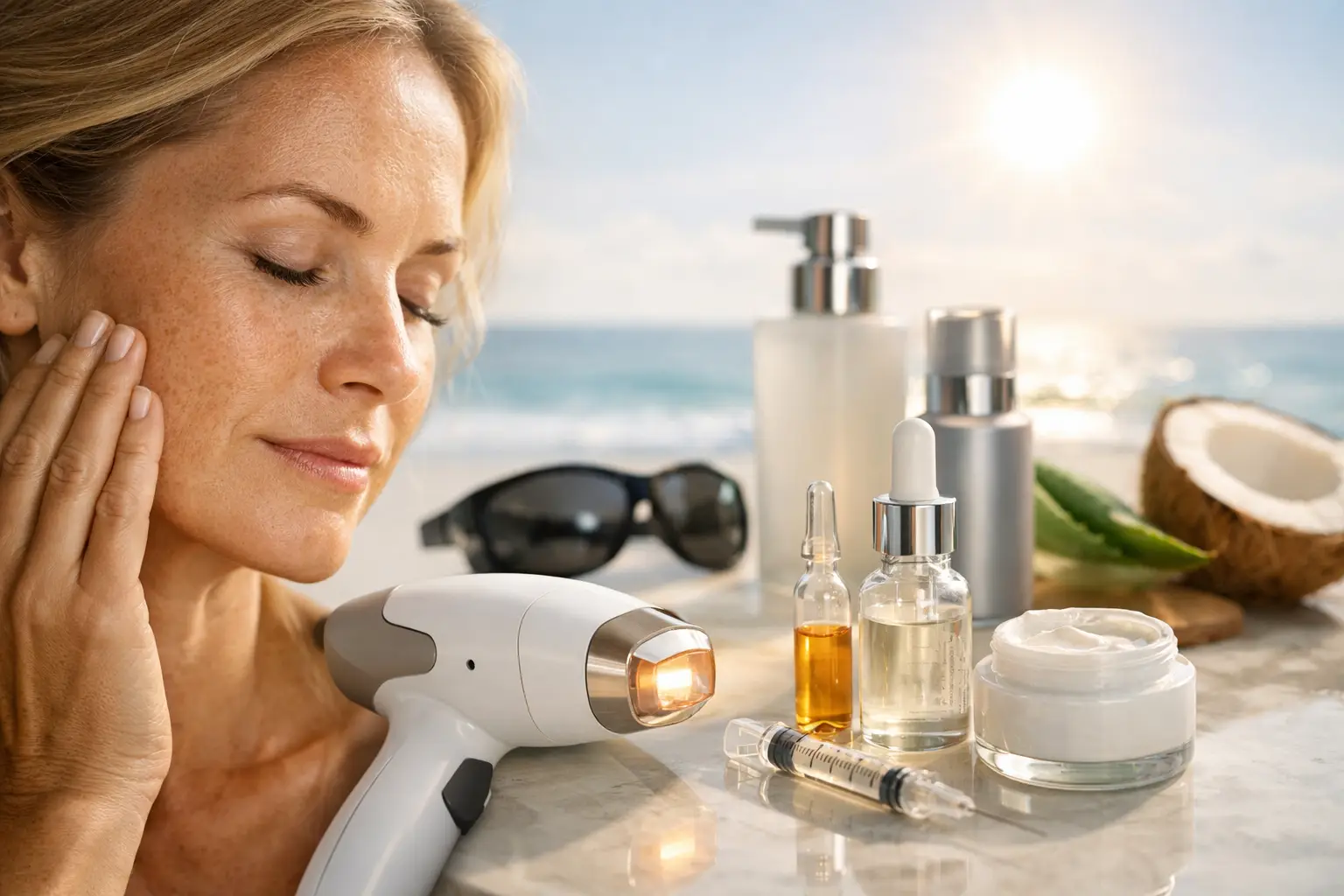
Sun exposure can leave a visible record long after a tan fades. Brown spots, uneven tone, fine lines, rough texture, and persistent redness often develop gradually, then become harder to conceal with skincare alone. The best treatments for sun damage depend on which of these changes concerns you most, how deeply they affect the skin, and your skin type.
A thoughtful plan should not promise to erase every sign of UV exposure in one appointment. Instead, it should improve the quality, clarity, and resilience of your skin in a controlled way. Physician-guided care is especially valuable when pigmentation is stubborn, redness is present, or you have a history of sensitivity or darker skin tones that require a more cautious approach.
Why Sun Damage Needs a Personalized Approach
Sun damage is not one condition. UV exposure can increase pigment production, break down collagen and elastin, enlarge visible vessels, and alter the skin’s surface. Someone with scattered brown spots needs a different approach than someone whose main concern is crepey texture around the eyes or diffuse facial redness.
The right treatment also depends on your timeline. A chemical peel may offer a relatively quick refresh before an event, while microneedling and certain laser treatments often work best as a series. More intensive treatments can deliver meaningful improvement, but may involve redness, peeling, or temporary darkening of pigment during recovery.
Daily sunscreen remains part of every successful treatment plan. Procedures can correct visible signs of prior exposure, but they cannot protect newly treated skin from future UV damage. Broad-spectrum SPF 30 or higher, protective clothing, and consistent reapplication help preserve your results.
Best Treatments for Sun Damage by Concern
1. Laser Treatments for Brown Spots and Uneven Tone
Laser treatments can be highly effective for targeted sun spots, freckles, and uneven pigmentation. These devices use focused energy to break up excess pigment so the body can gradually clear it. Depending on the technology used and the type of pigmentation being treated, spots may darken temporarily before they flake away or fade over the following weeks.
Laser treatment is not a one-size-fits-all answer. Some forms of pigmentation, including melasma, can worsen with excessive heat or an overly aggressive approach. A qualified provider should assess whether the discoloration is sun-related, hormonal, inflammatory, or a combination of factors before recommending treatment.
For the right candidate, laser therapy can create a clearer, more even complexion with relatively limited downtime. Results are often best when paired with medical-grade skincare and diligent sun protection.
2. Chemical Peels for Dullness, Fine Lines, and Surface Pigment
Chemical peels use carefully selected acids to exfoliate damaged outer layers of skin and encourage cell turnover. Light peels can improve dullness, mild discoloration, and a rough surface with minimal visible peeling. Medium-depth peels may provide more noticeable improvement for fine lines, acne marks, and more established pigment, but require more recovery time.
The strength and formulation matter. Stronger is not automatically better, particularly for sensitive or pigment-prone skin. An individualized peel plan can target concerns without unnecessarily compromising the skin barrier.
Many patients choose a series of lighter peels because they fit more easily into a busy schedule. The improvement is gradual, natural-looking, and can be maintained throughout the year with appropriate seasonal adjustments.
3. Microneedling for Texture and Collagen Support
Sun exposure accelerates collagen loss, which can make skin look thinner, less firm, and less smooth. Microneedling creates controlled micro-injuries in the skin, stimulating the natural repair process and supporting new collagen production over time.
This treatment is especially useful for uneven texture, early fine lines, enlarged pores, and mild acne scarring that may be more noticeable after years of sun exposure. Most patients experience redness similar to a mild sunburn for a short period, followed by a gradual improvement in smoothness and radiance.
Microneedling is usually performed as a series rather than a single treatment. It is a strong option for patients who want skin renewal without the downtime associated with more aggressive resurfacing. Results develop steadily, often becoming more apparent several weeks after each session.
4. PRP With Microneedling for Added Skin Renewal
Platelet-rich plasma, or PRP, may be used alongside microneedling for patients seeking an added regenerative component. PRP is prepared from a small sample of your own blood and contains concentrated platelets and growth factors. When applied during or after microneedling, it can support the skin’s healing response.
PRP is not a replacement for laser treatment when the main concern is concentrated brown spots. Its role is better suited to overall skin quality, texture, and a refreshed appearance. Patients who prefer treatments that use their own biologic material may find it particularly appealing.
As with microneedling alone, expectations should be realistic. PRP-supported treatments work gradually and are typically part of a broader plan rather than an overnight correction.
5. Vascular Laser Treatment for Redness and Broken Capillaries
Not all sun damage appears brown. Years of exposure can contribute to diffuse redness, visible blood vessels around the nose and cheeks, and a flushed complexion. Vascular laser treatments are designed to target these visible vessels while minimizing impact on surrounding skin.
Redness can also be associated with rosacea, irritation, or other skin conditions, so a proper evaluation is essential. The goal is not simply to reduce redness for a few days, but to identify the likely cause and choose treatment settings that are appropriate for your skin.
Some patients need multiple sessions, especially when redness is widespread. Avoiding heat triggers, using gentle skincare, and protecting the skin from sun exposure can help maintain improvement.
6. Prescription-Grade Skincare for Prevention and Maintenance
Professional treatments are often more effective when supported by a customized home regimen. Ingredients such as retinoids, vitamin C, pigment-regulating agents, and barrier-supporting moisturizers may help improve tone and texture while protecting your investment in in-office care.
Not every active ingredient should be started at once. Overusing exfoliating acids or retinoids can cause irritation, which may lead to more visible redness or post-inflammatory pigmentation. A measured routine is usually more effective than an aggressive shelf full of products.
Sunscreen is the non-negotiable step. Choose a broad-spectrum formula you will wear every day, not just on bright summer afternoons. UV exposure reaches the skin during routine driving, walking, and time near windows.
7. Injectables for Sun-Aged Skin That Has Lost Support
Botox and dermal fillers do not remove sun spots or repair UV-damaged cells. They can, however, complement skin-renewal treatments when sun exposure and natural aging have led to expression lines, volume loss, or a tired appearance.
Botox can soften dynamic wrinkles, while carefully placed filler can restore facial support and balance. For patients who want natural-looking rejuvenation, the best results often come from treating both skin quality and facial structure, rather than relying on one category of treatment alone.
An experienced injector will assess whether lines are caused primarily by movement, volume loss, skin texture changes, or a combination. This distinction matters because each concern responds differently.
How to Choose the Right Treatment Plan
A consultation should begin with your priorities, not a predetermined procedure. Explain what you notice in natural light, what products you use, how your skin reacts to treatments, and how much downtime you can accommodate. Photos, a skin assessment, and a review of your medical history help determine the safest path forward.
For example, a patient with a few distinct sun spots may benefit most from targeted laser treatment. Someone with diffuse dullness, early lines, and rough texture may be better suited to a peel and microneedling series. If redness is the main concern, vascular laser treatment may take priority before addressing pigment or texture.
At Balwin Aesthetics, individualized treatment planning is designed to balance visible improvement with skin health, safety, and natural-looking results. The goal is not to make your skin look treated. It is to help it look clearer, smoother, and more like its healthiest version.
Sun damage develops over years, and meaningful correction is usually a process rather than a single appointment. Starting with a professional assessment gives you a clearer understanding of what is treatable now, what should be approached carefully, and how to protect the results you earn.
