
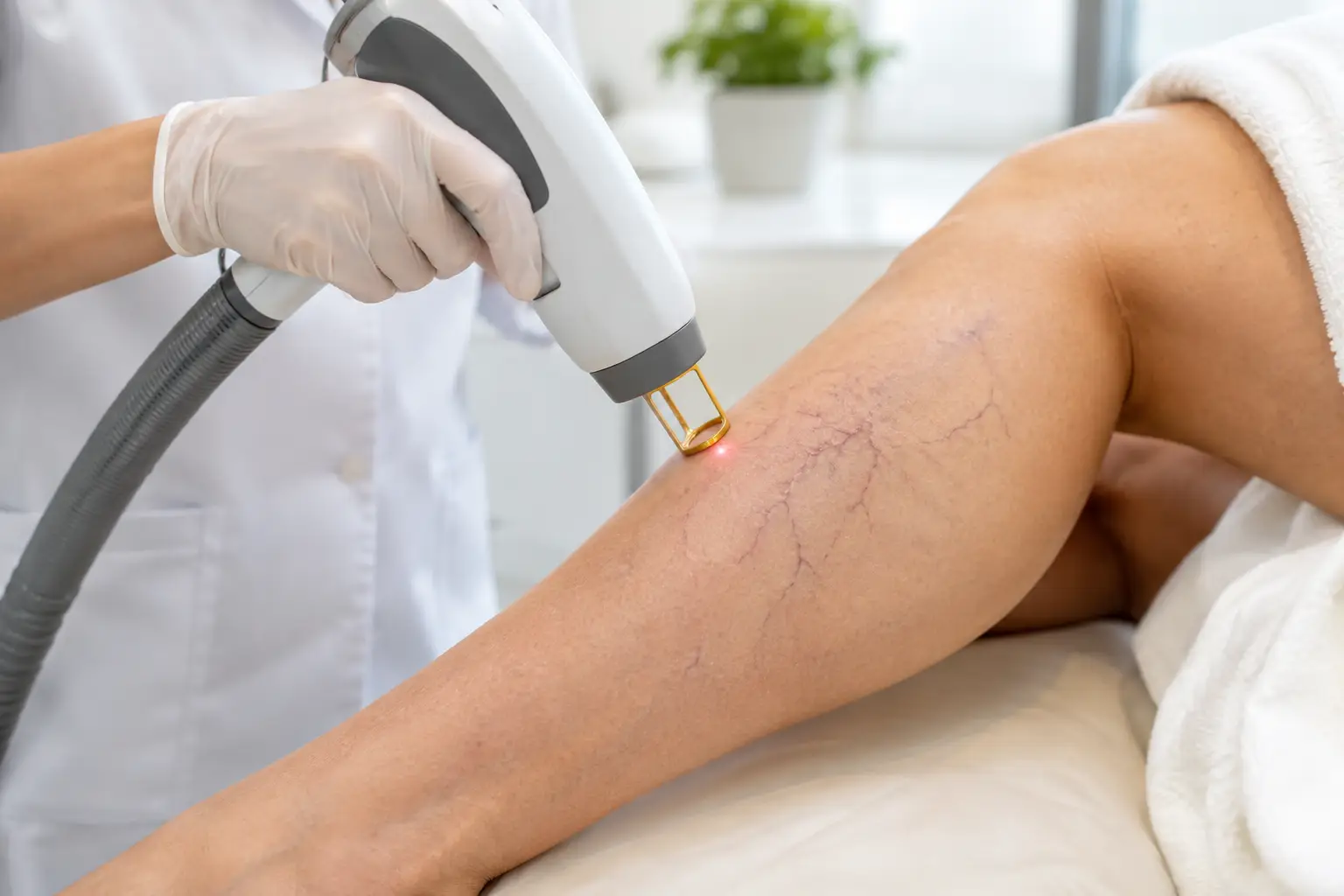
Spider veins can make otherwise healthy legs feel like the one feature you plan outfits around. If you are asking, can lasers treat spider veins, the short answer is yes – laser treatment can safely reduce the appearance of many small, visible veins. The best option, however, depends on the size, color, location, and underlying cause of the veins.
For the right candidate, laser vein treatment is a precise, nonsurgical option with little downtime. A professional assessment is still essential. Not every visible vein should be treated with a laser, and treating the surface without understanding what is happening beneath the skin may lead to disappointing results.
Can Lasers Treat Spider Veins Effectively?
Lasers treat spider veins by directing controlled light energy into the blood vessel. The pigment in the blood absorbs that energy, creating heat within the vessel wall. This causes the vessel to close. Over the following weeks, the body gradually clears the treated vein, and it becomes less visible.
Treatment tends to be most effective for very small red, purple, or blue veins close to the skin’s surface. Facial spider veins, including tiny vessels around the nose and cheeks, often respond particularly well to laser therapy. Small leg veins may also improve significantly, although they can be more resistant and commonly require a series of sessions.
“Effective” does not always mean every vein disappears after one appointment. Some vessels fade substantially; others require retreatment or respond better to another approach. A personalized plan is more meaningful than a one-size-fits-all promise because vein pattern, skin tone, and circulation all influence the outcome.
Laser Treatment Versus Sclerotherapy
Laser treatment is not the only way to address spider veins. Sclerotherapy is another established medical treatment, particularly for leg veins. During sclerotherapy, a qualified provider injects a solution directly into the vein, causing it to seal and gradually fade.
For larger or more extensive leg spider veins, sclerotherapy is often considered the more efficient option. It can treat a broader network of veins in one visit and may be more predictable for certain blue or purple vessels. Laser treatment is often favored for fine vessels, sensitive areas, needle-averse patients, or veins that are too small to inject easily.
In some cases, the strongest result comes from using both methods at different stages of care. For example, a provider may address larger feeder veins first, then use laser technology for remaining fine surface vessels. This is why an evaluation matters: the visible spider vein may be only one part of a larger vein pattern.
What Happens During a Laser Vein Appointment?
A physician-led consultation begins with a close evaluation of the treatment area, your skin type, your health history, and your goals. Your provider will also ask about previous vein treatments, medications, pregnancy, blood-clot history, and symptoms such as leg pain, swelling, heaviness, or skin changes.
If the veins appear purely cosmetic and appropriate for laser treatment, the skin is cleansed and protective eyewear is used. The device delivers quick pulses of light to each vessel. Most patients describe the sensation as a brief snap of heat against the skin. Some laser systems include cooling to improve comfort and protect the surrounding skin.
Sessions are usually relatively short, especially for small areas. After treatment, the skin may look pink or mildly swollen, and the treated vessels can appear darker or more noticeable before they fade. This temporary response is often part of the normal treatment process, not a sign that the treatment has failed.
How Many Treatments Are Needed?
The answer depends on the vessels being treated. Very fine facial vessels may improve after one or two sessions. Leg spider veins commonly need multiple treatments, usually spaced several weeks apart, because not all vessels respond at the same rate and new vessels may become visible over time.
Your provider should discuss realistic expectations before treatment. Laser therapy can clear or reduce the appearance of existing veins, but it does not prevent future spider veins from developing. Genetics, hormonal changes, prolonged standing or sitting, sun exposure, pregnancy, and natural aging can all contribute to new visible vessels.
Results develop gradually. Many patients see changes within a few weeks, while final improvement may take longer. Photographing the treatment area before and between sessions can be helpful, especially when changes are subtle from day to day.
Who Is a Good Candidate for Laser Spider Vein Treatment?
Good candidates are generally healthy adults with small, superficial vessels and realistic expectations. The treatment area should not have an active infection, open wound, or recent tan. Sun exposure can increase the risk of pigment changes, so planning treatment around travel, outdoor events, or summer sun habits is worth discussing.
Skin tone also matters. Because laser energy targets pigment, treatment settings must be selected carefully to reduce the risk of unwanted lightening or darkening of the skin. A knowledgeable medical provider can determine whether a particular laser and treatment approach are suitable for your complexion and vein type.
Laser treatment may need to be postponed during pregnancy. It may also be inappropriate for people with certain medical conditions, photosensitivity, a history of abnormal scarring, or medications that affect healing or blood clotting. These are not details to overlook for convenience. They are part of safe, informed aesthetic care.
When Spider Veins Need a Medical Vein Evaluation
Most spider veins are a cosmetic concern, but certain symptoms deserve medical attention before aesthetic treatment. Persistent aching, throbbing, leg heaviness, ankle swelling, itching, skin discoloration, ulcers, or visibly bulging veins can point to venous insufficiency or another circulation issue.
In those situations, treating only the visible surface veins may not address the underlying problem. Your provider may recommend further medical assessment, sometimes including ultrasound imaging, before deciding on cosmetic treatment. Sudden swelling, warmth, redness, or one-sided leg pain should be evaluated promptly rather than treated as a routine aesthetic concern.
Recovery and Aftercare
Downtime after laser treatment is usually minimal. Most patients return to normal routines the same day, though the skin should be treated gently. Your provider may advise avoiding hot baths, saunas, intense exercise, and direct sun exposure for a short period based on the device used and the area treated.
Do not scrub, pick, or exfoliate the treated skin while it is healing. If facial vessels were treated, use gentle skincare and daily broad-spectrum sunscreen. If leg veins were treated, follow any guidance about compression garments, walking, and activity. Aftercare is individualized, particularly when laser therapy is combined with injections.
Possible side effects include temporary redness, swelling, tenderness, bruising, blistering, or changes in skin pigment. More serious complications are uncommon when treatment is properly selected and performed, but no cosmetic procedure is risk-free. Choosing a medically supervised clinic with appropriate technology and an individualized treatment plan helps support both safety and natural-looking results.
Choosing Treatment for Veins You Actually Want to Show Less Of
The goal is not to chase every tiny vessel with the same device. It is to identify which treatment offers the best balance of effectiveness, comfort, safety, and recovery for your skin and concerns. At Balwin Aesthetics, a consultation can clarify whether laser treatment, sclerotherapy, or a combined approach is the most appropriate path.
Spider veins do not have to dictate how you feel in shorts, dresses, or close-up photos. A thoughtful evaluation gives you clearer expectations and a treatment plan designed around the veins you have – not a generic promise of perfect skin.
