
Unwanted hair can be more than a grooming inconvenience. Shaving can leave irritation, waxing requires regular upkeep, and ingrown hairs may affect both comfort and confidence. This guide to laser hair removal explains what the treatment can realistically achieve, who may be a candidate, and how to approach it with the level of care a medical aesthetic procedure deserves.
Laser hair removal is not a one-appointment solution, nor should it be treated like a routine salon service. The quality of the device, the experience of the provider, your skin and hair characteristics, and your willingness to follow a treatment schedule all influence the result. For people seeking long-term hair reduction with a refined, personalized approach, those details matter.
How laser hair removal works
Laser hair removal uses concentrated light energy to target pigment, called melanin, in the hair. The energy travels down the hair shaft and heats the follicle, helping reduce its ability to produce new hair. The surrounding skin is protected through precise settings and cooling technology.
The treatment works best when hairs are in the active growth phase, known as anagen. Because individual hairs cycle through growth, rest, and shedding phases at different times, only a portion of follicles can be effectively treated during any single visit. That is why a series of appointments is necessary.
The goal is long-term hair reduction, not a promise that every treated hair will disappear permanently. Most patients see a significant reduction in hair density and growth rate after completing their plan. Any remaining hair may grow in finer, lighter, and more manageable. Some people choose occasional maintenance treatments, particularly in hormonally influenced areas such as the face, underarms, or bikini line.
Who is a good candidate for laser hair removal?
Candidacy is more nuanced than the old assumption that laser treatment only works for fair skin with dark hair. Modern laser technology and thoughtful treatment selection can serve a wider range of skin tones safely. Still, the contrast between hair pigment and skin pigment remains relevant, and the right device settings are essential.
Dark, coarse hair typically responds most predictably because it contains more pigment for the laser to target. Black and brown hair often respond well. Blonde, gray, white, and red hair may be less responsive because there is limited pigment in the follicle. In these cases, a consultation should be honest about expected results before treatment begins.
Your provider should also assess current tanning, sun exposure, skin sensitivity, medical history, medications, and any history of pigmentation changes or scarring. Certain medications and active skin conditions can affect whether treatment should be postponed or adjusted. Pregnancy is commonly a reason to defer elective laser treatments because safety data is limited.
A physician-led consultation offers a more careful starting point, especially for patients with deeper skin tones, melasma, a history of post-inflammatory hyperpigmentation, or complex skin concerns. At Balwin Aesthetics, treatment planning centers on matching the treatment approach to the individual rather than applying one standard protocol to every patient.
Areas commonly treated
Laser hair removal can be used on many areas of the face and body. Popular treatment areas include the upper lip, chin, sideburns, underarms, arms, legs, bikini line, Brazilian area, chest, back, abdomen, and shoulders. The eye area is not treated because of the sensitivity of the surrounding tissue.
Small areas may take only a few minutes, while larger areas such as the full legs or back require more time. The treatment area, hair thickness, and your goals all affect the recommended appointment schedule.
What happens during a laser hair removal appointment?
Before beginning, the area is cleansed and prepared. You may be asked to shave the treatment area shortly before your appointment or the night before. Shaving leaves the follicle in place for the laser to target while avoiding excess hair above the skin that can absorb energy and create discomfort.
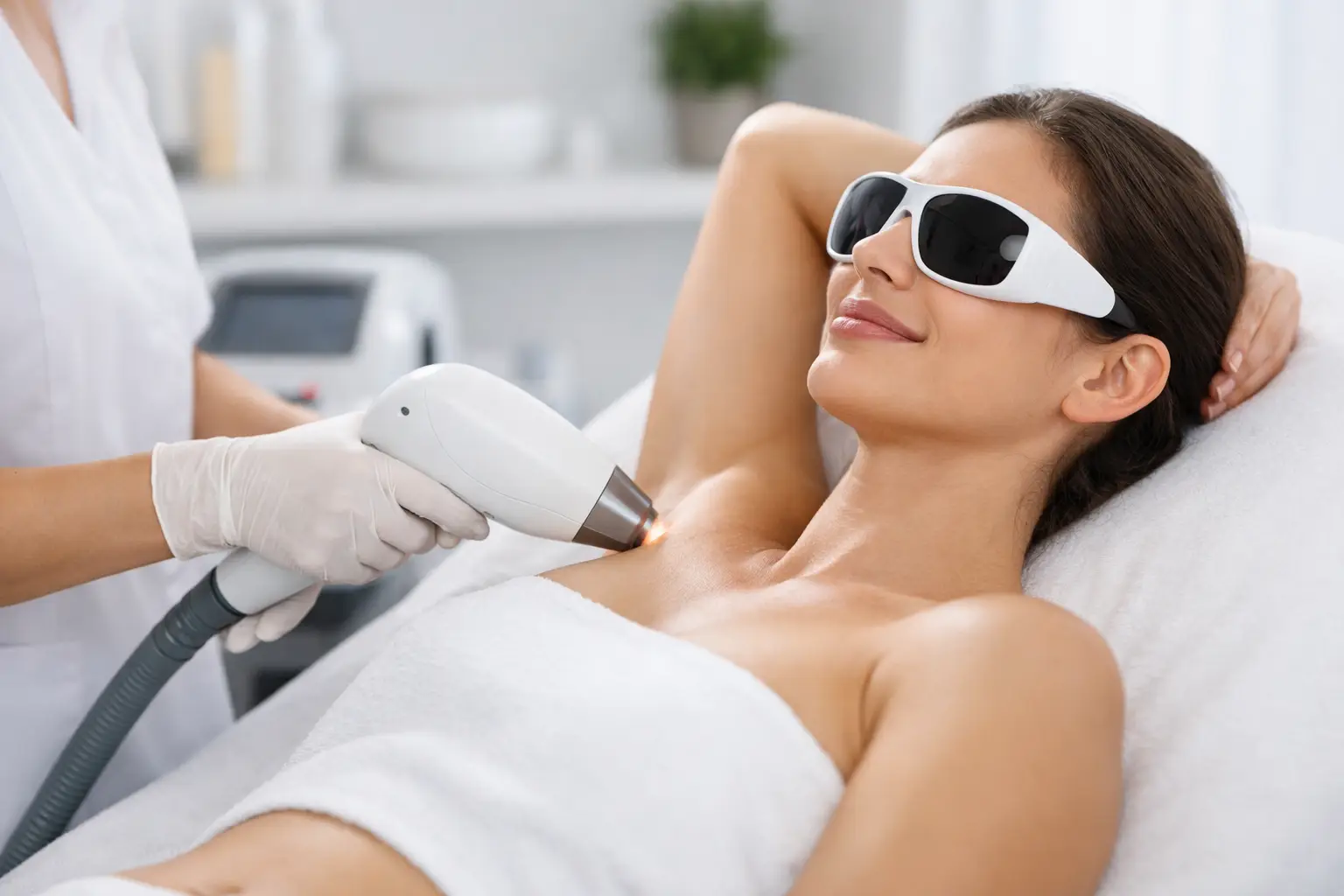
Your provider will provide protective eyewear, then select settings based on your skin tone, hair color, hair density, and treatment history. The laser handpiece is moved methodically across the area, delivering pulses of energy. Many patients describe the sensation as a quick snap against the skin, followed by brief warmth. Built-in or external cooling can make treatment more comfortable.
Some sensitive areas, such as the upper lip or bikini line, can feel more intense than the legs or arms. Comfort varies from person to person, but sessions are generally well tolerated. If you are concerned about sensitivity, discuss it during your consultation so your provider can recommend appropriate comfort measures.
After treatment, mild redness and slight swelling around the follicles are common. This response often resembles a mild sunburn and usually settles within hours to a few days. You can generally return to work and regular daily activities immediately.
How many sessions will you need?
Most patients need a series of treatments, commonly six to eight sessions, spaced several weeks apart. Facial areas may be treated more frequently than body areas because hair growth cycles differ. Your schedule may also change based on how your hair responds over time.
It is tempting to judge the result after one session, but laser hair removal rewards consistency. Treated hairs do not always vanish immediately. In the days and weeks after an appointment, they may appear to grow before shedding from the follicle. This is a normal part of the process.
Hormonal changes can also influence long-term results. Conditions such as polycystic ovary syndrome, as well as pregnancy-related or age-related hormonal shifts, can stimulate new hair growth. Laser treatment can still be valuable, but maintenance may be more likely in these circumstances.
Preparing for treatment and protecting your results
Good preparation supports both safety and outcomes. Avoid tanning, self-tanner, and prolonged sun exposure before treatment. Tanned skin has more surface pigment, which can increase the risk of irritation or unwanted pigment changes. Use broad-spectrum sunscreen on exposed treatment areas.
For several weeks before your session, avoid waxing, plucking, threading, and electrolysis in the treatment area. These methods remove the hair from the follicle, leaving less target for the laser. Shaving is preferred between appointments.
After treatment, keep the skin cool and avoid friction, heat, and irritation for the first day or two. Skip hot baths, saunas, steam rooms, strenuous exercise, and fragranced products if the area feels sensitive. Do not exfoliate aggressively or pick at shedding hairs. Sun protection remains essential, particularly when treating the face, chest, shoulders, or legs.
Safety, side effects, and why provider selection matters
When laser hair removal is performed with appropriate technology and individualized settings, it is generally well tolerated. Temporary redness, swelling, and sensitivity are the most common effects. Less commonly, patients may experience blistering, crusting, or lightening or darkening of the skin. These risks can be higher with recent sun exposure, inappropriate settings, or treatment performed by an inadequately trained provider.
A qualified medical aesthetics team should not rush the assessment. They should ask about your skin history, evaluate the treatment area, set realistic expectations, and provide clear aftercare instructions. A test spot may be recommended for some patients, particularly when there are concerns about skin sensitivity or pigment response.
Price should be considered in context. A lower-cost appointment is not necessarily a better value if the equipment is unsuitable for your skin tone, the settings are overly conservative or aggressive, or the treatment plan is inconsistent. Effective treatment requires sound clinical judgment as much as it requires technology.
When to schedule a consultation
A consultation is the right next step if you are tired of repetitive hair removal, experience frequent razor bumps or ingrown hairs, or want a clearer understanding of what your skin and hair type can achieve. Bring up any medications, prior reactions to cosmetic treatments, recent tanning, and areas where you have experienced pigmentation changes.
The most satisfying laser hair removal results tend to come from realistic expectations and a plan that respects your skin. When you choose a provider who prioritizes personalized assessment over quick promises, smoother skin becomes a goal you can pursue with greater confidence.
