
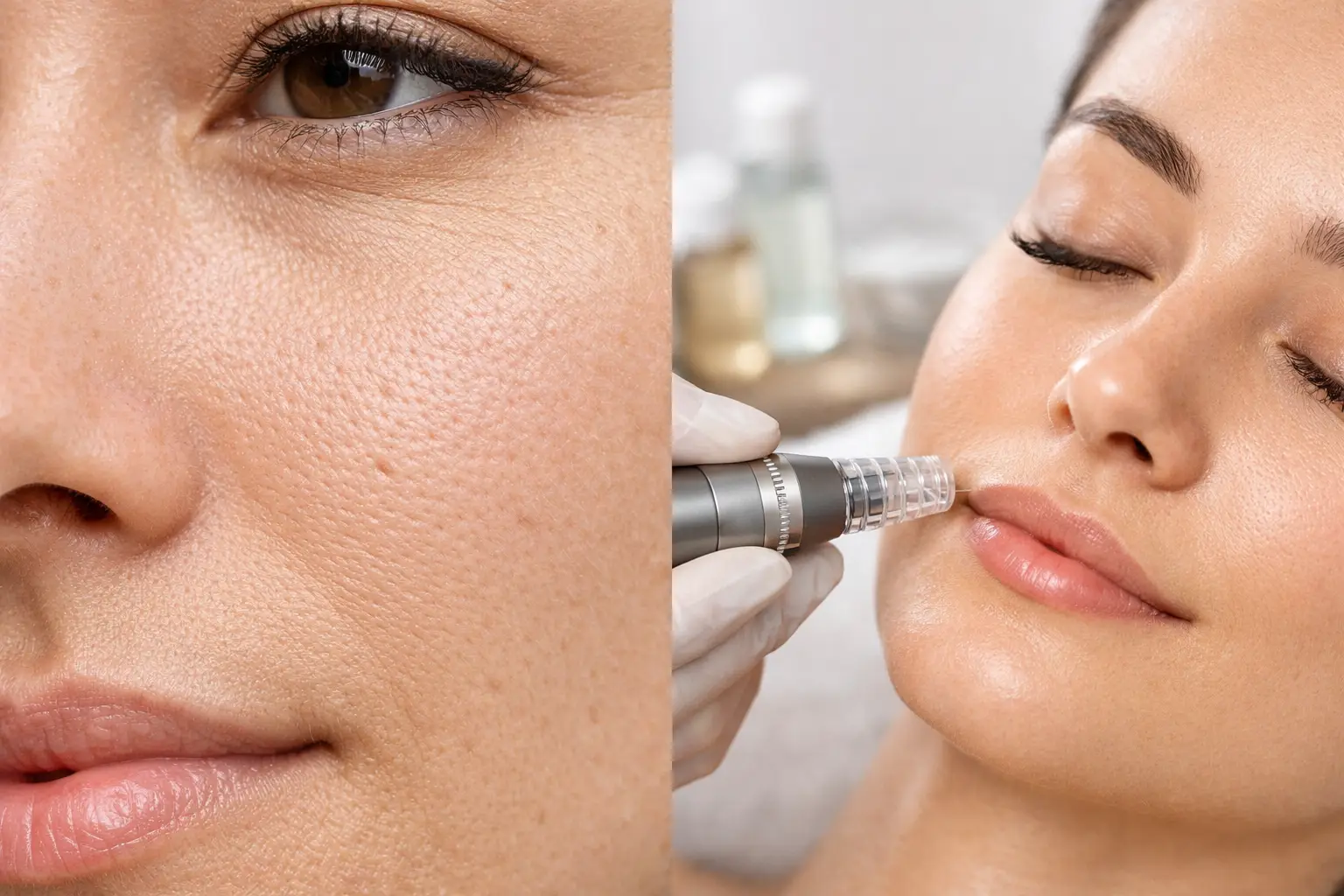
Large pores rarely look large because they are dirty. More often, they become noticeable when oil production, reduced collagen support, sun exposure, and uneven texture make the skin around each pore less firm. That distinction matters when choosing a treatment. Microneedling for enlarged pores is designed to improve the quality and support of the surrounding skin, helping pores appear more refined rather than attempting to permanently close them.
For patients who want smoother-looking skin without surgery or substantial downtime, professionally performed microneedling can be a valuable part of a personalized skin renewal plan. The best results come from realistic expectations, proper treatment depth, consistent aftercare, and a provider who evaluates the full cause of visible pores before recommending treatment.
Why Pores Can Look Enlarged
Pores are natural openings in the skin, and they do not open and close like doors. Their appearance can change, however. In oil-prone areas such as the nose, cheeks, forehead, and chin, excess sebum can make pores more visible. Congestion may add to the problem, but it is not the only factor.
As collagen and elastin decline with age or sun exposure, the skin surrounding a pore can lose some of its structure. The opening may then appear wider, particularly under makeup, in direct light, or when the skin is dehydrated. Acne, previous inflammation, and acne scarring can also leave an uneven surface that makes pores stand out more.
This is why a simple scrub or pore strip may offer only a temporary cosmetic improvement. When laxity and textural change are part of the concern, treatments that encourage collagen remodeling may be more appropriate.
How Microneedling for Enlarged Pores Works
Microneedling uses a medical-grade device with fine, sterile needles to create controlled microchannels in the skin. This process stimulates the body’s wound-healing response and supports new collagen and elastin production over time. As the skin renews itself, texture can become smoother and the tissue around visible pores may gain a more even, supported appearance.
The treatment is not a pore eraser. It cannot change the fact that pores exist, and results vary based on genetics, skin type, oil production, sun damage, acne history, and the severity of the concern. What it can do is improve the factors that often make pores look more pronounced: rough texture, mild skin laxity, fine lines, and superficial acne scarring.
A physician-led assessment is especially useful because not all enlarged pores require the same approach. Someone with active congestion and significant oil production may benefit from a skincare plan or chemical peel strategy alongside microneedling. Someone with acne scars, photoaging, and textural irregularity may be a stronger candidate for a series of treatments focused on collagen renewal.
What Happens During Treatment
A typical appointment begins with a skin assessment and cleansing. A topical numbing cream is often used to make the procedure more comfortable. The provider then passes the microneedling device across the treatment area at settings selected for the location and condition of the skin.
Needle depth should never be one-size-fits-all. The skin on the forehead differs from the cheeks, and a patient with delicate skin, active breakouts, or a history of post-inflammatory pigmentation needs a carefully considered plan. In some cases, a provider may recommend combining microneedling with platelet-rich plasma, or PRP, using the patient’s own concentrated growth factors as part of the treatment protocol.
Afterward, the skin commonly looks pink or red, similar to a mild sunburn. Mild warmth, tightness, and temporary sensitivity are also expected. Most patients can return to many regular activities quickly, although their skin needs gentle care while it recovers.
Who May Benefit Most
Microneedling is often a good option for adults concerned with visible pores on the cheeks, early signs of aging, uneven texture, or mild acne scarring. It can be appropriate for a range of skin tones when performed correctly, which makes it an appealing alternative for patients who may not be ideal candidates for more aggressive resurfacing procedures.
That said, candidacy depends on skin health. Treatment may need to be postponed for active acne lesions, eczema or dermatitis flares, open wounds, active skin infections, recent sunburn, or certain medications. Patients prone to keloid scarring, those who are pregnant or breastfeeding, and anyone with a history of pigment changes should discuss their medical history carefully during consultation.
A responsible provider will also ask about retinoids, anticoagulants, recent cosmetic procedures, and skincare products that could increase sensitivity. This level of planning helps protect the skin barrier and supports a more predictable recovery.
What Results to Expect and When
Many patients notice an initial healthy glow as post-treatment swelling settles, but collagen remodeling takes time. Texture often begins to look more refined over several weeks, with continued improvement developing in the months that follow. For enlarged pores, a series of treatments is commonly recommended rather than a single session.
The number of sessions depends on the concern. Mild textural changes may respond well to a focused series, while deeper acne scars or more significant sun damage may require additional treatment or a combination approach. Appointments are typically spaced several weeks apart to allow the skin time to repair and generate new collagen.
Results should look gradual and natural. The goal is not to alter your facial features or create an overly treated appearance. It is to improve skin quality so that pores, makeup texture, and uneven areas are less distracting in everyday life.
Photography can be helpful when tracking progress. Pore appearance changes with lighting, skin hydration, and oil levels, so standardized before-and-after photos provide a clearer view than daily mirror checks.
Aftercare That Protects Your Results
The first few days after microneedling are a time to simplify. Your skin has temporary microchannels and a more vulnerable barrier, so use only the products approved by your provider. A gentle cleanser, a simple hydrating product, and broad-spectrum sunscreen are usually central to recovery.
Avoid makeup until your provider says it is appropriate, particularly during the first day. Skip exfoliating acids, retinoids, benzoyl peroxide, scrubs, and other potentially irritating active ingredients until the skin has settled. Heat, heavy sweating, swimming pools, hot tubs, and direct sun exposure can also increase irritation early in the healing process.
Sun protection deserves special attention. Ultraviolet exposure contributes to collagen breakdown and can worsen pigmentation concerns after any procedure that stimulates skin renewal. Daily sunscreen and thoughtful sun avoidance help preserve the improvement you are investing in.
Do not pick, peel, or try to extract pores while the skin is healing. Temporary dryness or light flaking can occur, but aggressive exfoliation can prolong redness and compromise the result.
Microneedling Compared With Other Pore Treatments
Microneedling is not always the only answer. Chemical peels can help manage surface congestion, excess oil, and dullness. Certain laser treatments may be considered for patients with more significant texture concerns, photoaging, or scarring, though they can involve different recovery requirements and may not suit every skin type.
Topical retinoids can improve cell turnover and support collagen over time, while carefully selected exfoliating ingredients may help keep pores clearer. Botox can sometimes soften oiliness or pore appearance in select areas, but it is not a replacement for collagen-focused treatment. The strongest plan is often layered: professional procedures for structure and texture, paired with medical-grade home care for maintenance.
The trade-off is that combination care requires patience and consistency. A treatment that promises instant pore removal is unlikely to reflect how skin biology actually works. Thoughtful, gradual correction is generally safer and more believable.
Choosing a Provider Matters
Microneedling may seem straightforward, but treatment quality depends on more than the device. Sterile technique, proper needle selection, medical screening, and a customized approach all influence safety and results. Poorly performed microneedling can cause unnecessary irritation, infection risk, scarring, or pigment changes.
At Balwin Aesthetics, treatment planning is guided by a physician-led approach to skin renewal, with recommendations based on your skin condition, goals, and tolerance for downtime. A consultation should leave you with a clear understanding of what microneedling can improve, what it cannot, and whether another treatment or combination plan would better serve your skin.
If enlarged pores are affecting how you feel about your complexion, the most helpful next step is not chasing a quick fix. It is choosing an informed assessment and a treatment plan that respects your skin’s biology while working toward smoother, more confident-looking skin.
