
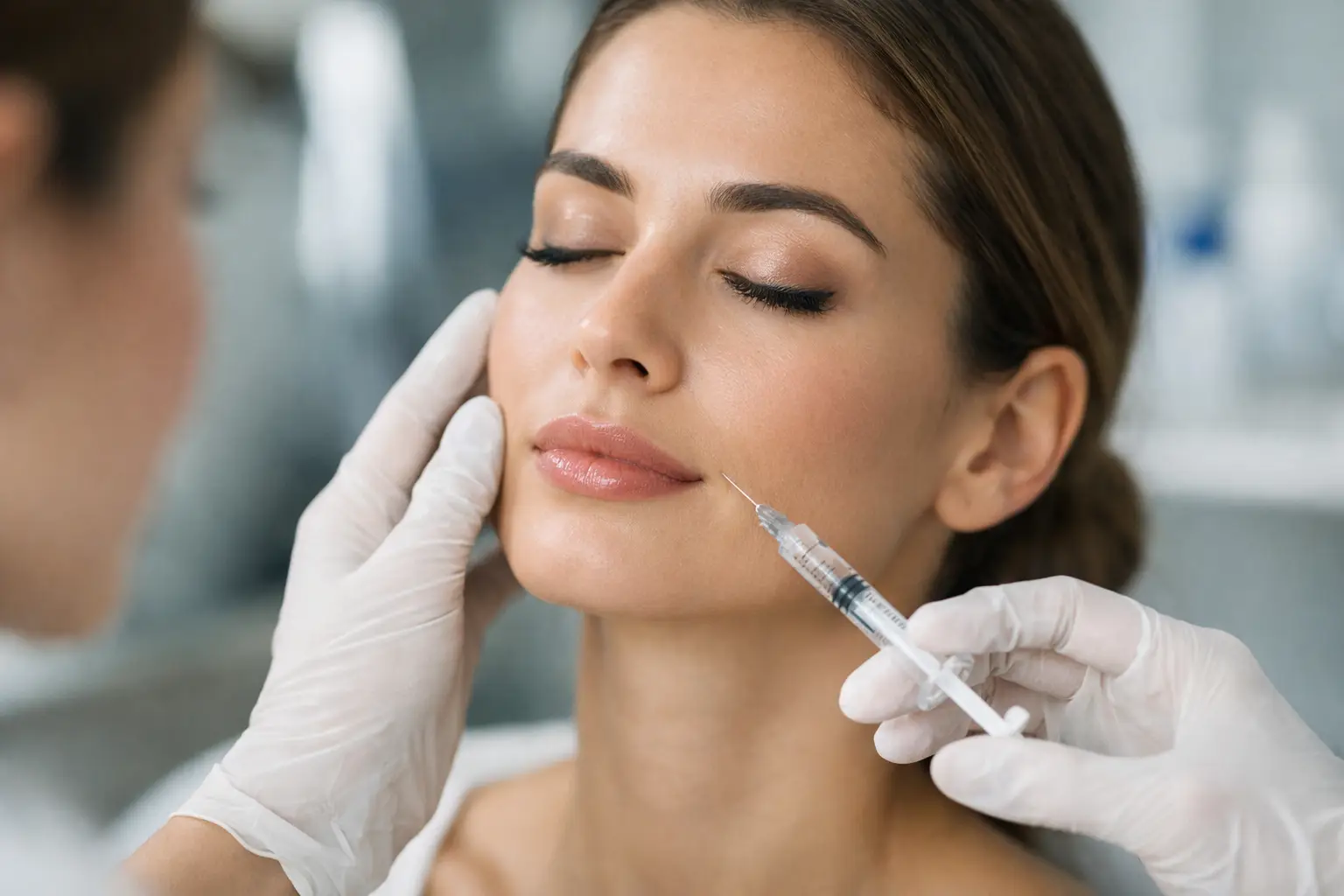
A refreshed face should not prompt people to ask what you had done. It should make you look rested, balanced, and more like yourself on a particularly good day. So, can fillers look natural? Yes – when treatment is built around facial anatomy, proportion, and restraint rather than simply adding volume where a line or hollow appears.
Natural-looking filler is not about making every crease disappear or creating the same features seen on social media. It is about restoring support and softness in a way that respects how your face moves, ages, and expresses emotion. The injector’s clinical judgment matters as much as the product itself.
Can Fillers Look Natural? Yes, With the Right Approach
Dermal fillers are gel-like injectable treatments, most commonly made with hyaluronic acid, a substance naturally found in the skin. They can restore volume, improve contour, soften certain lines, and provide structural support in areas affected by age-related volume loss.
The most natural results tend to come from treating the face as a whole. For example, a shadow beside the mouth may be related less to the line itself and more to changes in the cheeks or midface. Adding filler directly into every visible fold can create heaviness. Supporting the area that has lost volume may improve the fold more subtly while preserving natural expression.
This is why a personalized assessment is essential. A qualified medical injector considers your facial shape, bone structure, skin quality, existing volume, symmetry, and goals before recommending treatment. The appropriate plan for one person may be entirely wrong for another, even when the concern appears similar.
What Natural-Looking Filler Actually Means
Natural does not have to mean invisible. You may notice a gentle improvement in cheek contour, lip shape, under-eye hollowing, or jawline definition. The key is that the enhancement remains in harmony with your other features.
A natural result usually has several qualities: proportions remain balanced, facial movement is preserved, the skin does not appear overfilled, and the treatment fits the person’s age and features. Lips, for instance, can look beautifully enhanced without becoming disproportionately projected or losing definition around the mouth.
There is also an important difference between facial balancing and chasing perfection. Human faces are naturally asymmetrical. Attempting to correct every small difference can lead to unnecessary product use and a result that feels less authentic. Thoughtful treatment improves what bothers you while leaving the character of your face intact.
The Factors That Shape Your Result
Injector expertise and anatomical knowledge
Filler treatment is a medical procedure, not a one-size-fits-all beauty service. An experienced, properly trained injector understands the layers of the face, the location of blood vessels, and how different products behave in different tissues. This knowledge supports both safety and better aesthetic outcomes.
Technique matters. The depth of placement, amount of product, injection method, and choice of filler all affect whether results look smooth and refined. Some areas need structure and lift; others need a softer product that moves naturally with expression. Using the wrong product or placing it at the wrong depth can contribute to puffiness, visible irregularities, or an unnatural contour.
Product selection and placement
Not all dermal fillers are interchangeable. Some are designed for firmer support in areas such as the cheeks, chin, or jawline. Others are more flexible and may be better suited for lips or fine lines around the mouth. A treatment plan should match the product to the goal, not rely on a single filler for every facial concern.
Placement is often more valuable than volume. A small, strategically placed amount can make a meaningful difference. More product is not automatically better, particularly in delicate areas such as the lips and under-eyes. Conservative treatment gives your provider the opportunity to reassess after swelling settles and add more only if it truly serves your goals.
Your starting anatomy and skin quality
Fillers can restore volume, but they do not address every concern. Fine crepiness, enlarged pores, pigmentation, and laxity may require treatments that improve skin quality, such as microneedling, chemical peels, or laser-based care. Trying to use filler to correct a problem better addressed by another treatment can create an overfilled appearance.
Your baseline also affects what is realistic. Significant volume loss, deep folds, or skin laxity may benefit from a staged approach rather than a dramatic change in one appointment. Honest guidance is part of quality care. The right answer may be a small amount of filler, a complementary treatment, or no filler in a particular area at all.
Why Overfilled Results Happen
Overfilling is rarely the intention. It can happen when treatments are performed too frequently, when a provider focuses on a single line instead of the full face, or when swelling is mistaken for the final result and more product is added too soon.
Some people also bring highly filtered reference images to a consultation. These can be useful for communicating preferences, but they are not always realistic treatment goals. Filters can alter facial proportions, skin texture, and lip shape in ways that do not translate naturally to a real, moving face.
A responsible provider will explain the trade-offs clearly. More filler may create a more noticeable change, but it can also reduce softness or alter proportion. Choosing a conservative starting point is not a compromise in quality. It is often the most reliable path to an elegant result.
How to Plan for Natural-Looking Fillers
Start with a consultation that feels thorough rather than rushed. You should be able to discuss the features you want to enhance, what you would prefer to avoid, prior filler history, medications, allergies, and any relevant medical conditions. If you have had filler elsewhere, tell your provider when and where it was placed. Existing product can influence both planning and outcomes.
It is helpful to describe your goal in terms of how you want to look, not only which feature you want changed. Saying, “I want to look less tired,” or “I want subtle lip definition,” gives your injector more context than requesting a set number of syringes. A quality consultation should include an explanation of what can reasonably be achieved and whether filler is the most appropriate option.
Plan around important events carefully. Initial swelling and bruising are common, especially in the lips. While many people return to normal activities quickly, the final appearance may take days or sometimes longer to settle. Scheduling treatment at least two weeks before a major event allows room for healing and a follow-up assessment if needed.
Aftercare Helps Protect a Refined Result
Follow the aftercare instructions provided by your medical injector. Depending on the treatment area and your medical history, you may be advised to avoid strenuous exercise, alcohol, excessive heat, or pressure on the area for a short period. Do not massage treated areas unless your provider specifically directs you to do so.
Mild tenderness, swelling, and bruising can occur and are usually temporary. Contact your provider promptly if you experience unusual or worsening pain, significant blanching or color changes in the skin, visual symptoms, or any concern that feels out of the ordinary. These are medical treatments, and access to appropriate clinical guidance matters.
Questions Worth Asking Before Treatment
Before moving forward, ask who will perform your injections, how they assess facial balance, which product they recommend and why, and what a conservative treatment plan would look like for you. You can also ask to see before-and-after examples that reflect outcomes you consider natural.
Look for results across a range of ages and facial types, not just dramatic transformations. The most reassuring examples often show improvement without a loss of individuality. At Balwin Aesthetics, physician-led planning keeps the conversation focused on safety, proportion, and results that complement your natural features.
Natural-looking filler is a thoughtful process, not a volume target. Choose a provider who listens carefully, sets realistic expectations, and is comfortable recommending less when less is the better choice. The goal is not to look like someone else. It is to see yourself in the mirror with a little more confidence and ease.
